

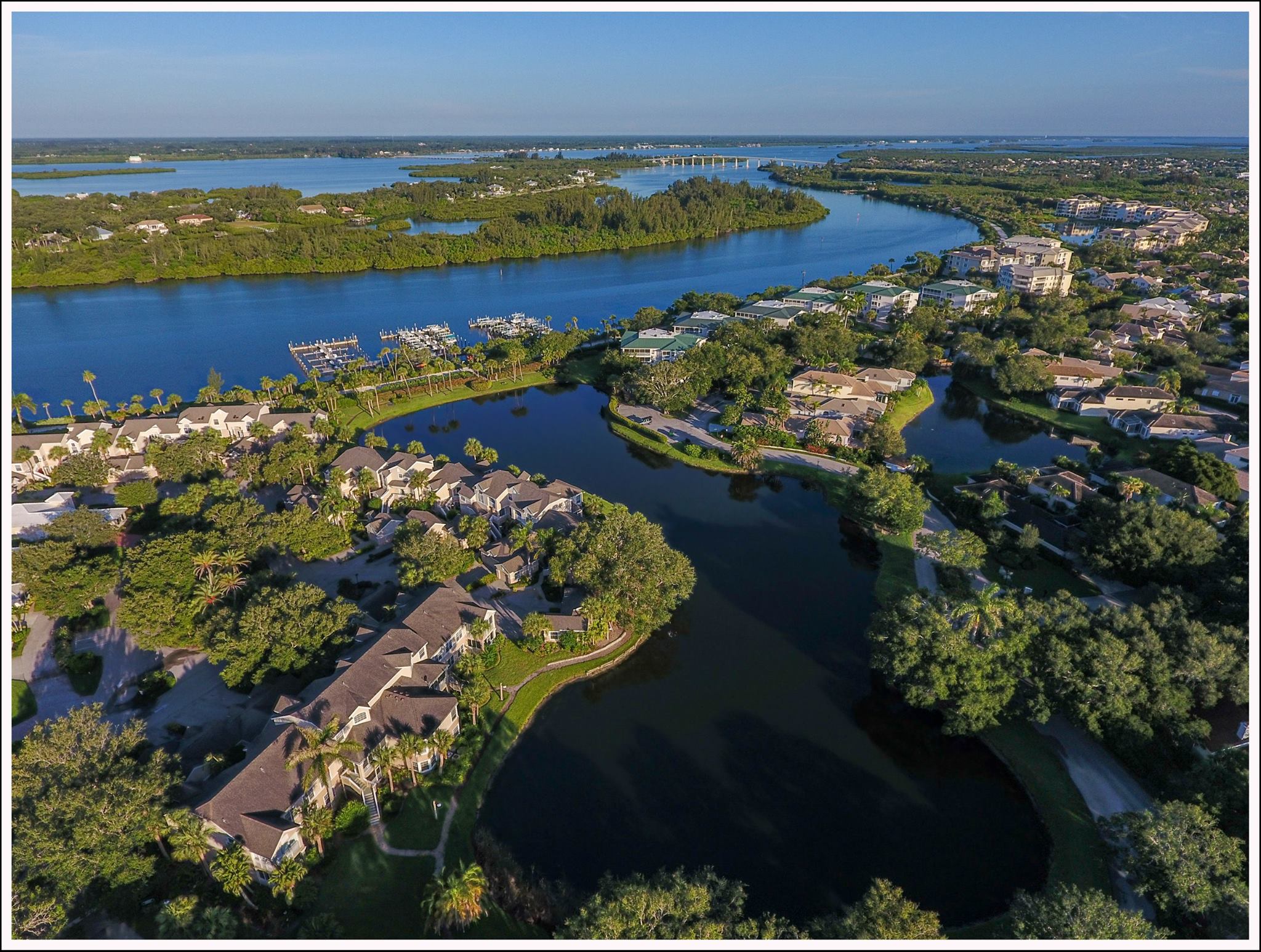

The plan, in its most common form, goes like this. Buy the Florida property. Get the Florida driver's license. Register to vote in Vero Beach. Spend more than half the year on the barrier island. Keep the Greenwich house as a weekend retreat, a family gathering place, a hedge against future uncertainty — a piece of Connecticut that remains available while the Florida chapter begins.
It is a reasonable plan. It is also, under Connecticut law, a plan that may not work at all.
The piece of the domicile framework that most Connecticut buyers encounter too late — after the Florida closing, sometimes after years of believing their tax savings were secure — is a legal concept with an unremarkable name and a remarkably broad application: the permanent place of abode. Understanding exactly what that term means under Connecticut's Department of Revenue Services regulations is not optional for any high-net-worth resident planning a Florida move. It is the prerequisite to everything else.
"The most expensive mistake Connecticut taxpayers make when relocating to Florida is not failing to spend enough days there. It is failing to sever their Connecticut residential ties — and discovering, years later, that Connecticut never accepted their departure."
The Statutory Residency Trap — What the Law Actually Says
Connecticut taxes individuals under two distinct frameworks. The first is domicile — your permanent legal home, the place you intend to return to whenever absent. Most high-net-worth taxpayers understand this test. Establish Florida as your domicile, sever your Connecticut ties, and Connecticut loses its claim on your income.
The second framework is statutory residency — and this is the one that traps people who believe they have successfully departed Connecticut. Under Connecticut law, an individual who is not domiciled in Connecticut is nonetheless taxed as a full Connecticut resident for any year in which they satisfy two conditions simultaneously: they maintained a permanent place of abode in Connecticut, and they spent more than 183 days in Connecticut during that year.
The critical word in that sentence is "and." Both conditions must be met. But the definition of permanent place of abode is where the law creates its broadest exposure.
Connecticut's Department of Revenue Services defines a permanent place of abode as any residence you maintain for your use on an ongoing basis — whether you own it, rent it, or your spouse holds the lease. The dwelling does not need to be your primary home. It does not need to be used frequently. It does not need to be in your name.
A furnished bedroom in a parent's Greenwich home that is kept available for your use has, in documented audit cases, qualified as a permanent place of abode. A seasonal home in Litchfield County kept in your spouse's name has qualified. A Westport apartment leased by your employer for your business travel has qualified. The standard is availability and maintenance — not frequency of use.
Three specific types of dwellings are excluded from the permanent place of abode definition: a property you own and rent to unrelated third parties under a lease of at least one year; a property used only as a vacation camp or cottage; and a barracks, motel room, or similar facility lacking standard domestic amenities. Every other category of Connecticut dwelling — including your primary Fairfield County home — falls within the definition by default.
The 183-Day Calculation — More Dangerous Than It Appears
Many Connecticut taxpayers who understand the permanent place of abode rule believe they are protected by the 183-day threshold. They plan carefully, count their days, and arrive at a number safely below the statutory limit. What they fail to account for is how Connecticut counts days.
Under Connecticut's rules, any part of a day spent in Connecticut counts as a full Connecticut day. A morning flight into Westchester, a business meeting in Stamford, and a same-day departure still constitutes a Connecticut day. A brief visit for a grandchild's birthday, a medical appointment at Yale New Haven Hospital, a charity gala at a Greenwich estate — each one is a Connecticut day, regardless of its duration. Over the course of a year, the accumulation of partial-day Connecticut visits among people who believe they have departed Connecticut is the single most common driver of audit exposure.
The burden of proof in a Connecticut residency audit falls entirely on the taxpayer. Connecticut's DRS does not need to prove you were there. You need to prove you were not. And the evidence they will examine — cell phone location records, EZ-Pass toll data, credit card transaction histories, airline passenger records, club membership attendance logs, medical appointment records — is detailed enough to reconstruct your physical presence with extraordinary precision.

The Audit Consequence Table
For Connecticut taxpayers who are reclassified from nonresident to full-year resident following a DRS audit, the financial consequences are applied retroactively and compounded by penalties and interest. The following table illustrates the magnitude of a failed domicile change across common income levels.
Annual Income | CT Tax If Resident | Penalty (10%) | 2-Year Interest (est.) | Total Exposure |
|---|---|---|---|---|
00,000 | 9,480 | ,948 | ,537 | 5,965 / year |
,000,000 | 4,480 | ,448 | ,737 | 8,665 / year |
,000,000 | 34,480 | 3,448 | 6,137 | 64,065 / year |
,000,000 | 04,480 | 0,448 | 4,537 | 49,465 / year |
Figures represent state income tax only at 2026 Connecticut rates. Penalty is Connecticut's standard 10% understatement penalty. Interest estimated at 6% annually on unpaid tax, applied retroactively. Does not include potential capital gains reclassification or estate tax exposure. Consult qualified tax counsel for individual analysis.
The Three Options — And the Honest Assessment of Each
Connecticut taxpayers who have purchased or are considering a Florida primary residence face three realistic options for their Connecticut property. Each carries distinct legal, financial, and practical implications. The right choice depends on individual circumstances and should be made in consultation with Connecticut and Florida tax counsel — but the framework is consistent.
Selling eliminates the permanent place of abode issue entirely. No dwelling, no exposure. The sale frequently generates the capital that funds the Vero Beach acquisition, and it removes the most common audit trigger in a single transaction. For sellers in strong Fairfield County markets, current pricing makes this a financially logical sequence. Through our Coldwell Banker Global Luxury network in Connecticut, we coordinate both transactions.
Renting to an unrelated third party under a bona fide lease of at least one year removes the property from the permanent place of abode definition — but only if the lease is genuine, the property is not kept available for your use, and you satisfy the 183-day requirement independently. Short-term rentals, family rentals, or arrangements that allow personal access do not qualify. This option demands meticulous documentation and legal oversight.
Retaining personal use of the Connecticut property while claiming Florida domicile is legally permissible only if you spend 182 days or fewer in Connecticut — and document every single day with contemporaneous records. For families with deep Connecticut roots — extended family, grandchildren, medical relationships, social obligations — maintaining fewer than 183 days in Connecticut while keeping a residence available often proves more difficult in practice than it appears on paper. This is the path most likely to produce audit exposure.
The Capital Gains Timing Problem — The Most Expensive Version of This Mistake
For Connecticut taxpayers with anticipated capital gains events — business sales, major stock liquidations, private equity distributions — the permanent place of abode problem takes on a dimension that dwarfs ordinary income tax exposure. Connecticut taxes capital gains as ordinary income at the same 6.99% top marginal rate. For a 0 million business sale, that is a Connecticut tax bill approaching 00,000.
The critical timing element is this: the domicile change must be completed and legally defensible before the taxable event occurs. A Connecticut business owner who sells a company while still maintaining a Connecticut permanent place of abode — even if they have a Florida driver's license and a Vero Beach address — cannot retroactively attribute those gains to Florida domicile. The tax year in which the gain is recognized is the tax year that determines the domicile, and the domicile is determined by the facts on the ground at the time of the event.
This means that for any Connecticut taxpayer planning a liquidity event in the next 12 to 36 months, the decision about what to do with the Connecticut home is not a future planning item. It is an immediate one.
Vero Beach Regional Airport offers direct Breeze Airways service to Westchester, Hartford, New Haven, and Providence. JetBlue operates daily nonstop service between Vero Beach and JFK in under three hours. For Connecticut families who sell or rent their Fairfield County home and establish Vero Beach as their primary residence, staying connected to Connecticut relationships — family, business, medical — requires a direct flight, not a disruption to their lives.

What Connecticut Buyers in Vero Beach Actually Do
The Connecticut buyers who arrive in Vero Beach and execute their domicile changes most successfully share a common approach. They engage Connecticut tax counsel and Florida estate attorneys before the Vero Beach closing — not after. They make the decision about the Connecticut property as part of the transaction, not as a deferred question. And they treat the Connecticut home not as an anchor to their former life but as a transaction — one that, timed correctly, frequently provides both the capital and the tax clarity that makes the Vero Beach purchase not merely possible but transformative.
The buyers who encounter audit exposure three or four years later are almost uniformly those who arrived in Vero Beach with the best intentions and a Connecticut house they were not ready to address. The house felt like an option — a hedge, a safety net, a concession to uncertainty. It became instead a liability — the permanent place of abode that Connecticut cited when it sent the audit notice.
The Vero Beach Advantage in This Context
The Vero Beach barrier island — zip code 32963 — offers something that genuinely eases the psychological difficulty of releasing a Connecticut home: it is not a consolation prize for buyers who could not afford Palm Beach or who settled for something smaller. It is a deliberate choice made by people who have run the numbers and understood that a comparable oceanfront lifestyle, priced 40 to 60 percent below Palm Beach comparable product, in a community with private clubs, world-class tennis, Cleveland Clinic healthcare, and direct air access to Connecticut airports, represents a value proposition that the Greenwich house cannot match.
The Connecticut home that Connecticut buyers are reluctant to release is frequently a house that costs 0,000 to 5,000 per year in property taxes alone, requires year-round maintenance and staffing, and provides, at best, a few months of genuine use. The Vero Beach estate that replaces it costs less to carry, appreciates in a market that our analysis suggests is in the early phase of a sustained cycle, and generates — when the domicile is properly executed — over 00,000 per year in tax savings that compound indefinitely.
The Connecticut house is not the problem because it has no value. It is the problem because, for as long as it remains a permanent place of abode, it prevents a high-net-worth taxpayer from capturing a benefit that is otherwise entirely available to them.

Search Vero Beach Barrier Island Listings From Connecticut
Vero Premier Properties is the only luxury real estate team within 100 miles with a dedicated app on the Apple App Store — allowing Connecticut buyers to monitor Grand Harbor, Sea Oaks, and barrier island inventory in real time while coordinating the Connecticut sale. Our listings sell 40% faster than market benchmarks. The buyers who act first are the ones already in the market.
Verified by RealTrends
Vero Beach Barrier Island
RealTrends Verified
Financial Concierge Desk
The Connecticut Home Decision Starts Here
Ben Bryk and Vance Brinkerhoff have guided Connecticut families through both sides of this transaction for over 35 years. Our Financial Concierge Desk coordinates the complete transition — Connecticut sale strategy, Florida domicile execution, tax counsel introductions, and Vero Beach acquisition — through our Coldwell Banker Global Luxury network in Fairfield County.
floridaeastcoastluxuryhomes.com