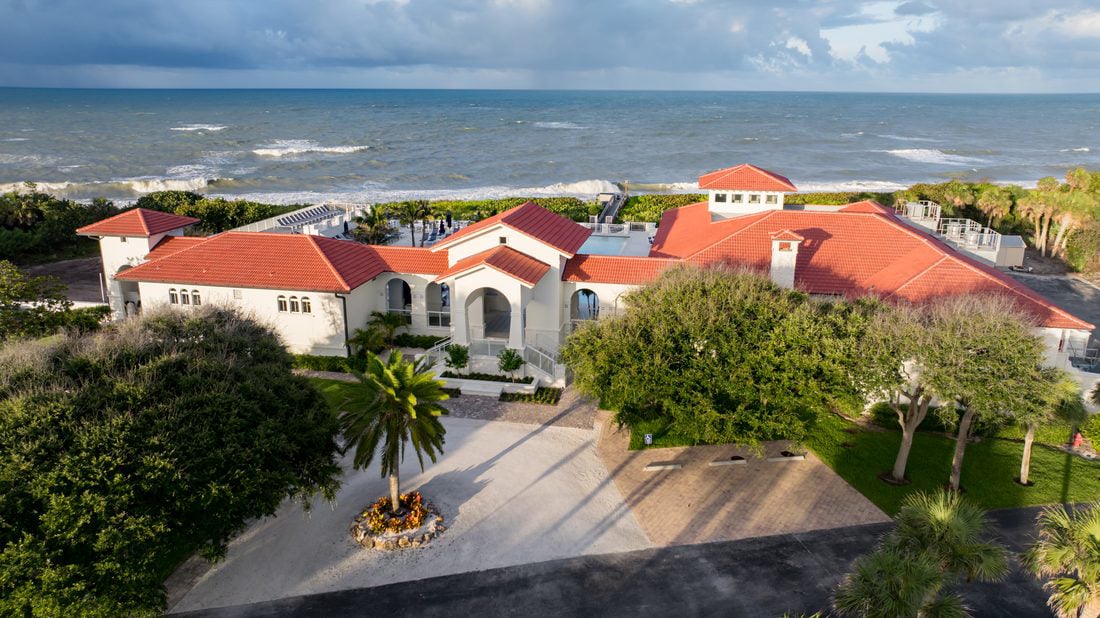
Winchester, Massachusetts to Vero Beach: What America's 31st Wealthiest Suburb Finds When the Lake Becomes an Ocean and the Tax Code Becomes Florida
Ben Bryk June 14, 2026
Ben Bryk June 14, 2026
The household that chose Winchester chose it for everything at once. The MBTA Lowell Line to North Station in fourteen minutes. The walkable downtown on Main Street, with its restaurants and independent shops and the particular civic energy of a community that has maintained its small-town character despite being ten minutes from one of the country's great cities. Winchester High School. Winchester Country Club. The Winchester Boat Club on the upper lake.
And the lakes themselves. Upper Mystic Lake and Lower Mystic Lake, glacial and clear, forming the southwestern edge of the town and the center of its outdoor life — the kayaks and the crew shells in spring, the swimming in summer, the long light over the water in the early evenings of September before the New England winter closes in for another four months and the waterway that defined the last six months becomes a memory until May.
The Winchester household that built its life around those lakes has already made the most important financial and lifestyle decision in this analysis: it chose water. The Indian River Lagoon is not an abstract concept to that household. It is an evolution — the same instinct, the same preference, the same daily orientation toward a body of water, applied at a latitude where it operates every month of the year rather than four of them.
The financial case for making that evolution the permanent address is as strong as it has ever been. Massachusetts taxes every dollar of income and capital gains above one million at nine percent. It taxes estates above two million. It bills $17,318 in annual property taxes on the typical Winchester home. Florida charges none of the above. And December 31, 2026 is the legislative deadline that converts a perpetual consideration into a defined decision.
Winchester is, by every objective measure, a complete suburb. It has everything that a Boston-area professional household in its prime earning years wants simultaneously: MBTA access at fourteen minutes to North Station, one of the genuinely vibrant downtowns of the Greater Boston orbit, a school system that consistently ranks among the top in Massachusetts, and Mystic Lakes — one of the most beautiful natural features of any suburb within thirty miles of the city.
The lakes are not incidental to Winchester's character. They are its character. Waterfront properties on Upper and Lower Mystic command a premium that reflects what the market already knows: that proximity to water is the single most durable value driver in the Winchester residential market. The Winchester Boat Club. The crew programs at Winchester High. The summer mornings on the water that residents describe when they explain what makes Winchester different from Lexington or Arlington or Medford, which are merely excellent suburbs without the lakes.
The Winchester household that chose a home near the upper lake, or drove the extra mile to find a street with a view of the water, made a considered decision about what kind of life it wanted. That decision is the most important data point in this analysis — because it reveals a buyer for whom the water is not a luxury amenity. It is a value. And values, unlike tax addresses, are portable.
Vero Beach's barrier island is the portable version of that value — in a climate where it operates twelve months a year, in a community organized around the Indian River Lagoon and the Atlantic in the same way Winchester is organized around Mystic Lakes, in a state where the income it took to pay for those lakefront years is not subject to a nine percent surtax.
Winchester's FY2026 residential property tax rate is $10.56 per $1,000 of assessed value. That is the official rate from the town's tax classification memo, as reported by the Winchester News in November 2025. Winchester voted at its November 2025 Town Meeting to maintain a single unified tax rate — no commercial/residential split — a decision that reflects the town's commitment to keeping the tax structure straightforward and the residential burden consistent.
On the typical Winchester home value of $1,639,942, the annual property tax bill is approximately $17,318. That bill has been arriving whether the household has children in Winchester schools, whether anyone has kayaked on Mystic Lake this summer, whether the MBTA schedule has been convenient this week. It arrives because the home is domiciled in Massachusetts, and Massachusetts has a property tax bill it needs to send.
Added to that bill, since January 2023: the Massachusetts Millionaires Tax. Nine percent on every dollar of income and capital gains above one million, permanent, applied to every tax return filed by a Winchester household above the threshold. Winchester's employment base is the Boston financial services, law, and technology corridor that operates daily from the Lowell Line. These are households whose base salaries are supplemented by annual bonuses, restricted stock unit vesting schedules, partnership distributions, and investment income that push total compensation above the one-million-dollar threshold in strong earning years — sometimes regularly, sometimes in the year of a liquidity event, sometimes in the year they sell the Winchester home itself.
The Massachusetts capital gains exposure on the Winchester home is real and specific. A household that purchased at $850,000 twelve years ago and is selling at $1.64 million today has a gain of approximately $790,000. After the $500,000 federal exclusion for a married couple, the remaining $290,000 is subject to Massachusetts capital gains tax. If investment gains, a bonus, or a business distribution push the combined amount above the one-million-dollar threshold in the year of sale, the nine percent surtax applies to the portion above that line. Florida's capital gains rate: zero.
And the Massachusetts estate tax triggers above two million dollars in total estate value — a threshold the Winchester homeowner with a $1.64 million home and a career's worth of investment assets crosses without difficulty. Florida has no state estate tax. The protection is permanent and generational.
In June 2026, the Florida legislature passed HJR 1-F, proposing a $250,000 increase to Florida's homestead exemption on top of the existing $50,000 benefit. The measure goes to Florida voters in November 2026.
The critical provision: buyers who establish Florida homestead by December 31, 2026 qualify immediately for the enhanced exemption — without the standard five-year waiting period. For a Winchester household currently paying approximately $17,318 per year in Massachusetts property taxes on the typical home, the first-year Florida property tax relief under the enhanced homestead exemption and Florida's 3% assessed-value cap is quantifiable before the first Florida tax bill arrives.
Consider the specific arithmetic for the Winchester household. The equity built in a $1.64 million Winchester home — purchased at $850,000 a decade ago and appreciated to its current value while the Mystic Lakes provided the outdoor backdrop — funds an entry point on the Vero Beach barrier island where the average sale is $1.99 million. The Mystic Lake equity funds the Atlantic Ocean home. The December 31 deadline determines whether the tax structure of that home is Florida's, which improves in real terms every year, or Massachusetts', which has been billing steadily since long before the legislature added a nine percent surtax on top of it.
December 31, 2026 is a legislative threshold. Not a sales deadline. The Winchester household that has been considering this move for years has a defined date on the calendar. That date is what the consideration has been waiting for.

The Winchester buyer does not need to be introduced to the concept of water-centered living. They have been practicing it for as long as they have lived in Winchester. What they need to understand is the scale and permanence of the upgrade.
Upper Mystic Lake is beautiful. It is spring-fed and glacially clear and the setting of some of the best mornings the Greater Boston suburb offers. It is also landlocked, freshwater, seasonal, and bounded by Middlesex County on all sides. The Winchester Boat Club operates a meaningful water program. The Mystic River Watershed is a genuine conservation asset. And every November, the water season ends.
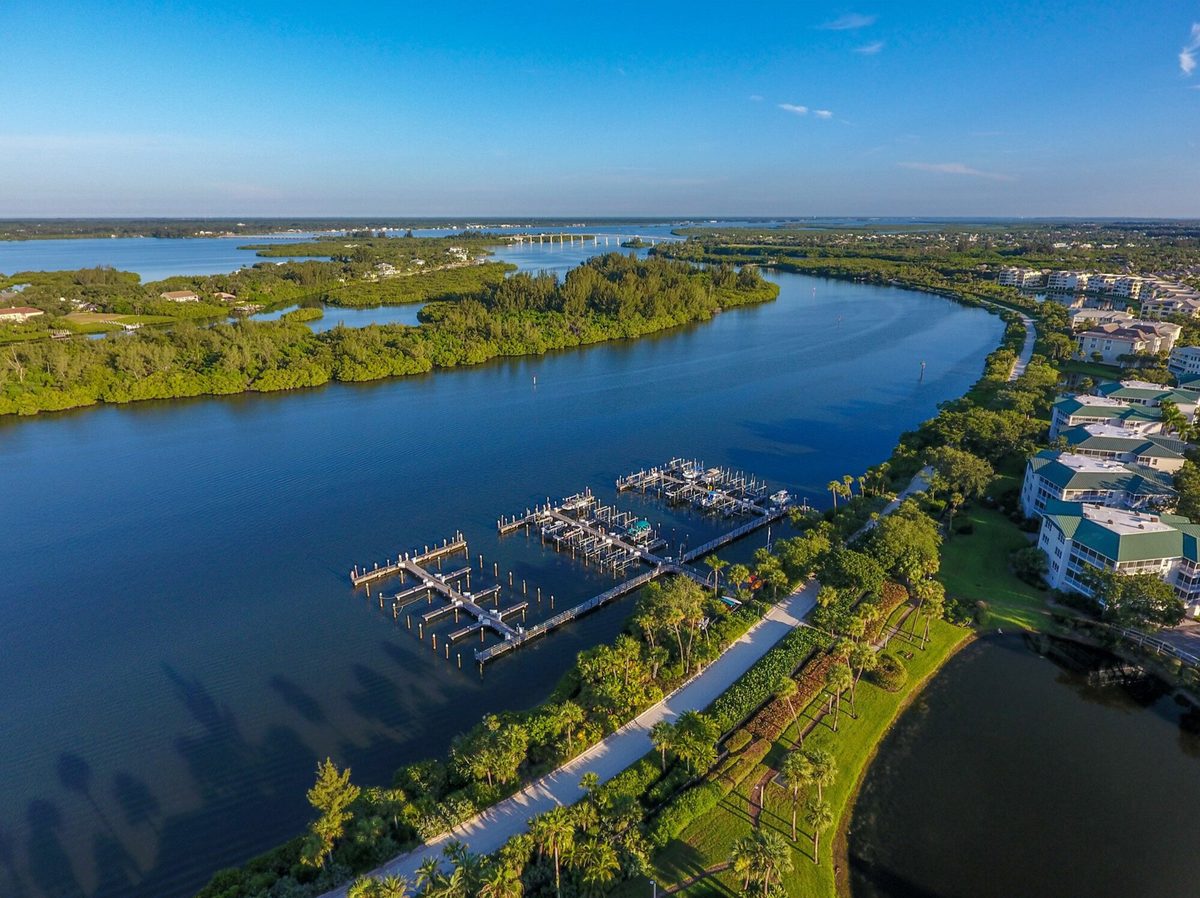
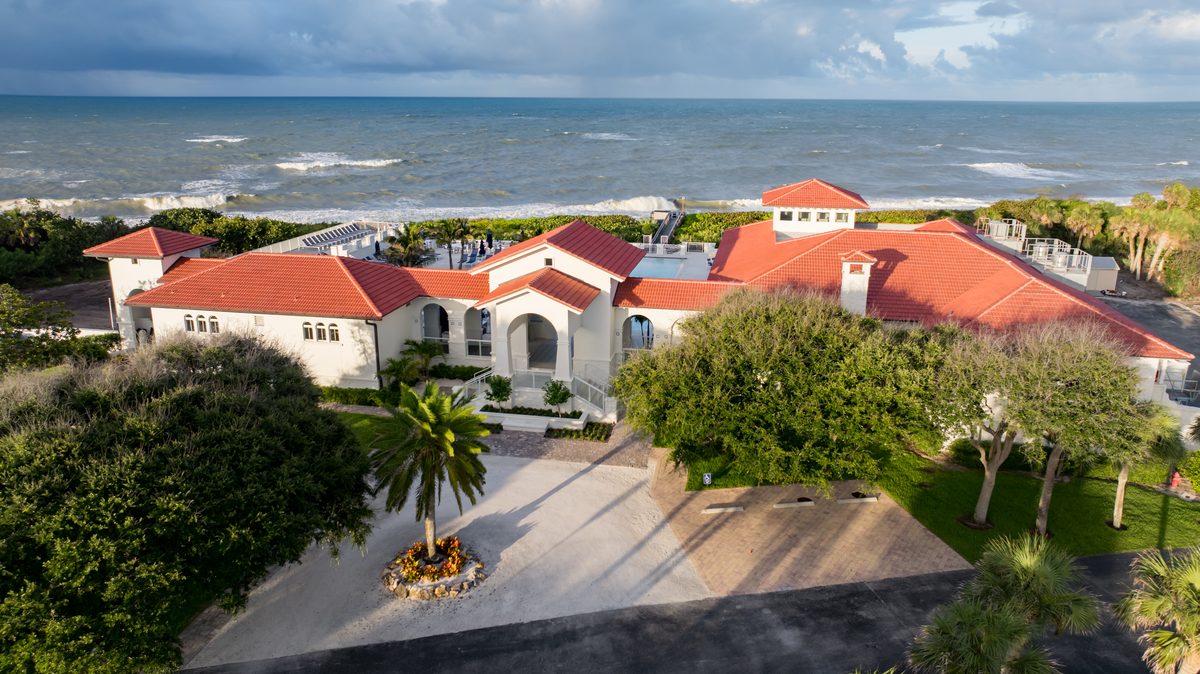
The Indian River Lagoon does not end. Sea Oaks' deep-water marina — from which the same kayaker who paddles the Mystic can navigate forty-three miles of Intracoastal Waterway, the Atlantic Ocean, Pelican Island National Wildlife Refuge, and the waterway system that defines the ecology of Florida's central east coast — operates on the same day in January that the Winchester boats are in dry storage. The Atlantic, a quarter mile from Sea Oaks' oceanfront club, is not a seasonal amenity. It is a permanent condition of daily life.
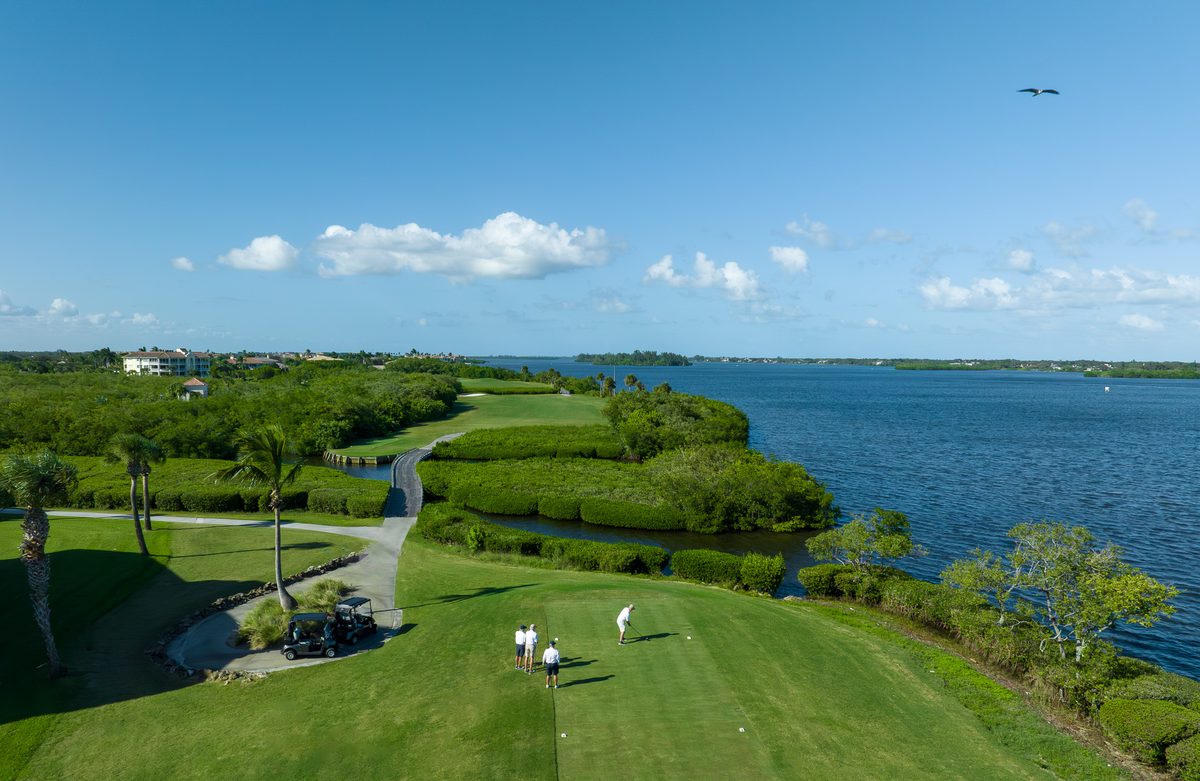
Grand Harbor's 750-plus acres on the Indian River Lagoon is the Winchester Country Club relocated to the waterway — not metaphorically but structurally: a private club on significant acreage, with golf and social infrastructure, organized around a body of water rather than adjacent to a city. The physical character of the two institutions is the same. The latitude, the tax code, and the calendar are different.
And the downtown parallel holds precisely. Winchester's Main Street and Waterfield Square — the walkable independent commercial core that gives Winchester its "small-town feel 10 minutes from Boston" character — finds its Florida equivalent in Ocean Drive. Not a resort commercial strip, not a tourist corridor, but a resident-first walkable village where the restaurants and galleries and shops exist because the people who live there support them. Vero Beach's Ocean Drive is what Winchester's Main Street is — the civic center of a community that chose its character deliberately and has maintained it.
Winchester has something no other town in the Massachusetts feeder series can claim: the best commuter rail position of the entire campaign. Fourteen minutes on the MBTA Lowell Line to North Station. The financial services professionals, attorneys, and executives who commute daily from Winchester to the Boston financial district are not making a sacrifice — they are making an optimization. And that optimization, when applied to a Florida domicile decision, creates a financial structure that is specific to Winchester and unavailable to the residents of Dover, Sherborn, or even Lexington.
Establishing Florida primary residence — spending more than 183 days per year at a Florida address — does not require severing Boston professional relationships. It requires structuring the calendar. The Winchester household that establishes Vero Beach as primary domicile and maintains Boston access through a smaller in-town apartment or a Lowell Line flexible schedule is executing a bicoastal financial optimization that eliminates Massachusetts income tax on all future earned income, capital gains, and investment distributions, while preserving the professional infrastructure that generated that income.
The tax savings that accrue from the first year of Florida domicile — on the income that the Winchester professional continues to earn in Boston — fund the cost differential between the Winchester home that is sold and the Vero Beach barrier island home that replaces it as primary residence. The MBTA is not an obstacle to the Florida move. In Winchester, it is the mechanism that makes the bicoastal model viable.
The Winchester household that has built equity in a $1.64 million home over the past decade — purchased at $850,000, appreciated to its current value while the Lowell Line delivered to North Station and the Mystic Lakes delivered in the evenings — arrives at the Vero Beach barrier island at a market where the average sale is $1.99 million. The step up from $1.64 million to $1.99 million is $350,000. The equity built in Winchester — $700,000 to $940,000 depending on the purchase year — funds that differential entirely and funds a cash purchase in full for homeowners who choose not to carry a mortgage in Florida.
The all-cash buyer rate on the Vero Beach barrier island is 62.7 percent — the highest of any luxury market in the United States. This is not a market of leveraged buyers speculating on appreciation. It is a market of equity-rich households repositioning capital that has already been built — the same profile as the Winchester buyer who has been quietly accumulating home equity and investment assets for fifteen years while commuting to Boston from a lakefront suburb.
Vero Beach trades at 66 percent below Naples for the same Atlantic barrier island geography, the same low density, the same finite seven-mile supply constraint with no high-rise development permitted. The entry point that exists on the barrier island in 2026 reflects a market that has not yet been fully priced by the national consensus. That consensus is forming. Palm Beach formed it over decades. The Winchester buyer who recognizes what pre-consensus pricing means — having watched Middlesex County home values compound for fifteen years in their own portfolio — understands what that window represents.
Vero Premier Properties operates as a Signature Division of Coldwell Banker Global Luxury — a network reaching more than 40 countries and 60 global markets through the International Luxury Alliance. In Massachusetts, our referral relationships extend to the leading Coldwell Banker offices and their top-producing agents in communities including Winchester, Lexington, Weston, Wellesley, Needham, and Arlington — and to the estate attorneys, CPAs, and wealth managers who serve the Boston professional corridor that populates all of them.
The move from Winchester to Vero Beach involves a specific coordination that our team manages across every component: the estate attorney who evaluates the Massachusetts domicile change and its impact on the Millionaires Tax, capital gains exposure, and estate tax; the CPA who models the bicoastal optimization and the first-year Florida tax savings; the Winchester listing agent who understands the market that produced 62.7 percent of buyers paying above list price; and the Vero Beach buyer's representative who knows which barrier island communities — Sea Oaks' marina, Grand Harbor's lagoon, the privacy of John's Island — align with the Winchester household's specific profile. We have been coordinating this sequence for decades.

The Winchester household that establishes Florida primary residence before December 31, 2026 does not make one financial decision. It makes three simultaneously — and the compound effect, applied at Winchester's specific income and property profile, produces a structural improvement that begins on day one and compounds for every year of Florida domicile that follows.
The first is the property tax. At $17,318 annually on the typical Winchester home, the immediate HJR 1-F homestead exemption and Florida's Save Our Homes 3% cap deliver first-year relief that is numerically concrete. The bill that has been arriving from Winchester town hall four times a year — regardless of lake access, regardless of school enrollment, regardless of the hockey season — is replaced by a structurally lower Florida obligation that improves in real terms every year thereafter.
The second is the elimination of state income tax. For the Winchester professional whose Boston financial services career, law partnership, or technology equity package regularly pushes total compensation above the one-million-dollar threshold, Florida's zero rate is not a marginal improvement. It is a recurring annual savings that compounds from the first year of domicile — applied to every dollar of future income, investment gain, and capital distribution above that threshold that Massachusetts was previously billing at nine percent on top of the standard rate.
The third is the estate tax elimination. Massachusetts triggers above two million in total estate value. The Winchester homeowner who holds $1.64 million in home equity, plus investment accounts, plus a career's worth of deferred compensation and retirement assets, is inside that threshold. Florida has no state estate tax. The protection is permanent and extends to the generation that inherits what the Winchester household built.

Ben Bryk and Vance Brinkerhoff offer confidential consultations for Winchester, Lexington, Weston, Wellesley, Needham, and Arlington households — and for the estate attorneys, CPAs, and wealth managers serving them — evaluating the Florida Financial Trifecta and the December 31, 2026 HJR 1-F homestead deadline. The conversation is calibrated to the Winchester household's Boston professional income profile, bicoastal optimization opportunity, capital gains position, and the specific barrier island communities that match a life already built around the water.
Ben Bryk · (772) 713-9455Vance Brinkerhoff · (772) 913-3426floridaeastcoastluxuryhomes.com

Lead Real Estate Agent
Buying a home is a very emotional experience, especially for those who have not done it very often. My experience in sales can help guide buyers with an analytical approach.
Find Your Dream Home
Get assistance in determining current property value, crafting a competitive offer, writing and negotiating a contract, and much more. Contact us today.