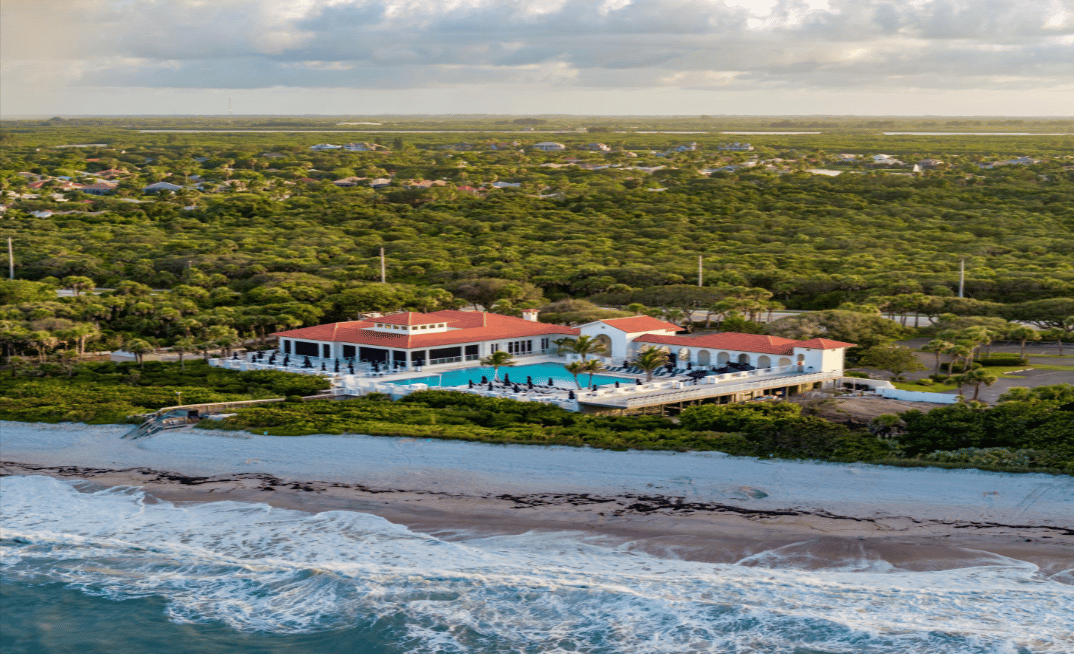
Will I Survive the Summer? An Honest Guide to Vero Beach’s Heat, Humidity, and What NJ Transplants Say After Their First Year.
Ben Bryk May 3, 2026
Ben Bryk May 3, 2026
|
8 Months of PrimeOutdoor Season |
4 Months ofHot Season |
35° Avg Sea BreezeTemp Drop |
72°F Average JanuaryHigh in Vero Beach |
It usually comes at the end of a first showing. The buyer has toured the oceanfront condo, stood on the lanai with the Atlantic breeze coming in, looked at the pool, and felt the February afternoon in a way that New Jersey will not allow until Memorial Day at the earliest. And then, almost on cue, they ask the question.
“But what about July?”
It is a fair question. And it deserves a straight answer, not a brochure. Yes — June through September in Vero Beach is hot. The average July high is 91°F with humidity that is real and present. Anyone who tells you Vero Beach summers are mild is selling you something. They are not mild. They are Florida.
But here is what that question misses: it frames the climate decision as four months of summer vs. four months of New Jersey winter — when the real comparison is four months of manageable heat traded for eight full months of outdoor living that New Jersey simply cannot offer at any price.
This blog gives you the honest, complete picture. Month by month. With what NJ transplants actually say after their first year. With the specific advantages that make Vero Beach’s summer more livable than inland Florida, the Gulf Coast, or most of the comparisons NJ buyers make when they are doing their research from a Morris County kitchen table in February.
|
“The first summer is harder than you expect. The second one, you start to understand it. |
|
By the third, you’ve stopped explaining to people back in Jersey why you don’t miss the fall.” |
|
— Vero Beach transplant from Short Hills, NJ. Arrived 2021. |
The single most useful framework for NJ buyers evaluating Vero Beach’s climate is the full twelve-month calendar — not cherry-picked winter photos and not worst-case August headlines. Here is what each month actually looks and feels like, with the lifestyle implications for someone who has relocated from the Northeast.
|
MONTH |
TEMP RANGE |
HUMIDITY |
STATUS |
WHAT LIFE LOOKS LIKE |
|
January |
66–75°F |
Low |
Peak Season |
Perfect golf, tennis, beach walks. The reason everyone came. |
|
February |
67–76°F |
Low |
Peak Season |
Best month of the year. Everything blooms. |
|
March |
70–80°F |
Low |
Peak Season |
Spring training energy. Last cool evenings before warmth builds. |
|
April |
74–84°F |
Low–Moderate |
Shoulder |
Still gorgeous. Crowds thin as snowbirds head north. |
|
May |
78–88°F |
Moderate |
Shoulder |
Warm afternoons. Evenings still comfortable on the lanai. |
|
June |
81–91°F |
High |
Hot Season |
Heat builds. Sea breeze saves the morning and evening. |
|
July |
82–92°F |
High |
Hot Season |
Hottest month. Pool culture peaks. Indoor midday. |
|
August |
82–91°F |
High |
Hot Season |
Still hot. Afternoon thunderstorms cool evenings quickly. |
|
September |
81–90°F |
High |
Hot Season |
Starts to ease late month. Locals’ favorite time to enjoy the coast without crowds. |
|
October |
77–86°F |
Moderate |
Best Kept Secret |
Warm water, fewer people, evenings perfect. Underrated. |
|
November |
71–79°F |
Low |
Secret Season Opens |
NJ transplants exhale. First nights under a light jacket. |
|
December |
67–75°F |
Low |
Peak Season |
Luxury market surges. Outdoor dining returns. The life begins again. |
Temperature averages based on National Weather Service data for Vero Beach / Indian River County. “Hot Season” = June–September. “Secret Season” = October–November. “Peak Season” = December–May.
This is the comparison NJ buyers rarely see laid out plainly. The argument is not that Vero Beach has no summer. It is that New Jersey has no January — and that trade is not close.
|
MONTH |
NEW JERSEY |
VERO BEACH |
|
January |
32°F avg high. Snow likely. Indoor only. |
72°F avg high. Beach walks. Golf. Outdoor dining. |
|
February |
35°F avg high. Coldest month. |
74°F avg high. Best month of the year in Vero. |
|
March |
45°F avg high. Still cold. |
78°F avg high. Tennis season opens. Spring in full bloom. |
|
July |
87°F avg high. Humid. Manageable. |
91°F avg high. Hot. Sea breeze helps mornings and evenings. |
|
August |
84°F avg high. Late summer. |
91°F avg high. Pool season peak. Afternoon storms cool evenings. |
|
October |
62°F avg high. Jacket weather. Outdoor season over. |
84°F avg high. Warm ocean, empty beaches. Locals’ secret month. |
|
November |
52°F avg high. Heating season begins. |
77°F avg high. Perfect. The payoff begins. |
|
December |
42°F avg high. Cold. Holiday season indoors. |
73°F avg high. Peak luxury season. Outdoor life in full swing. |
|
“NJ buyers worry about July. They forget about January, February, and March. |
|
In Vero Beach, those months are the entire point. |
|
The summer is the price of admission for eight months of outdoor life that New Jersey cannot offer at any income level.” |
Not all Florida summers are the same. This is one of the most important distinctions NJ buyers miss when they read generic “Florida summer” content. Vero Beach’s barrier island position on the Atlantic coast produces a summer microclimate that is measurably different from the Gulf Coast, inland Florida, and South Florida’s dense urban heat corridors.
Vero Beach’s barrier island position on the Atlantic coast produces a consistent easterly sea breeze that typically develops by 10–11 AM and persists through late afternoon. This breeze — driven by the temperature differential between the ocean and the land — can lower the perceived temperature by 8–12°F on the barrier island compared to inland areas just a few miles west.
For a buyer comparing Vero Beach summer to Naples or Sarasota on the Gulf side, this is not an incidental difference. The Gulf Coast’s summer sea breeze is less consistent, arrives later, and dissipates faster because of the Gulf’s relatively warmer water temperature. Vero Beach buyers on the barrier island — in communities like Sea Oaks, Orchid Island, Castaway Cove, or along Ocean Drive — experience materially different summer conditions than the same person would in an inland Florida community at the same latitude.
Experienced Vero Beach residents structure summer around the morning window. Between 6 and 10 AM, conditions on the barrier island and Intracoastal are genuinely pleasant — temperatures in the low-to-mid 80s, low humidity compared to peak-of-day, and the Atlantic breeze already building. This is when golf happens. When beach walks happen. When boat launches happen. When tennis is played.
The luxury communities of Vero Beach are built around this rhythm. Grand Harbor’s 5:30 AM tee times fill in July. The Sea Oaks beach path is active at 7 AM on the hottest summer days. Residents who understand the morning window report that summer is not the outdoor-activity desert NJ buyers fear — it is simply a season with different hours.
Vero Beach’s summer afternoons follow a predictable pattern that NJ buyers from the Shore region will recognize: daytime heating builds cumulus clouds through the late morning, afternoon convective thunderstorms develop (typically between 2 and 5 PM), deliver 20–40 minutes of intense rain that drops temperatures 8–12°F, and then clear completely. The evenings that follow are often genuinely pleasant — air-washed, cooler, and comfortable on an outdoor lanai.
This afternoon thunderstorm cycle is not a nuisance for most Vero Beach luxury residents who have structured their day around the morning window. It is a reliable clock that resets the outdoor environment every afternoon and makes the evening hours genuinely livable.
For NJ buyers accustomed to pools as seasonal amenities — open Memorial Day, closed Labor Day, used perhaps 80 days per year — the role of pool culture in Vero Beach’s luxury communities requires a conceptual reset. In Vero Beach, the pool is not seasonal infrastructure. It is the primary outdoor living environment for four months of the year — and a significant amenity for eight.
In April 2026’s Sea Oaks and Grand Harbor MLS data, 100% and 83% of closed properties respectively featured pool access. This is not coincidental — it reflects the market’s clear signal that pool access is a non-negotiable for Vero Beach luxury buyers. The question is whether a private pool or community pool better serves your lifestyle, and that depends on how you use summer.
Private pools on detached single-family properties — Grand Harbor’s Paseo Del Lago, barrier island homes on Orchid Island, Ocean Drive estates — offer the luxury of complete privacy, custom water features, and year-round heating capability that allows swimming from January through December.
Community pools in HOA-governed communities (Sea Oaks, Harbor Village Drive, The Moorings) offer resort-level maintenance, social interaction, and the economic advantage of not bearing pool maintenance costs individually — often a significant consideration when comparing the all-in cost of condo versus SF ownership.
The luxury communities of John’s Island, Grand Harbor, and Sea Oaks additionally offer Olympic-length lap pools, adult-only pools, and full pool deck facilities that NJ buyers from country club communities will find immediately familiar.
Sophisticated NJ buyers ask about air conditioning infrastructure before they buy — and this is exactly the right question. In Vero Beach’s luxury market, AC is not a feature. It is the core mechanical system of every home, sized for year-round heavy use, and expected to maintain 74–76°F interior temperatures even during July’s peak heat.
Budget $250–$500 per month in electricity costs during June–September for a 2,000–3,500 sq ft luxury home with consistent AC use. This is real operating cost that should be part of any honest financial planning for a Vero Beach purchase. Post-2018 construction with impact glass and proper insulation consistently runs at the lower end of this range; pre-2000 construction at the higher end. At Vero Premier Properties, we share utility history on every listing we represent so buyers can plan accurately rather than guessing.
The most honest data on the Vero Beach summer question does not come from climate charts — it comes from NJ buyers who have actually lived through it. Here is what the Vero Premier Properties client community consistently reports after their first summer in residence.
|
WHAT THEY EXPECTED |
WHAT THEY FOUND |
|
Unbearable heat that makes outdoor activity impossible for months |
Uncomfortable midday heat but very workable mornings, evenings, and pool time. Most adapted faster than expected. |
|
No meaningful difference from other Florida cities |
The Atlantic sea breeze on the barrier island is real. Multiple NJ transplants who also visited Naples said Vero Beach's summer mornings felt noticeably different. |
|
Social isolation during the summer months |
The year-round resident community is strong in Vero Beach. Grand Harbor, Sea Oaks, and John's Island maintain active social programs through the summer. It is quieter — but not empty. |
|
Missing NJ's autumn and seasonal change |
Year one is an adjustment. By year two, most report that October in Vero Beach — warm ocean, emptied beaches, falling prices at restaurants — became their new favorite season. |
|
Regret about the decision |
Nearly every NJ transplant client we've worked with in 35 years has said the same thing: they wish they'd done it sooner. |
The summer question is important. But the more relevant question for most NJ buyers is what the other eight months of the year deliver — because that is what they are actually buying.
October through May in Vero Beach is, for most NJ transplants, the complete realization of everything they imagined Florida could be. The weather is objectively perfect by any standard. Temperatures range from 66°F to 84°F. Humidity is low. The Atlantic is warm. The calendar is full.
Golf at Grand Harbor, John’s Island, Orchid Island, or Windsor before 9 AM with temperatures in the mid-60s and the sun just coming up over the Atlantic.
Beach walks on Vero’s uncrowded barrier island at 7 AM with a coffee from the Ocean Drive cafe district — the kind of morning that New Jersey offers perhaps 20 days per year, if the calendar cooperates.
Tennis on Har-Tru courts at Grand Harbor’s 12-court facility in 72°F conditions in February, while NJ country clubs are still under snow covers.
Pickleball — the fastest-growing sport in America and a daily reality at Grand Harbor, Sea Oaks, and across Vero Beach’s luxury communities — played outdoors in January because this is Florida.
Boat launches from Sea Oaks’ private ramp or Grand Harbor’s 161-slip marina into the Indian River Lagoon in March when water temperatures are already in the mid-70s.
Outdoor dining on Ocean Drive, Osceola Bistro, and the Vero Beach wine district in shirt sleeves in December while the conversation back in NJ is about whether the furnace is working.
The Riverside Theatre’s season runs October through May. The Museum of Art’s major exhibitions are anchored to the October–April period. The McKee Botanical Garden is at its most spectacular from November through March.
If summer comfort is a priority in your Vero Beach luxury purchase — and for most NJ buyers it should be a consideration — here is the property feature checklist that experienced Vero Beach agents (and experienced Vero Beach residents) prioritize.
East and northeast exposures capture the Atlantic sea breeze from its strongest angle. On the barrier island, this means morning light, afternoon shade, and consistent breeze across the lanai. West-facing exposures on the Intracoastal can trap afternoon heat without ocean breeze benefit.
A screened enclosure eliminates Florida’s afternoon insect activity (no-see-ums and mosquitoes peak July–September) while preserving full ventilation and outdoor access. Many Vero Beach luxury buyers from NJ find that the screened lanai becomes their primary living space from October through May.
Beyond insurance advantages, impact glass provides significant thermal insulation that reduces summer cooling loads and AC costs. A well-insulated impact glass home can save $100–$200/month in July–September electricity vs. a pre-2000 single-pane structure.
Pools on properties with mature tropical landscaping to the west provide afternoon shade that significantly extends comfortable pool use into the hottest hours. A southwest-shaded pool is usable from 9 AM through 7 PM even in July. An unshaded western exposure becomes uncomfortable by noon.
Barrier island proximity is the single greatest summer livability multiplier in Vero Beach. The Atlantic breeze is most consistent and most pronounced within a half-mile of the ocean. Grand Harbor’s Intracoastal proximity provides secondary breeze benefit that purely inland communities lack.
Vero Beach averages high temperatures of 90–92°F in July and August, with heat indices occasionally reaching 100–105°F during peak afternoon hours on still days. Morning temperatures (6–10 AM) are typically 78–82°F with moderate humidity. The Atlantic sea breeze on the barrier island typically reduces perceived temperature by 8–12°F compared to inland areas. Evenings cool to 75–78°F after afternoon thunderstorms.
Yes. June through September humidity is real and significant, with relative humidity regularly reaching 75–85% during afternoon peak hours. The combination of heat and humidity is the primary adjustment for NJ buyers. Most NJ transplants report that the Atlantic sea breeze on Vero’s barrier island makes the heat feel more manageable than inland Florida cities at similar temperatures. The adjustment period is typically one to two years before the pattern feels normal.
Both cities experience similar summer temperature ranges (90–92°F average July high). The primary difference is in the consistency of sea breeze: Vero Beach’s Atlantic-facing position delivers an earlier, stronger, and more consistent easterly sea breeze than Naples’ Gulf Coast position. Afternoon thunderstorms are similarly frequent in both markets. NJ buyers who have visited both consistently report that Vero Beach’s barrier island feels meaningfully cooler in the mornings due to Atlantic breeze consistency.
The consistent theme across 35 years of NJ transplants is that the first summer is an adjustment, the second is manageable, and by the third it feels normal. The most common observation is that the morning window — 6 to 10 AM on the barrier island — is genuinely pleasant even in July, and that the trade of four months of manageable summer for eight months of Florida's best weather is one they would make again without hesitation.
January or February for the pure experience of Vero Beach at its best, or October for a deliberately honest assessment. October shows you the ‘secret season’ transition — still warm enough for the beach, empty enough to experience the community at its most authentic, and representative of the nine-month stretch from October through June that makes the summer trade-off worthwhile. If you visit in February and fall in love, visit again in August before you decide — that’s the honest approach.
Yes, with proper timing. Summer outdoor activity in Vero Beach is structured around the morning window (6–10 AM) and the evening window (after 6 PM). Golf, tennis, pickleball, beach walks, kayaking, and fishing all happen year-round in Vero Beach—just earlier in the day during summer months. Grand Harbor’s 5:30 AM tee times fill in July. Sea Oaks’ beach path is active before 8 AM on the hottest days. The summer is not an outdoor activity desert—it is a season with different hours.
FOUR MONTHS OF SUMMER.
EIGHT MONTHS OF THIS.
Come and see what October through May looks like from a Vero Beach barrier island lanai.
At Vero Premier Properties, we have guided more NJ and Northeast buyers through the Vero Beach climate question than any other team on Florida’s East Coast — because we’ve been here for 35 years, we live here year-round, and we give you the honest picture, not the brochure. We know which communities have the best sea breeze exposure. We know which properties have the screened lanais, the east-facing pools, and the impact glass that make summer genuinely livable. And we know which buyers regret not coming sooner.
We are verified among the top 1.5% of realtors nationally by Real Trends, rated among the Top 10 Most Trusted Realtors in Florida by Apple News, and the only realtors on Florida’s East Coast with an exclusive mobile real estate app on the Apple Store—an app that drives 40% of our listing sales directly. Over 2,000 transactions. More than $1 billion in total sales volume. No fax machines. No outdated playbooks.
Call or text us today. We’ll tell you everything you need to know about summer — and show you everything October through May has waiting for you.

Lead Real Estate Agent
Buying a home is a very emotional experience, especially for those who have not done it very often. My experience in sales can help guide buyers with an analytical approach.
Find Your Dream Home
Get assistance in determining current property value, crafting a competitive offer, writing and negotiating a contract, and much more. Contact us today.