Wellesley, Massachusetts to Vero Beach: What New England's #1 Wealthiest Suburb Gets for Its Equity — and Its Tax Bill — in Florida's Most Undervalued Luxury Market
Ben Bryk June 15, 2026
Ben Bryk June 15, 2026
The household that built something real in Wellesley — that earned the dual incomes in finance and medicine, or in private equity and law, that made the $2.1 million home on a quiet street off Washington Street or Cliff Road feel like an investment rather than an expense — did not arrive there by ignoring the math. They got there by running it, carefully, over decades.
The math on Massachusetts is now running against them.
Not as a threat. Not as a projection. As a documented, annual, compounding cost that is already built into every tax return filed since January 2023, every paycheck processed above the one-million-dollar threshold, every capital gain realized on assets that Wellesley households have been accumulating for twenty-five years of the most extraordinary suburban home appreciation in New England's modern history.
Wellesley home values have increased 197 percent since the first quarter of 2000. A household that purchased at $900,000 in 2001 is sitting on a home worth $2.7 million today. The Massachusetts capital gains surtax is already waiting for the proceeds of that sale. The Massachusetts Millionaires Tax is already billing the household that earns above $1 million annually — which, in Wellesley, describes a substantial and growing share of the tax base. And the Massachusetts estate tax, which triggers above $2 million in estate value, is already relevant for the Wellesley homeowner who holds significant home equity plus an investment portfolio accumulated across a thirty-year career in Boston's financial and professional services economy.
Florida's answer to each of those three exposures is the same: zero.
The Wellesley buyer profile is not the same as Weston's. Where Weston is estate living — older wealth, longer tenure, primary income from investment rather than employment — Wellesley is dual-income, achievement-oriented, and actively earning at the top of its professional range. The top employment sectors for Wellesley residents are Finance and Insurance, Professional and Scientific Services, and Education. Median age: 37.1 years. That is a household with fifteen to twenty more years of peak earning ahead of it.
Which means the Massachusetts Millionaires Tax is not a one-time event. It is a recurring annual billing — and the argument for addressing it is not about protecting what has already been made. It is about preserving what is still being made, compounded over the runway that remains.
A Wellesley dual-income household — a vice president in private equity and a physician at a Boston hospital, earning a combined $1.4 million — pays nine percent on the $400,000 above the threshold. That is $36,000 per year in state tax that a Florida-domiciled household earning exactly the same income does not pay. Not this year. Not next year. Not in any year. Florida's zero income tax rate is constitutionally protected, not subject to the kind of legislative revision that has steadily elevated Massachusetts' effective burden on high earners.
Over twenty years, at current earnings and without accounting for income growth, that differential compounds to more than $720,000 in cumulative excess state tax. When reinvested at a conservative rate, the capital preserved by Florida domicile — rather than paid to the Commonwealth — represents a wealth accumulation difference that dwarfs most other financial planning decisions the Wellesley household will face in the same period.
Wellesley's residential real estate has been one of the most durable wealth-creation assets in the New England market. From the first quarter of 2000 through the third quarter of 2025, home values increased 197 percent — more than double the Consumer Price Index over the same period. A household that purchased at $900,000 in 2001 now owns a home worth approximately $2.7 million. The gain is $1.8 million.
The federal exclusion for a married couple filing jointly covers $500,000 of that gain. The remaining $1.3 million is subject to Massachusetts capital gains tax. The Massachusetts capital gains surtax — nine percent — applies to the $300,000 above the one-million-dollar threshold. That is $27,000 in state tax on the sale proceeds, above and beyond the standard Massachusetts capital gains rate applied to the full taxable gain.
A Florida-domiciled homeowner at the time of sale pays zero state capital gains tax on those proceeds. The $27,000 is not reduced. It is eliminated. And for the Wellesley household with a substantial investment portfolio — retirement accounts, taxable brokerage assets, business equity — the same surtax logic applies to every realized gain above the threshold in the year of sale. The household that coordinates the timing of a home sale with a business liquidity event or large portfolio rebalancing is executing a tax strategy that Massachusetts has specifically made more expensive. Florida has specifically made it irrelevant.
In June 2026, the Florida legislature passed HJR 1-F, proposing a $250,000 increase to Florida's homestead exemption on top of the existing $50,000 benefit. The measure goes to Florida voters in November 2026.
The provision that changes the calculus for 2026: buyers who establish Florida homestead by December 31, 2026 qualify immediately for the enhanced exemption — without the standard five-year waiting period. For the Wellesley household paying $16,983 annually in Massachusetts property taxes, the immediate homestead exemption represents meaningful first-year property tax relief in Florida, with a compounding advantage built into every subsequent year.
Florida's Save Our Homes cap limits annual assessed value increases to 3% regardless of market performance. For a Wellesley buyer entering the Vero Beach barrier island market at $1.99 million in a cycle where the island has been appreciating materially above that ceiling, the tax position improves in real terms every year from day one of homestead — delivering the kind of compounding structural advantage that the Wellesley household, which has spent twenty-five years watching home equity compound in a constrained-supply market, understands intuitively.
December 31, 2026 is not a sales deadline. It is a legislative threshold. The distinction is the point.
The distinction between Wellesley and Weston is not only financial. It is cultural. Wellesley is a college town in the truest sense — a community organized around institutions, civic investment, and the kind of walkable, intellectually engaged daily life that Wellesley College, Babson College, and thirty thousand educated, community-oriented residents have shaped over more than a century.
The Wellesley household that has spent twenty years serving on school committees, supporting the Wellesley Symphony, attending Sunday farmers markets, and building a life around what a walkable, culturally intact suburb can offer is not looking to trade that identity for a gated enclave on a golf course. That household is looking for a place where the civic culture is already present — where the Riverside Theatre and the Vero Beach Museum of Art function the way Wellesley's institutions do, as anchors of community life rather than seasonal attractions.
Ocean Drive's walkable village — with its restaurants, galleries, and independent shops — functions the way Wellesley's Linden Street or Central Street do: as a neighborhood for the people who actually live there. The Vero Beach Museum of Art, with its nationally recognized permanent collection and education programs, reflects the same commitment to the arts that Wellesley's residents have always valued. The Riverside Theatre's professional productions draw from the same audience that has supported the arts in suburban Boston for decades.
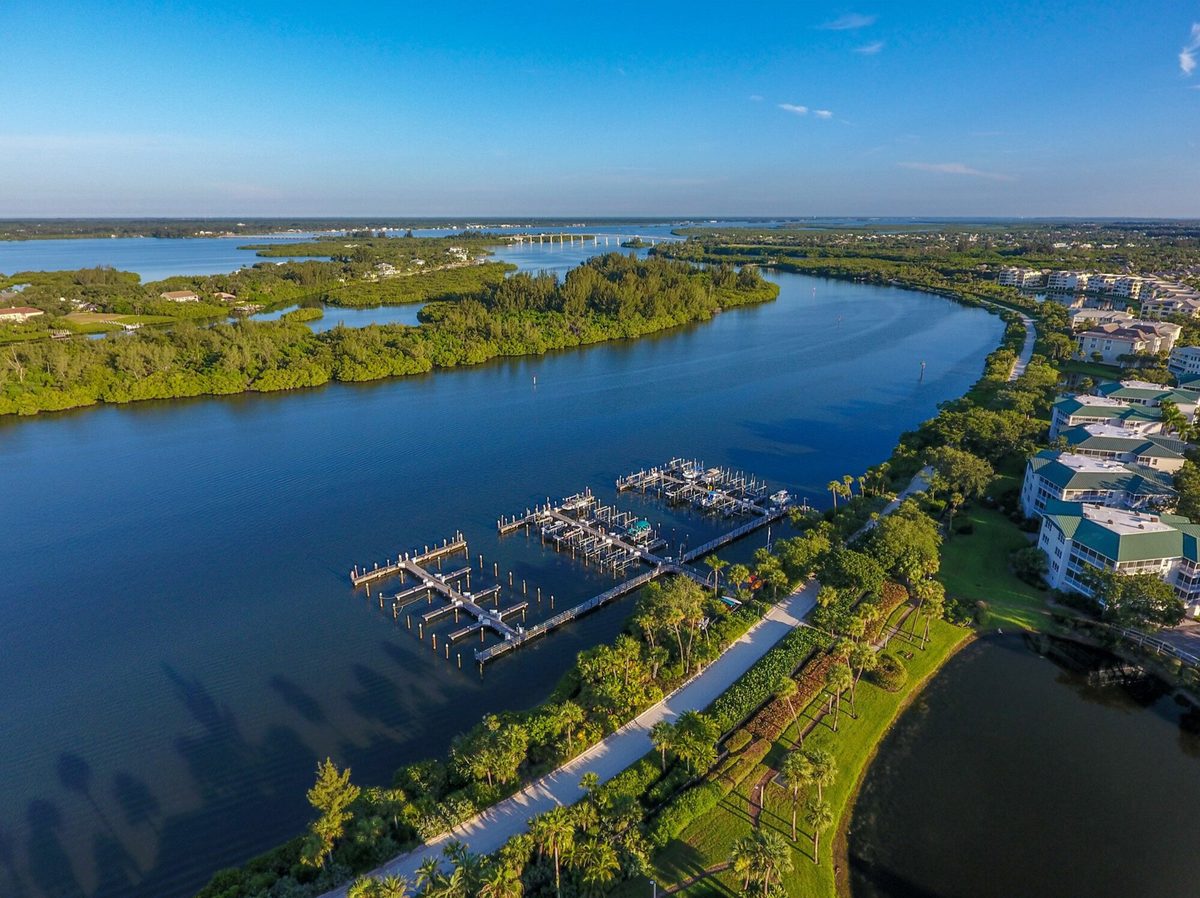
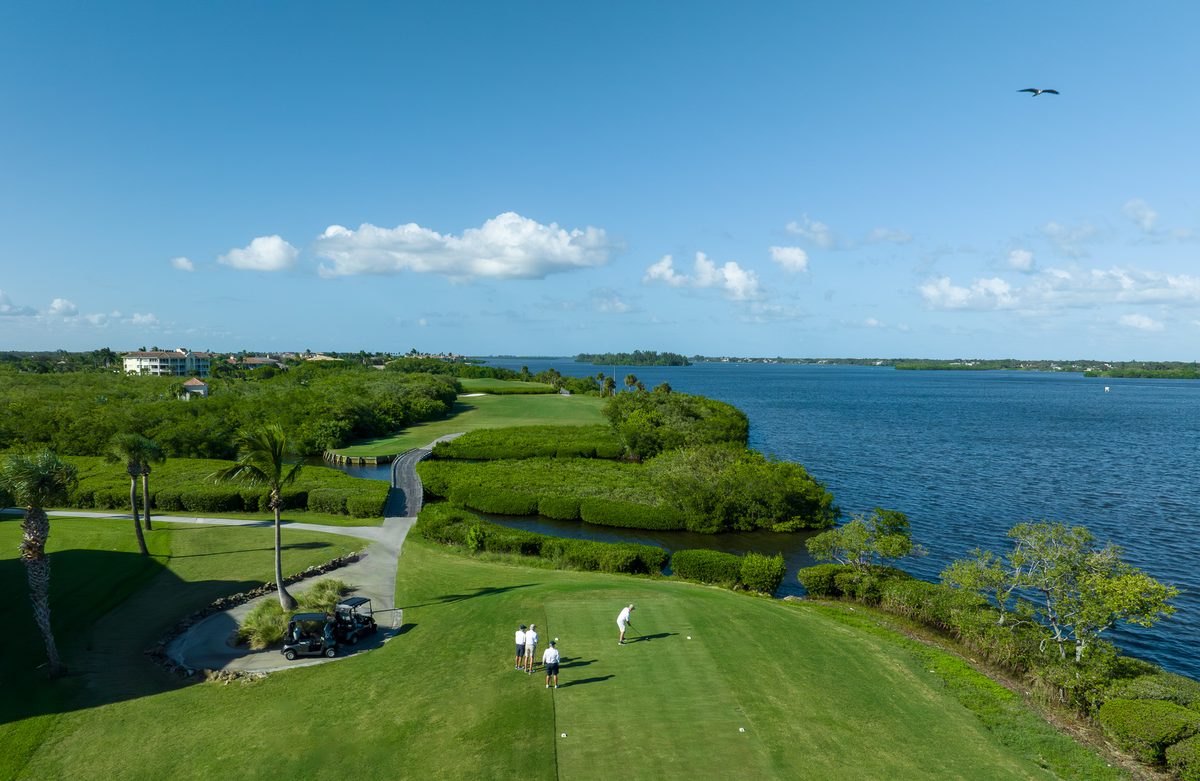
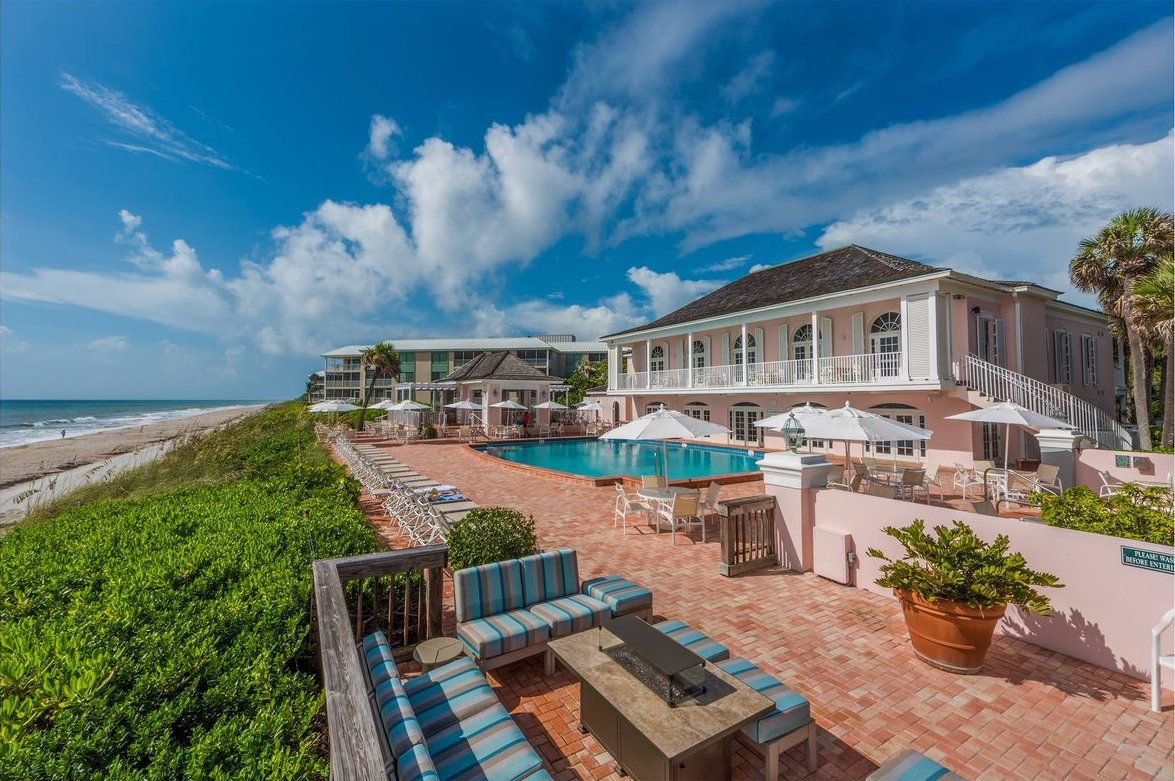
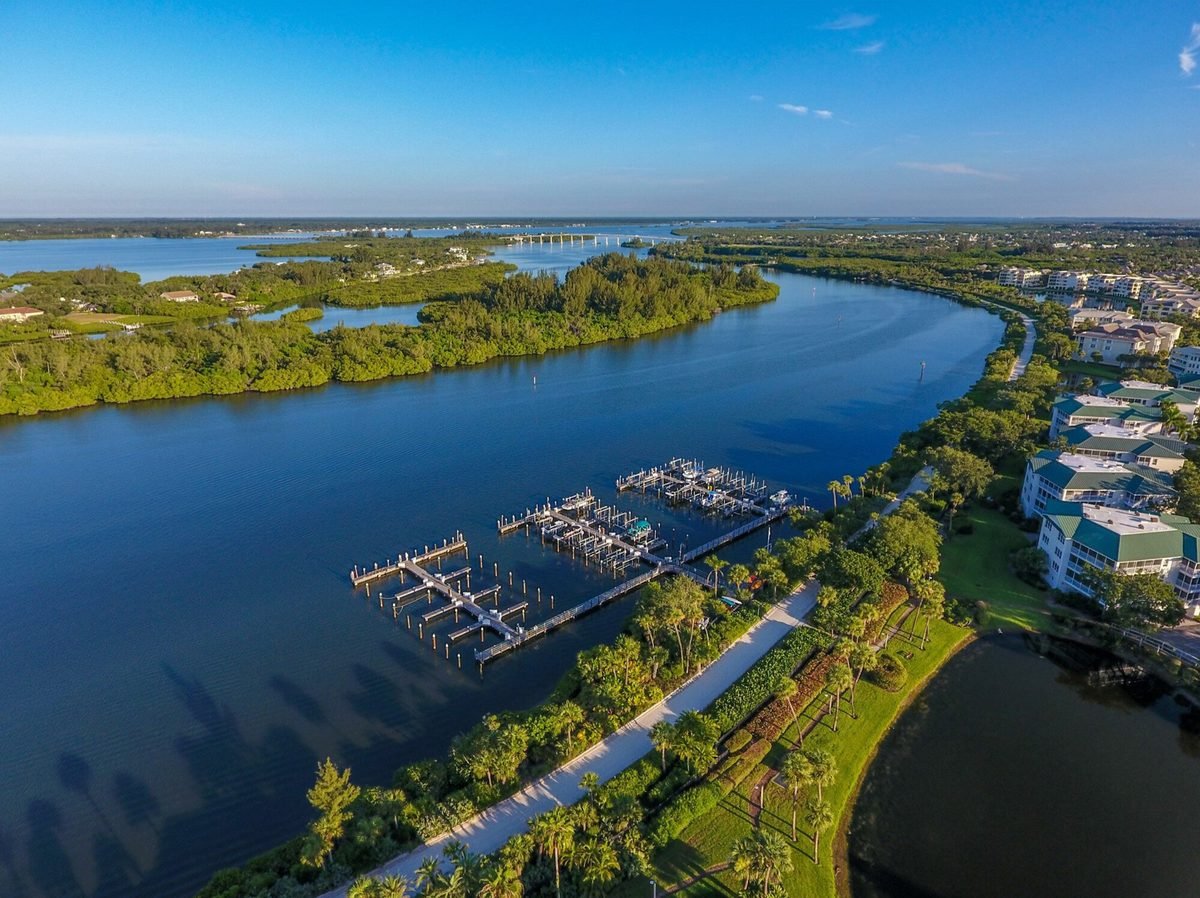
Grand Harbor's 36-hole championship layout on the Indian River Lagoon. Sea Oaks' deep-water marina and direct Atlantic beach access. Cleveland Clinic's world-class medical center on the Treasure Coast — a differentiator that resonates specifically with the Wellesley household in its forties and fifties that has spent decades benefiting from Boston's medical infrastructure and has no intention of compromising that standard. The barrier island delivers all of it, at a price point that is comparable to Wellesley's median, in a tax environment that is structurally the inverse of Massachusetts.
The Vero Beach barrier island market confirms the thesis that the Wellesley buyer's financial profile — liquid, equity-rich, analytically rigorous — has been preparing them to enter: a market with exceptional underlying fundamentals, a buyer base that does not require financing, and a price point that remains materially below comparable oceanfront geography elsewhere on Florida's east coast.
The all-cash buyer rate of 62.7 percent is the highest of any luxury market in the United States. This is not a curiosity. It is a signal about the nature of the buyer pool — and about the stability of pricing in a market where transactions are not contingent on rate environments, lending conditions, or appraisal gaps. The Wellesley buyer, who has watched Wellesley's own market operate on the same principle of underlying demand exceeding constrained supply, reads this data the way they read any balance sheet: as confirmation that the fundamentals are intact.
The average barrier island sale price of $1.99 million as of January through May 2026 sits at 66 percent below Naples' equivalent oceanfront pricing — for the same Atlantic geography, the same low density, the same barrier island character. Palm Beach Island commands a premium built on decades of social capital and national press coverage. Vero Beach commands a discount built on the same thing: it has not yet been fully priced by the consensus. When that consensus forms — when the arbitrage between Vero Beach and Naples closes the way comparable arbitrages have always closed in Florida's luxury coastal markets — the entry point that exists in 2026 will no longer exist.
The barrier island is seven miles of finite supply. No high-rise development permitted. No replication of the oceanfront addresses in Grand Harbor, Sea Oaks, The Moorings, and the estate corridor of South Ocean Drive. The Wellesley buyer who has spent twenty-five years in a market defined by constrained supply understands, without a presentation, what finite supply does to long-term value.
Vero Premier Properties operates as a Signature Division of Coldwell Banker Global Luxury — a network that reaches more than 40 countries and 60 global markets through the International Luxury Alliance. In Massachusetts, our referral relationships extend across the state's most significant Coldwell Banker offices and their senior producers in communities including Wellesley, Weston, Dover, Needham, Winchester, Lexington, and Newton.
The move from Wellesley to Vero Beach is not a single transaction. It is a coordinated sequence: the estate attorney who evaluates the domicile change, the CPA who models the tax differential, the Wellesley listing agent who prepares the sale, and the Vero Beach buyer's representative who knows exactly which barrier island communities align with the Wellesley buyer's specific profile — walkable, culturally active, marina or golf, oceanfront or lagoon. We operate across every part of that sequence, and we have been doing so for households from Wellesley and the surrounding communities for decades.
The consultation is confidential. The analysis is specific to the household's financial profile, timeline, and lifestyle priorities. And the December 31, 2026 deadline means the conversation that begins today has a defined planning horizon — not a theoretical future consideration, but a legislative window with a closing date that is already on the calendar.
The decision to establish Florida primary residence is not a single financial event for the Wellesley household. It is the entry point into three simultaneous, permanent structural advantages that operate in parallel — and that compound in the household's favor from the first year of Florida domicile.
The first is the elimination of state income tax. For a Wellesley dual-income household earning above $1 million, this is a recurring, compounding reduction in effective tax rate applied to every dollar of earned income — at nine percent on the portion above the threshold — for as long as Massachusetts domicile continues. Florida's zero rate is constitutionally protected, not subject to the legislative revision that Massachusetts voters approved in 2022 and that the state has expanded incrementally since.
The second is the HJR 1-F homestead exemption, which delivers an immediate enhanced property tax exemption for buyers who establish Florida homestead by December 31, 2026 — without the standard five-year waiting period. Combined with Florida's Save Our Homes cap, which limits assessed value increases to three percent annually, the Wellesley household entering the Vero Beach market today locks in a tax position that improves in real terms every year from day one. Against a Wellesley baseline of $16,983 annually — a number that has risen steadily for three decades — the Florida alternative is structurally more favorable from the first tax assessment.
The third is Florida's absence of a state estate tax. Massachusetts triggers its estate tax above $2 million in estate value — a threshold that the Wellesley homeowner, sitting on $2 million or more in home equity plus a career's worth of investment assets, crosses with regularity. Florida has no state estate tax. The Wellesley household that relocates primary domicile to Florida removes that exposure entirely — for their estate and for the generation that inherits it.
Ben Bryk and Vance Brinkerhoff offer confidential consultations for Wellesley, Weston, Dover, Needham, Winchester, and Lexington households — and for the estate attorneys, CPAs, and wealth managers serving them — evaluating the Florida Financial Trifecta and the December 31, 2026 HJR 1-F homestead deadline. The conversation is calibrated to the complexity of the dual-income household's financial profile and the specificity of the legislative window.
Ben Bryk · (772) 713-9455Vance Brinkerhoff · (772) 913-3426floridaeastcoastluxuryhomes.com
Lead Real Estate Agent
Buying a home is a very emotional experience, especially for those who have not done it very often. My experience in sales can help guide buyers with an analytical approach.
Find Your Dream Home
Get assistance in determining current property value, crafting a competitive offer, writing and negotiating a contract, and much more. Contact us today.