Wayland, Massachusetts to Vero Beach: What the Town That Doesn't Appear on the Wealth Rankings — But Should — Finds When Conservation Meets the Indian River Lagoon
June 14, 2026
June 14, 2026
Wayland, Massachusetts doesn't appear on the national wealth rankings. This is worth noting — not because the rankings are wrong, exactly, but because the oversight says something important about what kind of wealth Wayland contains and why it has been able to remain, for so long, quietly outside the attention of the lists and the profiles and the publications that track these things.
The median household income in Wayland is $221,250. That figure is higher than Lexington's $219,402 and higher than Winchester's $218,176 — two communities that GoBankingRates includes in its top-50 wealthiest suburbs in the United States and that appear regularly in the press coverage of Boston-area wealth. The Cochituate area of Wayland ranked as the sixth wealthiest place in Massachusetts in U.S. Census data. The top five percent of Wayland households report a mean income of $1,080,777 — the highest top-decile figure in the Massachusetts feeder market series we have been building across this campaign. Wayland's incomes are in the one hundredth percentile nationally, per BestNeighborhood.org.
The oversight, in other words, is not a reflection of what Wayland is. It is a reflection of what Wayland chose to be. This is a community that selected conservation land over commercial development, Lake Cochituate over a prominent downtown, the Sudbury River corridor and the Great Meadows National Wildlife Refuge over the kind of infrastructure and amenity density that generates press coverage and national rankings. Wayland chose to be quiet. The wealth came anyway.
And Massachusetts has a nine percent plan for all of it.
Wayland's character is not incidental. It is the result of a community that has made specific, deliberate decisions about what kind of place it wants to be — and has been making those decisions consistently for generations. The Conservation Commission's 19 official conservation areas. The Heard Farm trails. Castle Hill and Trout Brook. Cow Common. Mainstone Farm and Reeves Hill. The Sudbury River corridor that runs through the town's western edge alongside the Great Meadows National Wildlife Refuge, one of the most significant freshwater wetland systems in the Northeast. Lake Cochituate, with its three ponds, its Wayland Town Beach on the north pond, its boat rentals and ADA-accessible paths and seasonal lifeguards and the particular quality of a summer afternoon on the water that is available to Wayland residents in a way it is not available to most of the MetroWest communities around them.
Old stone walls. Open fields. The path to Heard Farm. The birding corridors along the river. These are not amenities in the resort-brochure sense. They are the reason the household moved to Wayland rather than to Natick or Framingham or Marlborough — the towns that are equally accessible, equally served by the MassPike and Route 9, but that made different decisions about what to protect from development.
That conservation identity is the most important fact about the Wayland buyer — more important than the income numbers, more important than the tax rate, more important than the ranking that doesn't include it. Because it tells us exactly what the Vero Beach barrier island needs to offer this household in order to be considered. And the Indian River Lagoon — together with Pelican Island National Wildlife Refuge, established in 1903 as the very first National Wildlife Refuge in the United States — offers it more precisely than any other Florida coastal market.
Wayland's FY2026 property tax rate is $14.83 per $1,000 of assessed value. That figure comes from the Wayland Post's March 2026 reporting on the town's tax structure, which confirmed the total property tax levy of $91.8 million against a total municipal budget of $122.1 million.
Two things about that rate are worth understanding before the dollar amount registers. The first is that Wayland maintains a uniform tax rate — commercial and residential properties are taxed at the same $14.83 per $1,000, with no shift of the burden toward commercial and away from residential. This is the opposite of Needham, for example, which adopted the maximum allowable commercial shift and saved its residential owners $1,880 per year. Wayland has no such mechanism, because Wayland has chosen a limited commercial base — approximately 95 percent of the total annual tax levy comes from residential properties. The town that chose conservation over commercial development is also the town that pays for that choice four times a year in property tax bills.
The second thing is that $14.83 is a higher rate than Winchester ($10.56), Needham ($10.83), and Lexington ($13.00). On a $1.2 million home — a reasonable anchor for the Wayland market — the annual property tax bill is approximately $17,796. On a $1.4 million home, it reaches $20,762. These are not the highest absolute dollar bills in the Massachusetts series — Lexington's $25,805 on a $1.985 million home remains the ceiling — but the rate is among the highest for a wealthy community with no commercial relief, and the effective burden on the Wayland homeowner who chose a modest home in a conservation-rich community is disproportionate to what comparable communities charge.
Florida's Save Our Homes cap limits annual assessed value increases to three percent from the first year of homestead. For the Wayland household that has watched its assessed value and tax bill climb steadily as the town's property values have risen, the three percent cap is not an abstract benefit. It is the specific, quantifiable protection against the kind of compounding tax burden that Wayland's uniform rate and residential-heavy levy structure have been generating for decades.
Wayland's top five percent of households report a mean income of $1,080,777 — the highest top-decile figure of any Massachusetts community in this campaign. This is not a statistical curiosity. It has a specific financial implication: the median Wayland household in the top five percent of earners is not approaching the Massachusetts Millionaires Tax threshold. It is above it, by $80,777 at the mean, with nine percent of that excess going to the Commonwealth annually.
For the Wayland household in that top cohort earning $1.08 million in a typical year, the Massachusetts surtax adds $7,270 in excess state tax above the standard income tax rate on the full amount. That number is the floor. In years involving equity vesting, private equity distributions, a business sale, or a significant capital gain on investment assets accumulated over a career in Wayland's tech and biotech corridor, the exposure is materially larger. A Wayland household earning $2 million in a vesting year pays nine percent on $1 million — $90,000 in excess state tax that a Florida-domiciled household earning the same income in the same year does not pay.
The Massachusetts Millionaires Tax was effective January 2023. It will not be repealed. It is applied to every tax return filed by a Wayland household above the threshold, every year, compounding against a Florida alternative that charges zero — constitutionally, permanently, without legislative risk of revision at the state level. The household that made its career in MetroWest's technology and professional services economy, that built an income at the intersection of the Route 9 corridor and the innovation economy that Boston anchors, is now domiciled in a state whose tax structure has specifically redesigned itself around the income profile that career produced.
In June 2026, the Florida legislature passed HJR 1-F, proposing a $250,000 increase to Florida's homestead exemption on top of the existing $50,000 benefit. The measure goes to Florida voters in November 2026.
The critical provision: buyers who establish Florida homestead by December 31, 2026 qualify immediately for the enhanced exemption without the standard five-year waiting period. For Wayland homeowners currently paying $17,796 to $20,762 per year in Massachusetts property taxes, the first-year Florida relief under the enhanced homestead exemption is numerically concrete.
Florida's Save Our Homes cap then limits annual assessed value increases to 3% regardless of market performance. Wayland chose a community whose conservation commissions and open space programs protect its natural landscape from the pressures of development — a statutory framework that preserves what the community values. Florida's Save Our Homes cap is the tax equivalent of that framework: a statutory limit on what the market can do to the homeowner's assessment, protecting the cost of ownership from compounding in the same way Wayland's conservation protections protect the character of the landscape.
The principle is the same. The latitude is warmer. And December 31, 2026 is the date that makes the protection available without a five-year wait.
The Wayland household that has built its identity around the Sudbury River, the Great Meadows National Wildlife Refuge, Lake Cochituate, and the nineteen conservation areas that the Wayland Conservation Commission maintains is not looking for a resort. It is not looking for a gated golf community with a clubhouse and a concierge. It is looking for a place that shares its values — and Vero Beach's barrier island, understood in ecological terms rather than marketing terms, is that place more precisely than any other Florida coastal market.
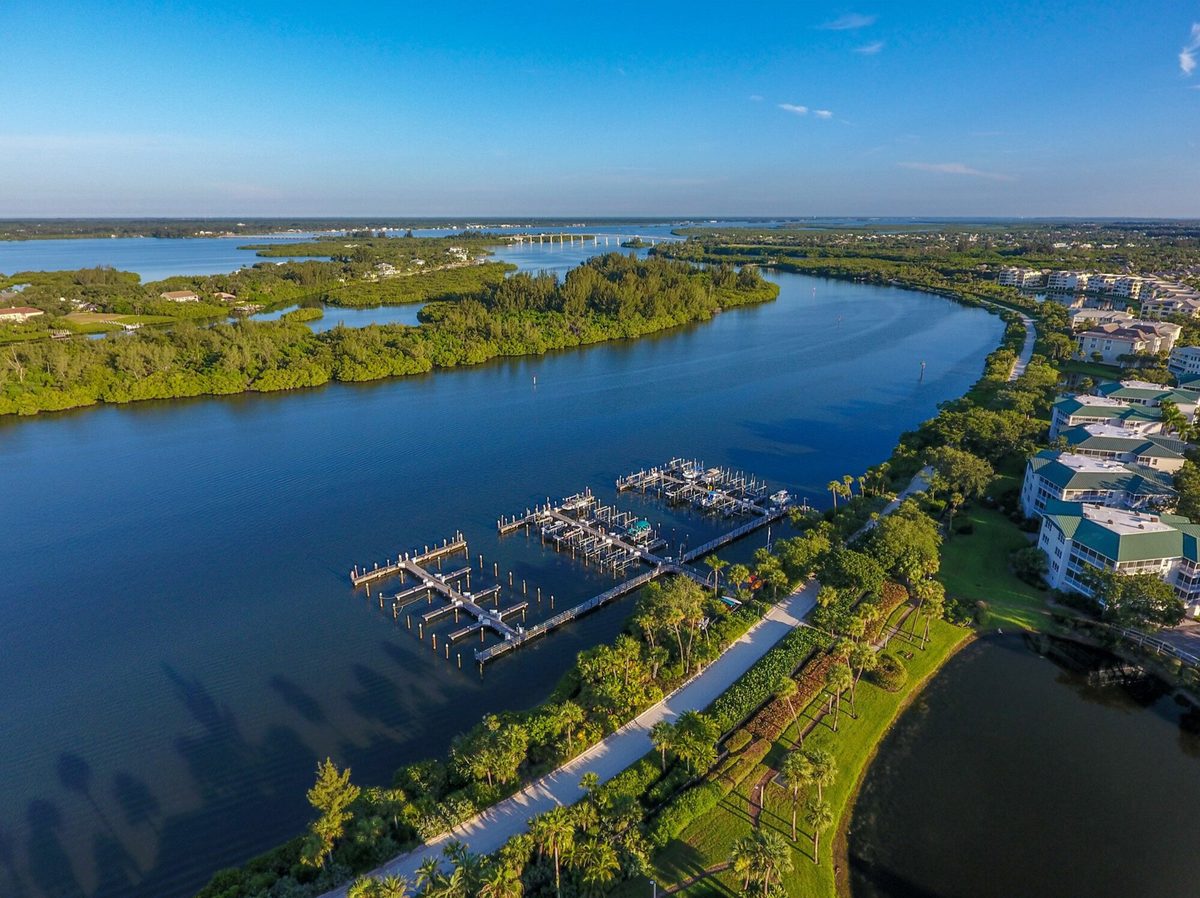
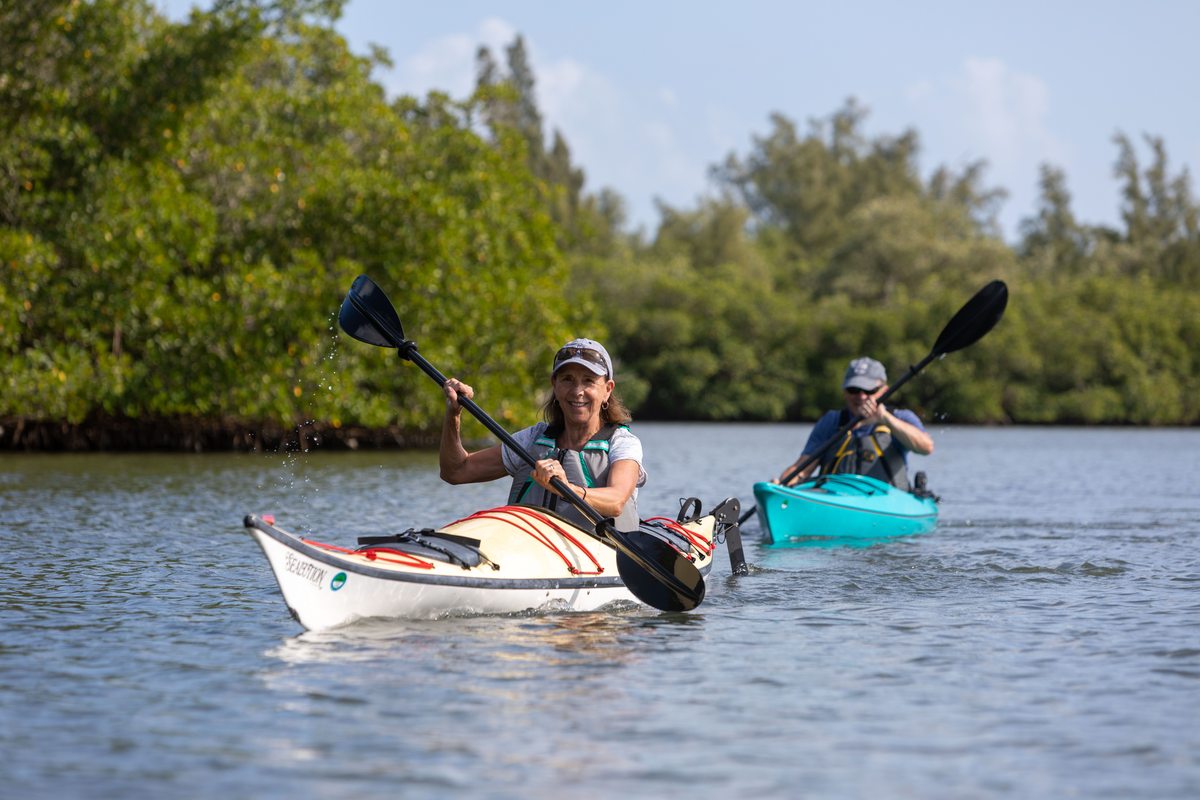
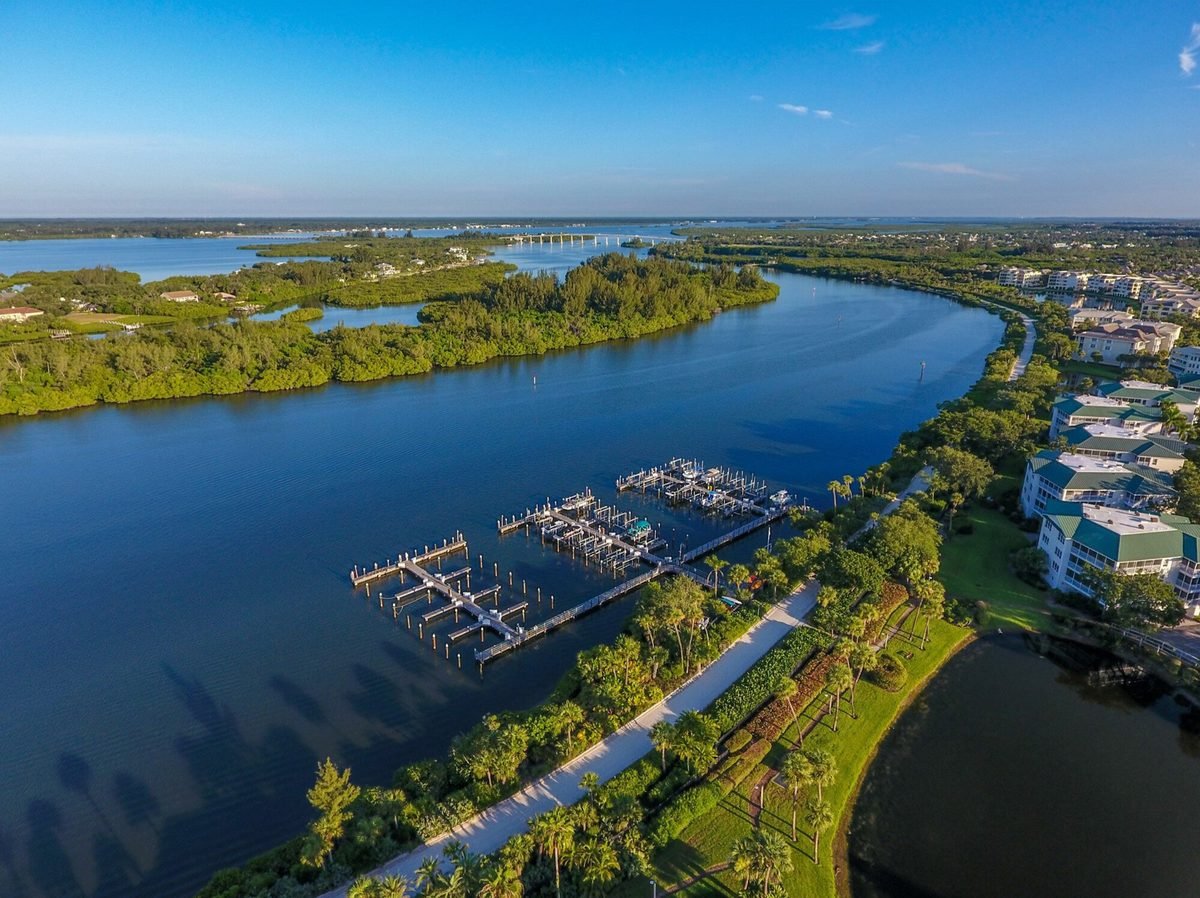
The Indian River Lagoon is one of the most biodiverse estuaries in the United States — home to more than 4,300 species of plants and animals, including 36 species of threatened or endangered wildlife. The Lagoon stretches 156 miles along Florida's east coast, with the Vero Beach segment forming the western edge of the barrier island and offering year-round kayaking, paddleboarding, birding, and boating of a quality that exceeds what Lake Cochituate and the Sudbury River provide not in spirit but in scale and seasonality. The Wayland household that packs the kayak away in November puts it back in the water in January, on the Lagoon, in sixty-degree air, among the osprey and manatees and roseate spoonbills that make the Indian River Lagoon one of the most remarkable waterway systems on the East Coast.
Pelican Island National Wildlife Refuge — established by President Theodore Roosevelt in 1903 as the first National Wildlife Refuge in the United States — lies directly adjacent to the Vero Beach barrier island. For the Wayland resident who has spent years birding the Great Meadows, this is not a peripheral amenity. It is the equivalent, at a different latitude, of what they already consider the defining natural asset of their community.
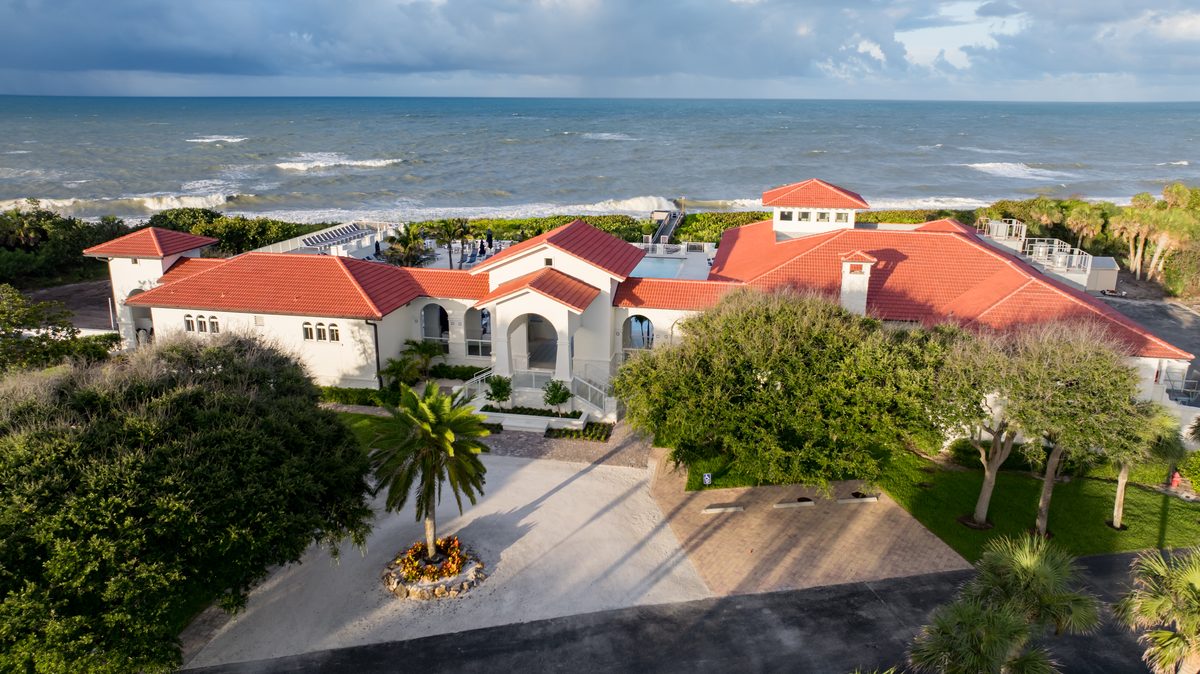
And Vero Beach's barrier island maintains its conservation character by ordinance. No high-rise development is permitted anywhere on the seven-mile island. The communities that define the barrier island's residential character — Grand Harbor, Sea Oaks, The Moorings, John's Island — are built at the density and scale of conservation-adjacent communities, not resort developments. The Wayland buyer who lives adjacent to protected land because they chose a town with a conservation commission and an open space program will recognize the barrier island's character immediately — as the deliberate product of the same kind of institutional commitment to protecting place.
The Vero Beach barrier island's average sale price of $1.99 million as of January through May 2026 represents a step up from Wayland's $1.2 to $1.4 million market — but it is a step that the Wayland household's equity fully funds. The peak earning cohort in Wayland — ages 45 to 64 — reports a median household income of $250,001 or more (the Census Bureau's reporting ceiling, meaning the actual figure exceeds that). The top five percent earns a mean of $1,080,777. The household that has built equity in a Wayland conservation-adjacent home over fifteen or twenty years, while earning in the MetroWest and Boston professional corridor, arrives at the Vero Beach barrier island with the capital to participate in a market that is all-cash at a rate of 62.7 percent — the highest of any luxury market in the United States.
That all-cash rate is not incidental. It confirms that the Vero Beach barrier island's buyer pool is built of households that do not need financing — that have built their wealth the way Wayland's household has built it, through career income and compounding equity and the kind of patient, deliberate accumulation that characterizes a community which chose conservation land over commercial development and meant it. The buyer pool here and the seller pool in Wayland are, financially, the same kind of household.
Vero Beach trades at 66 percent below Naples for the same Atlantic barrier island geography, the same low density, the same finite seven-mile supply constraint. The Wayland household that has watched its own conservation-protected community hold its value precisely because the supply of comparable homes is constrained by the same ordinances and trusts that protect the landscape understands, without a presentation, what constrained supply does to long-term value on a barrier island where no high-rise will ever be built.
Vero Premier Properties operates as a Signature Division of Coldwell Banker Global Luxury — a network reaching more than 40 countries and 60 global markets through the International Luxury Alliance. In Massachusetts, our referral relationships extend to leading Coldwell Banker offices and their top producers in Wayland, Needham, Winchester, Lexington, Wellesley, and the surrounding MetroWest communities — and to the estate attorneys, CPAs, and wealth managers in the Boston and MetroWest professional corridor who serve the households this campaign reaches.
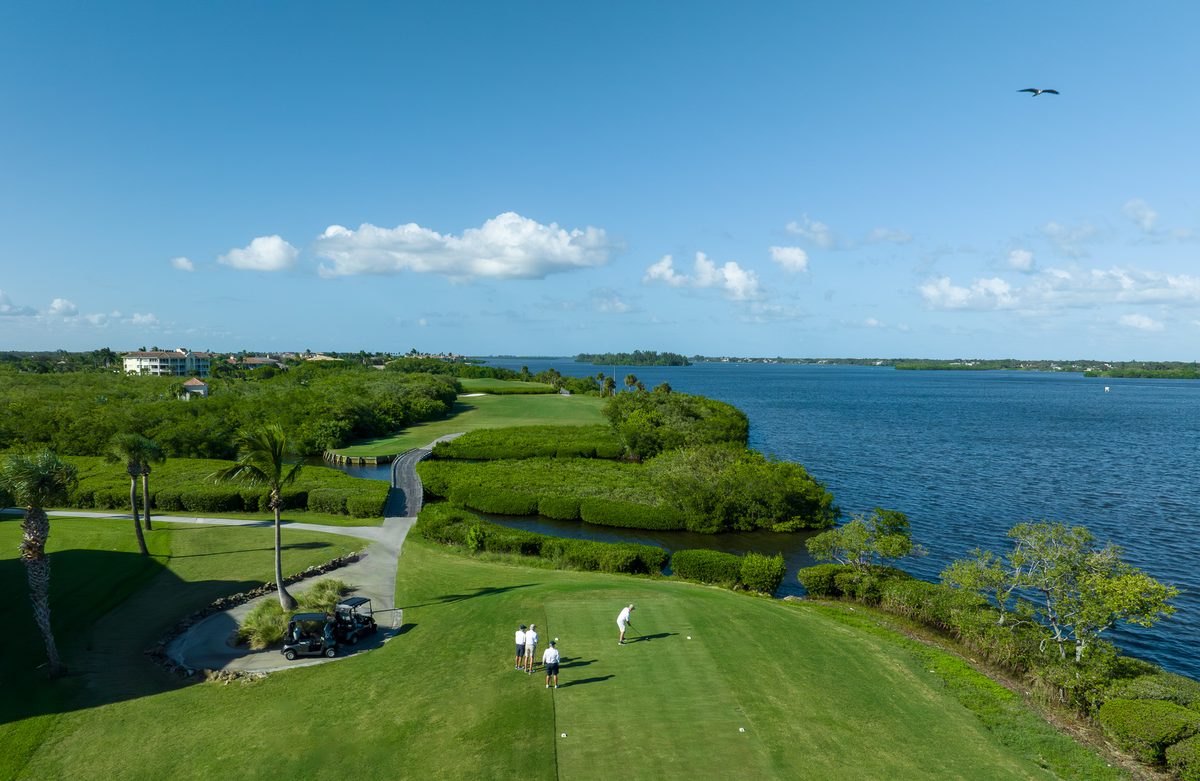
The move from Wayland to Vero Beach involves a specific and thoughtful coordination: an estate attorney who evaluates the Massachusetts domicile change and its impact on income, capital gains, and estate tax exposure; a CPA who models the top-5%-income differential and the specific savings for Wayland's most-exposed earners; a Wayland listing agent who understands the conservation-adjacent market and the specific buyer profile it attracts; and a Vero Beach buyer's representative who knows which barrier island communities — Sea Oaks' gated waterfront character, Grand Harbor's 750-plus acres on the Lagoon, the ecological proximity to Pelican Island — align with the Wayland household's specific values. We coordinate that sequence, and we have been doing so for decades.
The Wayland household that establishes Florida primary residence before December 31, 2026 does not make one financial decision. It makes three simultaneously — and the compound effect of all three, applied at Wayland's specific tax rate and income profile, delivers the most structurally complete financial improvement available in the Massachusetts feeder market series.
The first is the property tax. At $14.83 per $1,000 on a uniform rate with no commercial relief, Wayland's annual property tax bill on even a modest home is among the highest effective rates for a wealthy Massachusetts community. The HJR 1-F enhanced homestead exemption — available without the standard five-year wait for buyers establishing Florida homestead before December 31, 2026 — delivers immediate first-year relief, followed by Florida's Save Our Homes cap that limits future increases to three percent annually. For the Wayland household that has watched its property tax bill compound every year as assessed values have risen with the market, this cap operates precisely as the town's conservation protections operate: it establishes a statutory limit on escalation, and it holds.
The second is the elimination of state income tax. For a Wayland household in the top five percent of earners — at a mean income of $1,080,777, fully above the Massachusetts Millionaires Tax threshold — the nine percent surtax on all income and capital gains above one million is a recurring annual cost that Florida removes permanently. At that income level, the annual saving from the first year of Florida domicile is measurable before any equity event, any capital gain, or any investment distribution is considered. In a peak year, the savings are transformative.
The third is the estate tax. Massachusetts triggers above two million in total estate value. The Wayland homeowner with a $1.2 to $1.4 million home, an investment portfolio, and the career income that a household in the hundred-percentile nationally has accumulated over thirty years is inside that threshold. Florida has no state estate tax. The elimination is permanent and generational — protecting the capital the household built in the MetroWest conservation community it chose, for the generation that will receive it.
Ben Bryk and Vance Brinkerhoff offer confidential consultations for Wayland, Needham, Winchester, Lexington, Wellesley, and Sudbury households — and for the estate attorneys, CPAs, and wealth managers serving them — evaluating the Florida Financial Trifecta and the December 31, 2026 HJR 1-F homestead deadline. The conversation is calibrated to the conservation identity, income profile, and estate structure of the Wayland household, and to the specific barrier island communities that match the same values Wayland has always protected.
Ben Bryk · (772) 713-9455Vance Brinkerhoff · (772) 913-3426floridaeastcoastluxuryhomes.com
Lead Real Estate Agent
Buying a home is a very emotional experience, especially for those who have not done it very often. My experience in sales can help guide buyers with an analytical approach.
Find Your Dream Home
Get assistance in determining current property value, crafting a competitive offer, writing and negotiating a contract, and much more. Contact us today.