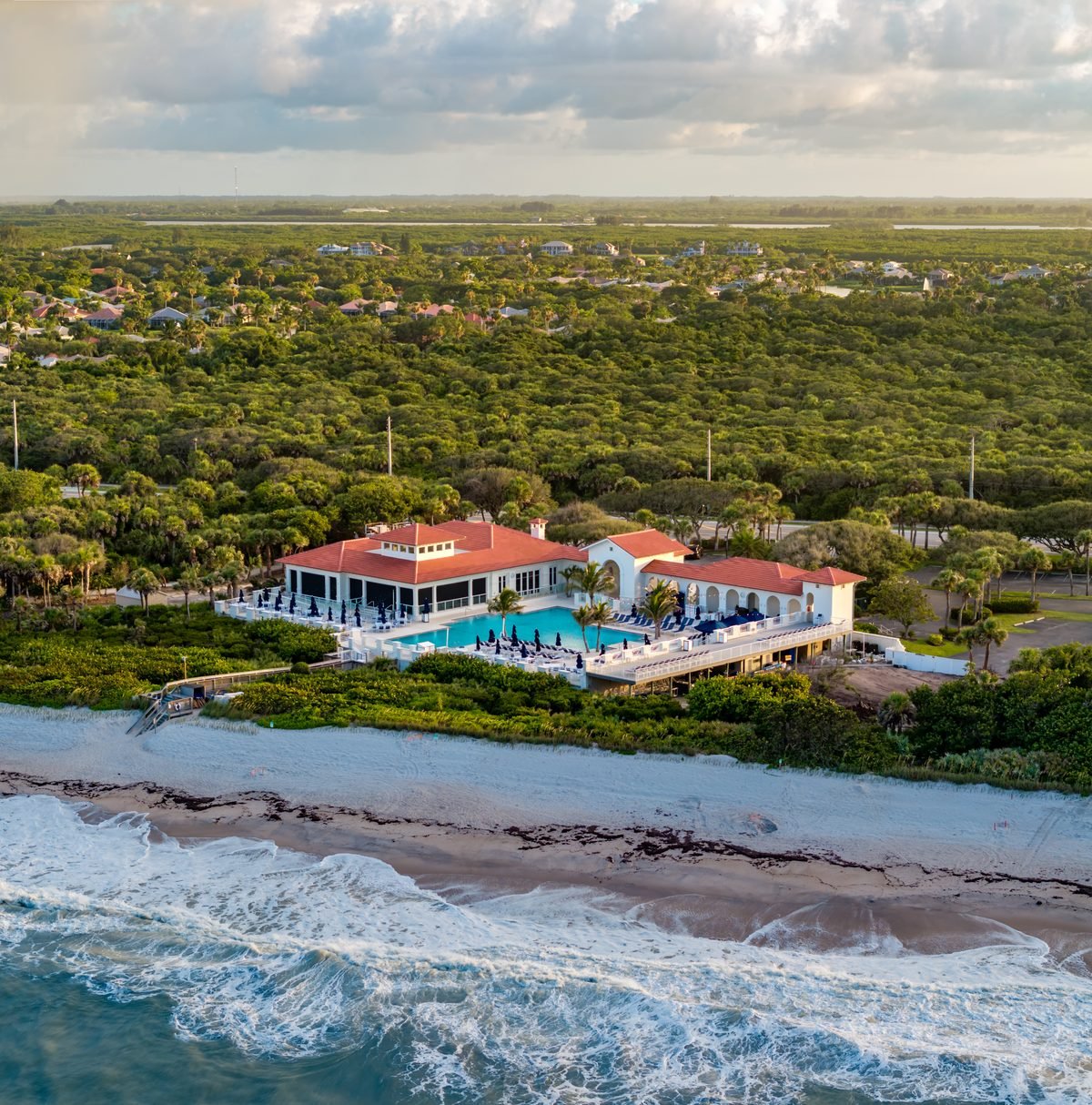
For most of the past three decades, the decision to sell a long-held home was, for affluent owners, a matter of timing and taste. It is increasingly a matter of arithmetic. A provision of the federal tax code written in 1997, when the median American home sold for roughly one hundred twenty-nine thousand dollars, is now colliding with a barrier island market where the average sale approaches two million. The result is a quiet but consequential drag on supply at the top of the Vero Beach market.
The mechanism is the capital gains exclusion on a primary residence. Single filers may exclude up to two hundred fifty thousand dollars of gain from the sale of their home; married couples filing jointly may exclude up to five hundred thousand. Those figures were generous in 1997. They were never indexed to inflation, and they have not changed since. In the intervening years, median single-family prices have risen roughly two hundred twenty-five percent. The shelter stood still while the gains it was meant to cover ran past it.
Why the freeze cuts deepest at the top of the market
It is tempting to read a capital gains story as a problem for the middle of the market, and at the national level much of it is. But the dollar gap is what matters, and the dollar gap is widest precisely where appreciation has been greatest. A homeowner whose gain lands comfortably inside the exclusion never feels the threshold at all. An owner whose barrier island estate has appreciated well past the five hundred thousand dollar married limit feels it as a line item.
Consider the structure rather than any single seller. Many of the island's most desirable properties are held by owners who bought a decade or two ago, improved the home substantially, and watched the land beneath it revalue. Their embedded gain is not a quarter of a million dollars. It is frequently several multiples of the exclusion. The shelter absorbs a slice; the remainder is exposed. Faced with that math, a meaningful number of these owners do the rational thing and stay put.
That inertia is the part of the story most relevant to Vero Beach. A constrained supply of estate-grade homes does not soften values; it firms them. For the owner who does decide to transact in a thinly stocked segment, scarcity is an ally. For the buyer relocating from the Northeast, it is the reason the right house is so difficult to find. The frozen exclusion, in other words, is not merely a tax curiosity. It is a structural feature of why barrier island inventory behaves the way it does.
What the national numbers say about Florida
The scale of the issue is no longer anecdotal. A National Association of Realtors report released in May 2026 estimated that 17.9 percent of Florida owner-occupied households now hold home-sale gains above the federal exclusion thresholds, higher than the national figure of roughly 15 percent. The report's sensitivity analysis is the part worth lingering on, because it describes a trajectory rather than a snapshot.
NAR projection · Share of Florida owner households above the capital gains exclusion | |
Scenario | Florida households above threshold |
|---|---|
Current | 17.9% |
With a 10% price increase | 23.1% |
With a 20% price increase | 28.3% |
With a 30% price increase | 34.3% |
Read those figures against a barrier island that has appreciated faster than the state as a whole, and the direction is clear. Each cycle of price growth that buyers celebrate also pushes another tranche of long-tenured owners across the threshold and, for some, further toward staying put. The freeze compounds. It does not resolve itself.
A proposed fix, and why it is not yet a reason to wait
There is a legislative answer on the table. The More Homes on the Market Act, introduced in the House as H.R. 1340 and in the Senate as the bipartisan companion S. 3332, would double the exclusion to five hundred thousand dollars for single filers and one million for joint filers, and index it to inflation thereafter. The Joint Committee on Taxation scores the change at roughly forty-four billion dollars over ten years, and survey data cited by NAR puts public support for adjusting the threshold above eighty percent across party lines.
Status as of June 2026
The bill is proposed, not law
H.R. 1340 was introduced in February 2025 and remains in committee. The Senate companion, S. 3332, was introduced in December 2025. Neither has been enacted, and no seller should plan a transaction on the assumption that the higher exclusion will be available. Treat it as a tailwind that may arrive, not a date on the calendar.
Even on its own terms, the proposal is partial relief for this market. Doubling the married exclusion to one million dollars is meaningful for much of the country. For an island estate carrying a gain of two million or more, it shelters more of the gain but rarely all of it. The lesson for Vero Beach sellers is not to wait for Washington. It is to understand the levers that exist today.
Florida's structural advantage in the same equation
Here the geography works in the seller's favor. The exclusion debate is a federal one, and the federal tax is the only capital gains tax a Florida resident faces. Florida imposes no state income tax and no state capital gains tax, both protected at the constitutional level. A seller in Greenwich, Scarsdale, or Wellesley layers a state capital gains liability on top of the federal one. A seller on the Vero Beach barrier island does not.
That distinction is the quiet center of the relocation thesis. The same household that finds the federal exclusion inadequate in a high-tax Northeast state finds that, having established Florida domicile, the state-level layer simply disappears. The frozen federal threshold is a shared national problem. The absence of a state capital gains tax is a Florida advantage, and it is most valuable precisely to the high-gain sellers the exclusion no longer covers.
What sophisticated sellers do before they list
The taxable gain is the sale price less the cost basis, and the cost basis is where preparation pays. Basis is not simply the original purchase price. It includes qualifying capital improvements made over the years of ownership and certain costs of sale. On estates that have been renovated, expanded, and maintained to barrier island standards, documented improvements can run well into six and even seven figures, and every dollar of them reduces the gain. The owner who can produce that record arrives at the closing table with a materially smaller exposure than the owner who cannot.
For multigenerational owners and families navigating an estate, a further set of considerations applies, including the step-up in basis at death and the structure through which a property is held. These are not marketing questions; they are matters for a CPA and an estate attorney, decided well before a sign goes in the ground.
The practical first step
Assemble the file before the conversation about price
The single most useful thing a prospective seller can do is gather the original closing documents, the record of capital improvements with receipts, and prior tax returns reflecting the property. With that file in hand, a tax professional can model the actual after-tax outcome rather than a guess. Vero Premier Properties coordinates that work through its Financial Concierge Desk, which brings domicile attorneys, estate planners, CPAs, and wealth advisors into the conversation early, alongside the pricing strategy itself.
None of this is a reason to rush a sale, and none of it is a substitute for professional advice. It is a reason to begin the conversation earlier than most owners do. By the time a listing is live, the planning window for several of these levers has already narrowed. The owners who transact well in this market are, almost without exception, the ones who started the analysis first.