The $20 Million Question: How Clubhouse Renovations Are Quietly Repricing Barrier Island Real Estate
Ben Bryk July 10, 2026
Ben Bryk July 10, 2026
Most homeowners file a nine-figure club renovation under "amenity." The resale data says it belongs under "asset."
Most homeowners see a clubhouse renovation as an amenity, not an asset. When a $20 million capital assessment appears on a barrier island club's books, the first reaction from members is rarely enthusiasm — it is closer to sticker shock. Yet a growing body of resale data suggests that homeowners who write off these projects as vanity spending are leaving money on the table. The wellness centers, resort-grade racquet complexes, and reimagined social pavilions redefining private clubs along Florida's east coast are not cosmetic upgrades. They are functioning as one of the more reliable value drivers in the luxury resale market, and the numbers behind that claim are more specific than most buyers realize. Nowhere is that clearer than at Grand Harbor, where a $36 million member-approved renovation offers a live case study in how this wealth transfer actually works — a story we turn to below.
For three generations, the value of a private club community was assumed to rest almost entirely on the condition of its greens and the pedigree of its course architect. That assumption is aging quickly. Remote and hybrid work have converted clubs from weekend golf destinations into daily-use lifestyle hubs — members are on the grounds during hours that, a decade ago, would have found them at an office. A club built around eighteen holes and a grill room was not designed for that pattern of use.
The historical data on golf itself is more modest than most sellers assume. Research dating to the 1990s found that golf course presence added roughly 7.6 percent to nearby home values, with course views adding a further 5 to 12 percent. A 2020 National Association of Realtors study found golf course frontage in luxury markets carrying premiums of 15 to 30 percent — a wider range, but one still tied to a single, single-use amenity.
Barrier islands complicate the picture further. Academic research specific to a South Carolina barrier island community found that building on a golf course, by itself, did not move price the way it does inland — the premium instead tracked proximity to the club's shops, dining, and social spaces. In other words, on a barrier island, the fairway was never really the product. The club was.
That distinction is why golf-only facilities across the country are reporting stagnating dues revenue while multi-use destinations — those combining fitness, recovery, dining, and racquet sports under one membership — are posting waitlists. The renovation dollars are following the data, not preceding it.
The amenities absorbing today's capital assessments are not incidental upgrades. They are a direct response to measurable shifts in how members want to spend their time. Wellness real estate — properties built around fitness, recovery, and spa infrastructure — has been shown to command sales premiums averaging 10 to 25 percent over comparable traditional properties, within a wellness real estate segment reportedly growing at roughly 15.8 percent annually.
The participation numbers behind that demand are not a passing trend. Pickleball participation reached roughly 19.4 million players in 2024, and Pilates participation grew nearly 40 percent over five years. Separately, recent housing research found that 84 percent of Americans now say wellness access factors into their housing decisions. A club spending $20 million today is, in most cases, converting an underused back nine's worth of capital into a spa, a recovery suite, and a racquet complex — the amenities its own membership data says they actually use.
"The variables that sustain a club's premium over time have less to do with the renovation itself and everything to do with what happens after the ribbon-cutting." — Club financial health, reserve funding, and membership demand as sustaining factors
A capital assessment and a resale premium are rarely placed side by side in the same conversation, but they should be. Consider the math in illustrative terms: a $20 million assessment spread across a club with 600 member households averages roughly $33,000 per household — a meaningful, one-time cost. Set against a $2 million home carrying even the low end of the wellness real estate premium range, 10 percent, that single renovation cycle could be associated with roughly $200,000 in added resale value. At the higher end of the range, the figure moves closer to $500,000. These are directional illustrations, not a guarantee for any specific property, but they explain why sophisticated buyers increasingly evaluate an assessment as a capital investment rather than a line-item cost.
A separate hedonic pricing study out of Texas, examining golf-adjacent subdivisions, found premiums representing 25.8 percent of average sales price for the most favorably positioned homes — evidence that, under the right conditions, a well-executed amenity investment can be recaptured many times over across a membership's collective resale activity, not just a single property.
The variable that determines whether an assessment behaves like an investment or a sunk cost is the club's financial health afterward: a funded reserve, no deferred maintenance, and a membership waitlist are the strongest available signals that a renovation's premium will hold rather than fade.
Florida's absence of a state income tax and estate tax, paired with an effective property tax rate near 1 percent, changes how a capital assessment should be evaluated by any buyer relocating from a high-tax state. For a household moving from Connecticut, New York, New Jersey, or Illinois, a one-time $30,000 to $60,000 assessment reads very differently against a lifetime tax structure that no longer includes state income tax on investment gains or an estate tax on generational transfer. The assessment is a known, finite number. The tax savings compound for as long as the household maintains residency.
Framed this way, a clubhouse renovation assessment functions less like a fee and more like a hedge — a defined cost that protects and, based on the data above, likely enhances the value of an asset already benefiting from a structurally favorable tax environment. It is a different calculation than the one most first-time club members run when the assessment notice arrives, and it is the calculation that tends to determine whether they view the renovation as a burden or an opportunity.
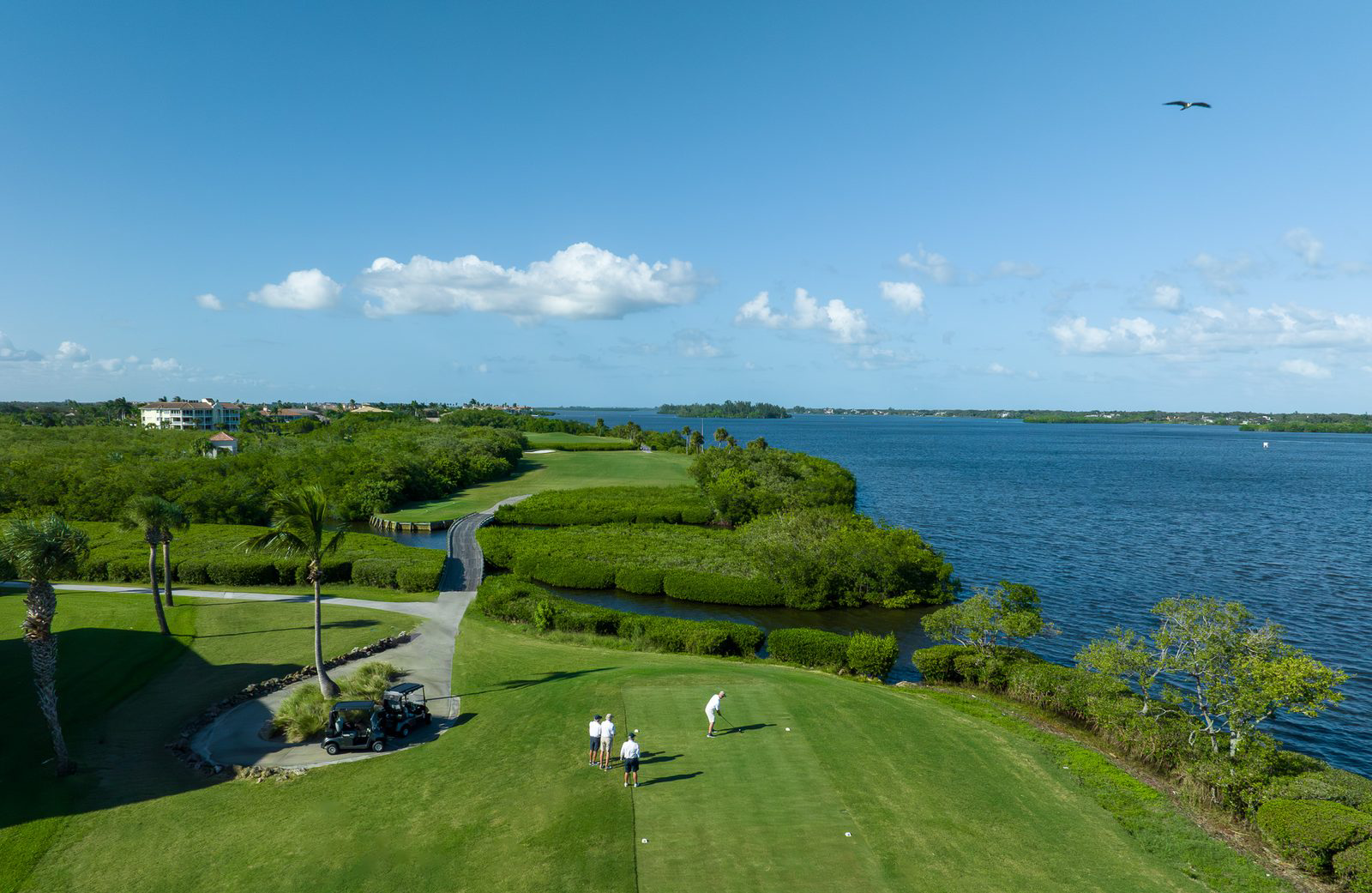
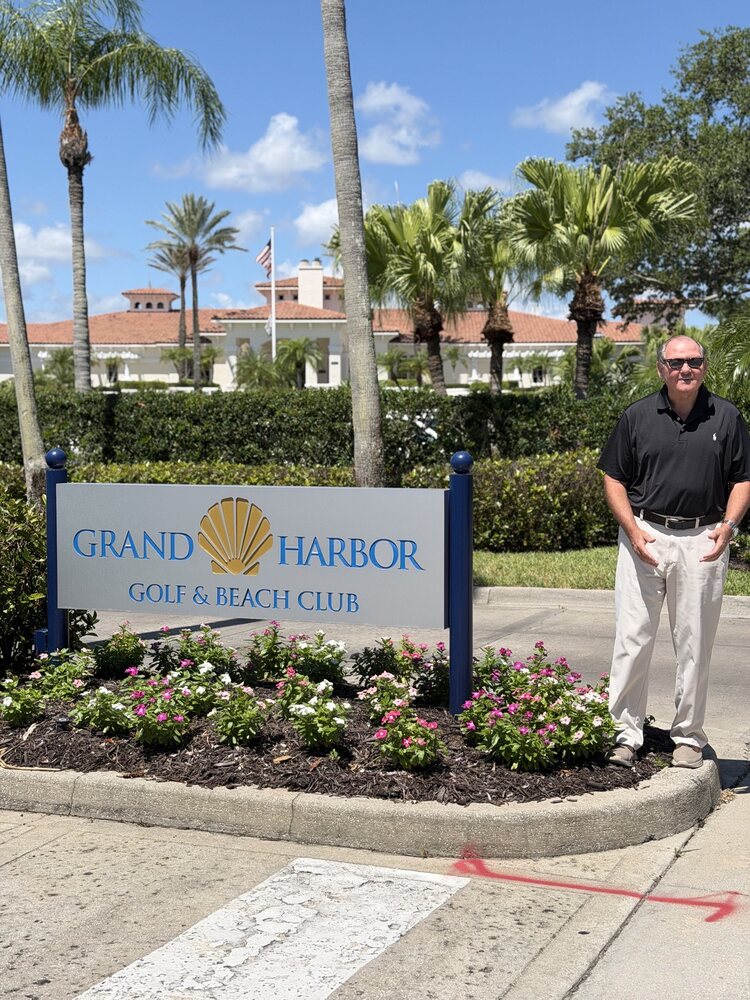
The clearest local illustration of every principle above is unfolding at Grand Harbor Golf & Beach Club, a 900-acre, 1,180-home community on Vero Beach's barrier island. In 2026, members voted 77 percent in favor of a $36 million capital program — and the story of why that vote passed so decisively is, in effect, a live demonstration of the wealth-transfer thesis.
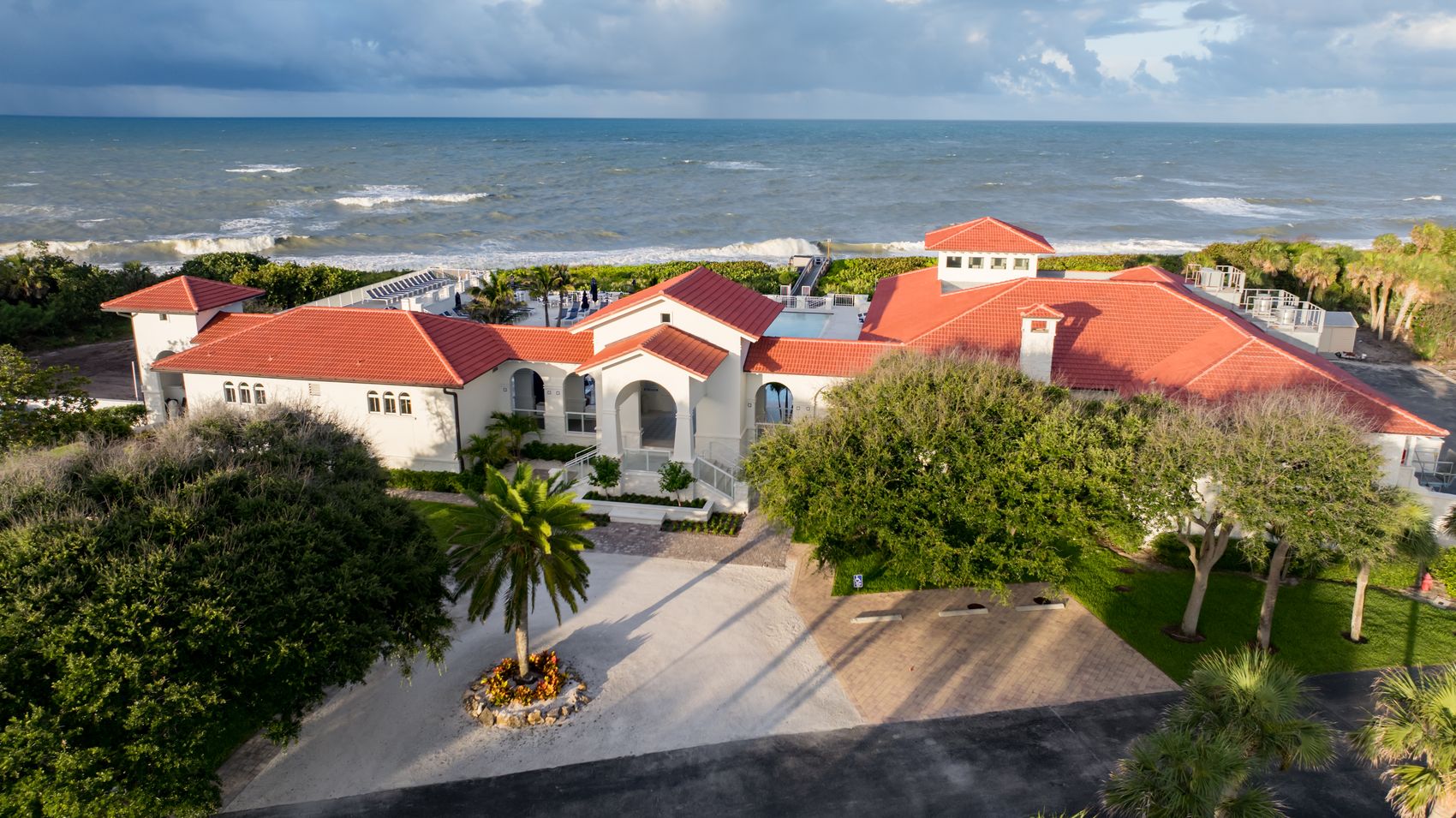
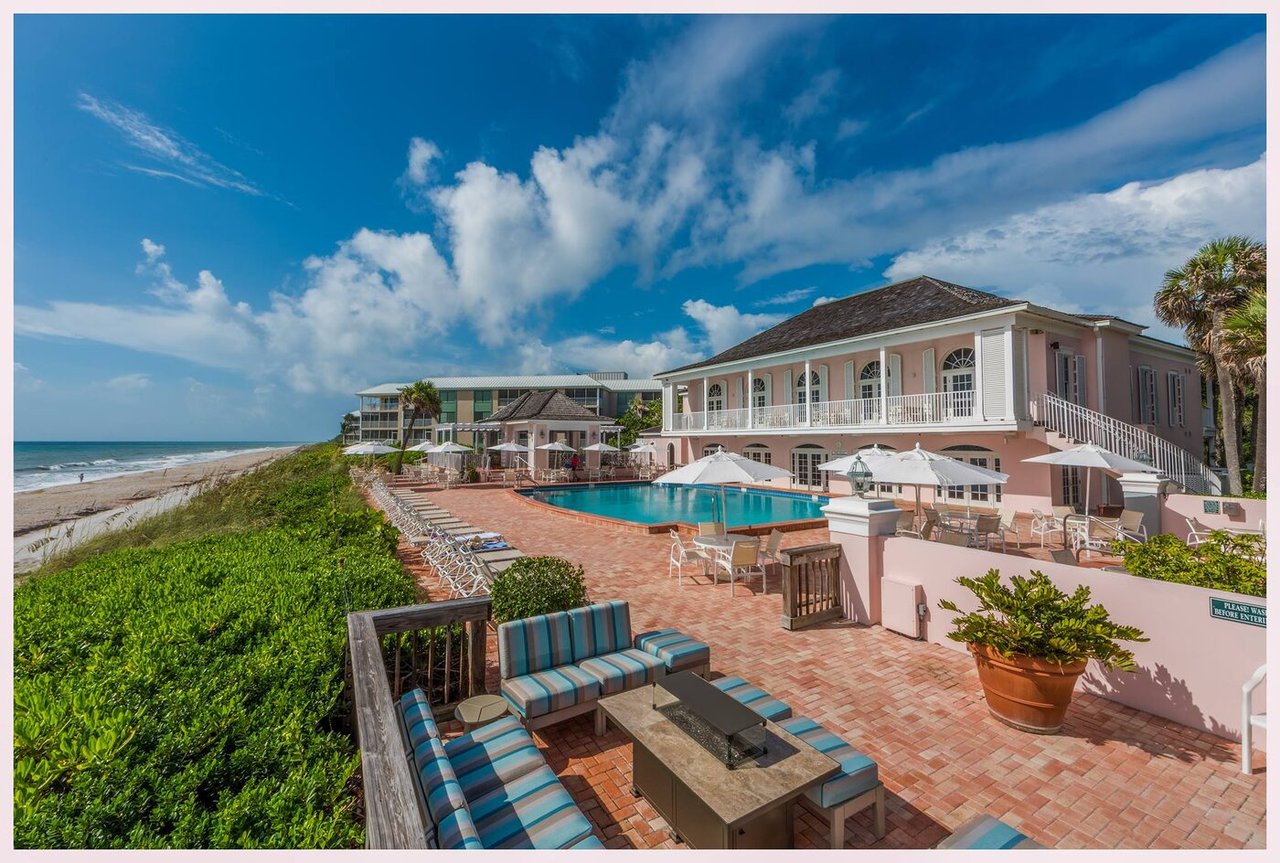
The centerpiece is not a new set of greens. It is The Cove, a standalone 15,000-square-foot Lifestyle + Fitness Center designed by Leo A. Daly, the 110-year-old global architecture firm. The Cove's program reads far closer to a resort spa than a traditional golf-club gym: dedicated fitness spaces overlooking the Indian River Lagoon, Pilates studios, spa rooms, a resort-style pool, a café and bar, and a Zen garden. Its contemporary curved white-panel façade deliberately breaks from the community's Mediterranean Revival tradition — a physical signal aimed squarely at a younger, wellness-oriented membership. The broader program also adds a two-story, 6,000-square-foot dining and clubhouse wing, renovated locker rooms, and an expanded golf shop, on top of two already-renovated championship courses and eight completed pickleball courts.
This is the sustaining-factor checklist from the previous section, made real. The renovation did not create the demand — it followed a five-year reinvestment cycle that had already rescued the club from near-insolvency in 2021, when roughly 60 members paid dues in advance to keep it solvent under a $6 million bridge loan. The board hired a new general manager, invested visible capital, attracted younger members, and used the resulting dues to fund the next round of improvements. Membership doubled. The average age dropped. The waitlist-and-demand signals that research identifies as the strongest predictors of a durable resale premium are exactly the signals Grand Harbor now exhibits — which is precisely why a nine-figure-adjacent capital vote passed with better than three-quarters support rather than sticker-shock resistance.
The surrounding market data reinforces the point. Across the Vero Beach barrier island, the first five months of 2026 saw 174 sales at an average price of $1.99 million, with 62.7 percent completed in cash. That cash rate is not incidental — it reflects a financially sophisticated buyer, frequently relocating from a high-tax Northeast or Midwest market, running exactly the assessment-against-tax-structure calculation described earlier and concluding that the math favors the barrier island.
Not every renovation holds its value equally. The clubs most likely to sustain a resale premium after a major capital program share a consistent set of traits: a healthy reserve fund with no deferred maintenance, a membership waitlist signaling real demand, transferable membership structures that widen the buyer pool, and active social programming that keeps the renovated space in daily use rather than functioning as underutilized square footage. Grand Harbor's trajectory — doubled membership, falling average age, and a supermajority capital vote — checks each of those boxes, which is what separates an investment-grade renovation from a sunk cost.
Vero Premier Properties maintains a dedicated Grand Harbor microsite with current inventory, community data, The Cove renovation details, and direct access to the barrier island's leading luxury specialists.
Visit Grand Harbor Homesgrandharborhomesverobeach.com
The barrier island's only luxury real estate app — Apple Editors' Choice, 4.9 stars — puts Grand Harbor and Sea Oaks inventory, market data, and direct agent collaboration in your pocket.

Vero Premier Properties tracks capital programs, reserve health, and resale data across Vero Beach's barrier island club communities — including Grand Harbor's $36 million renaissance.

Lead Real Estate Agent
Buying a home is a very emotional experience, especially for those who have not done it very often. My experience in sales can help guide buyers with an analytical approach.
Find Your Dream Home
Get assistance in determining current property value, crafting a competitive offer, writing and negotiating a contract, and much more. Contact us today.