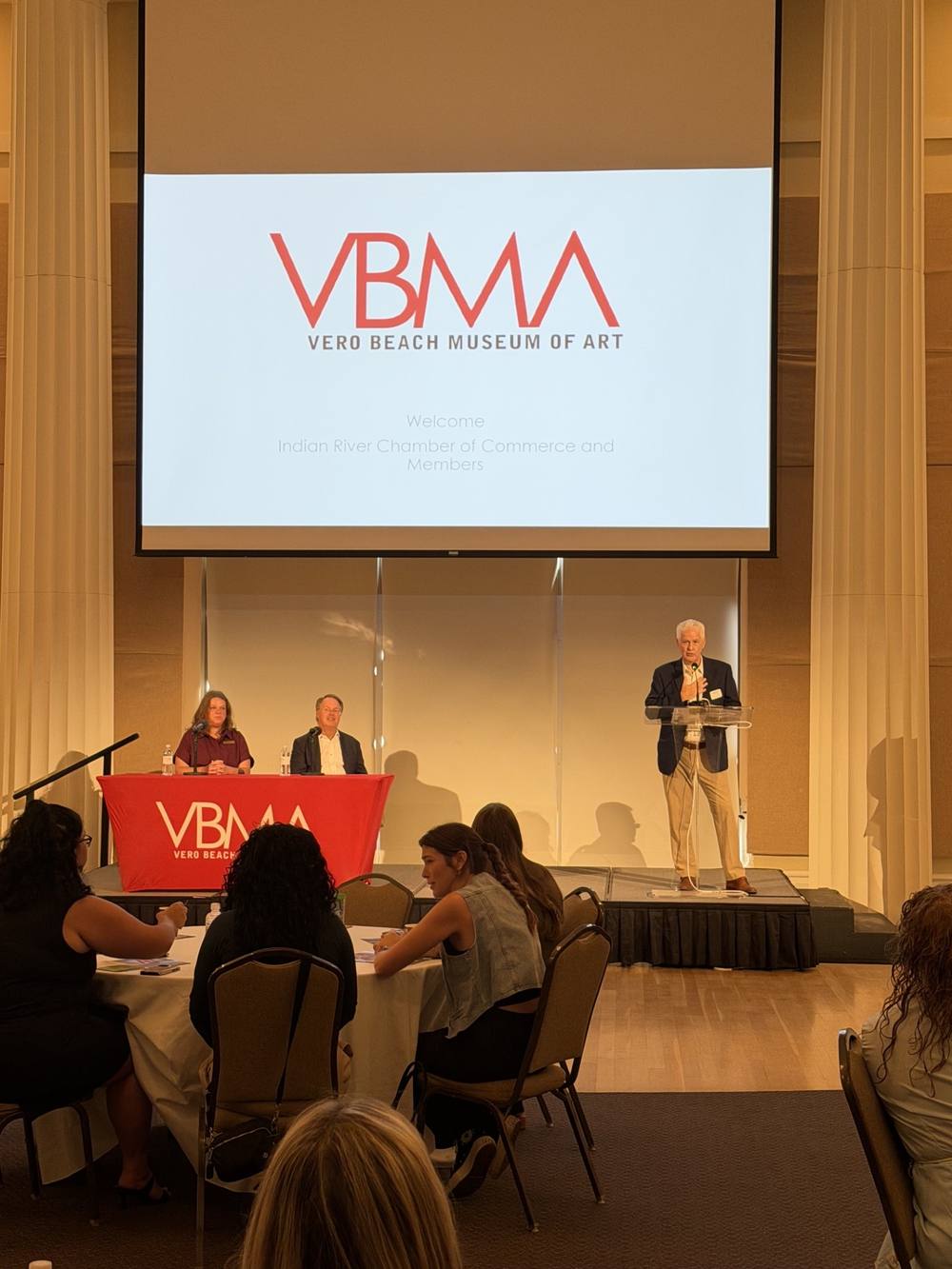
On Thursday morning, the Indian River County Chamber of Commerce filled a ballroom at the Vero Beach Museum of Art, and for the better part of an hour, a room full of the county's business leaders got their first close look at the most consequential cultural investment in the history of Florida's Treasure Coast.
The welcome slide was modest. What followed was not.
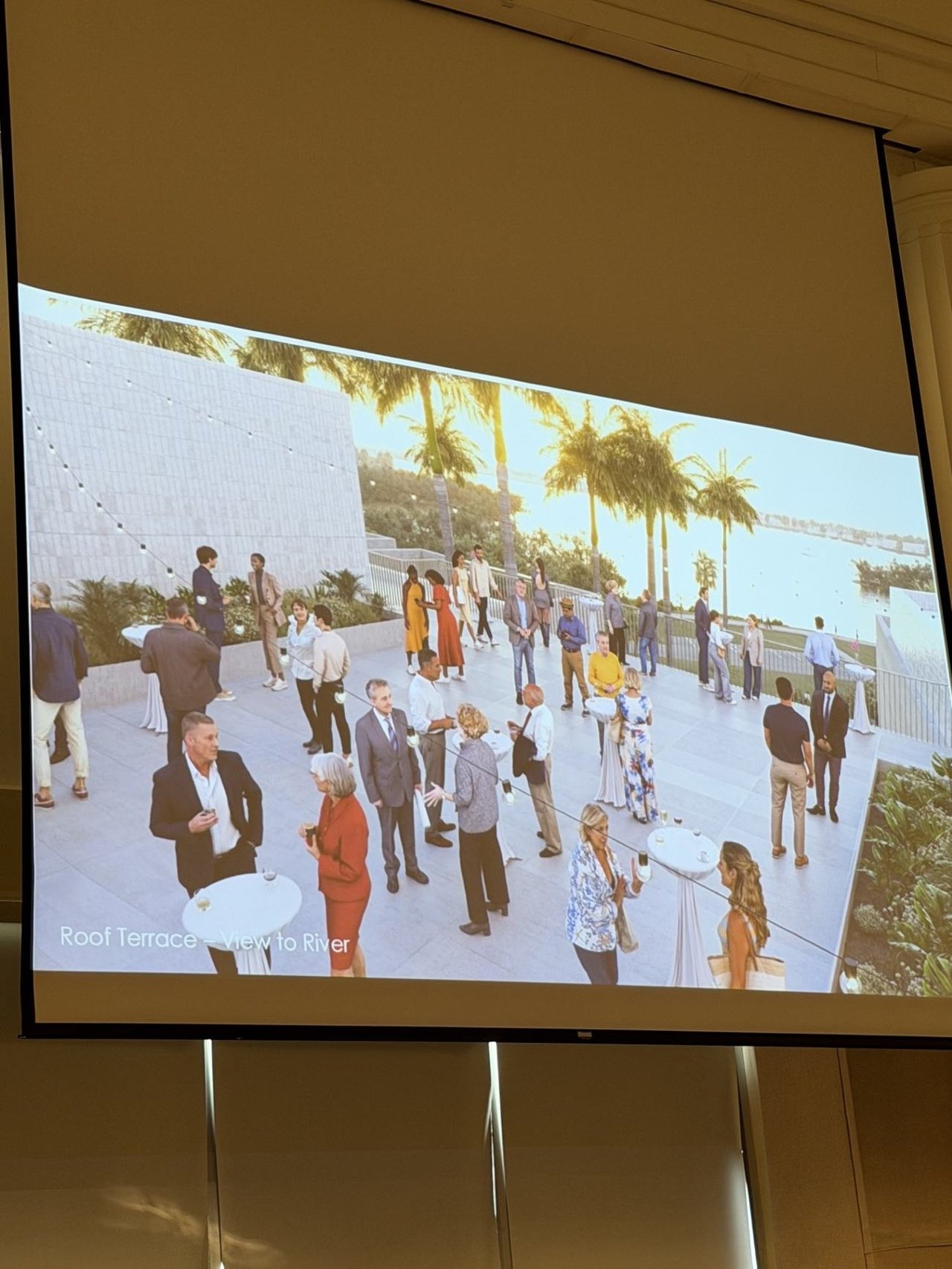
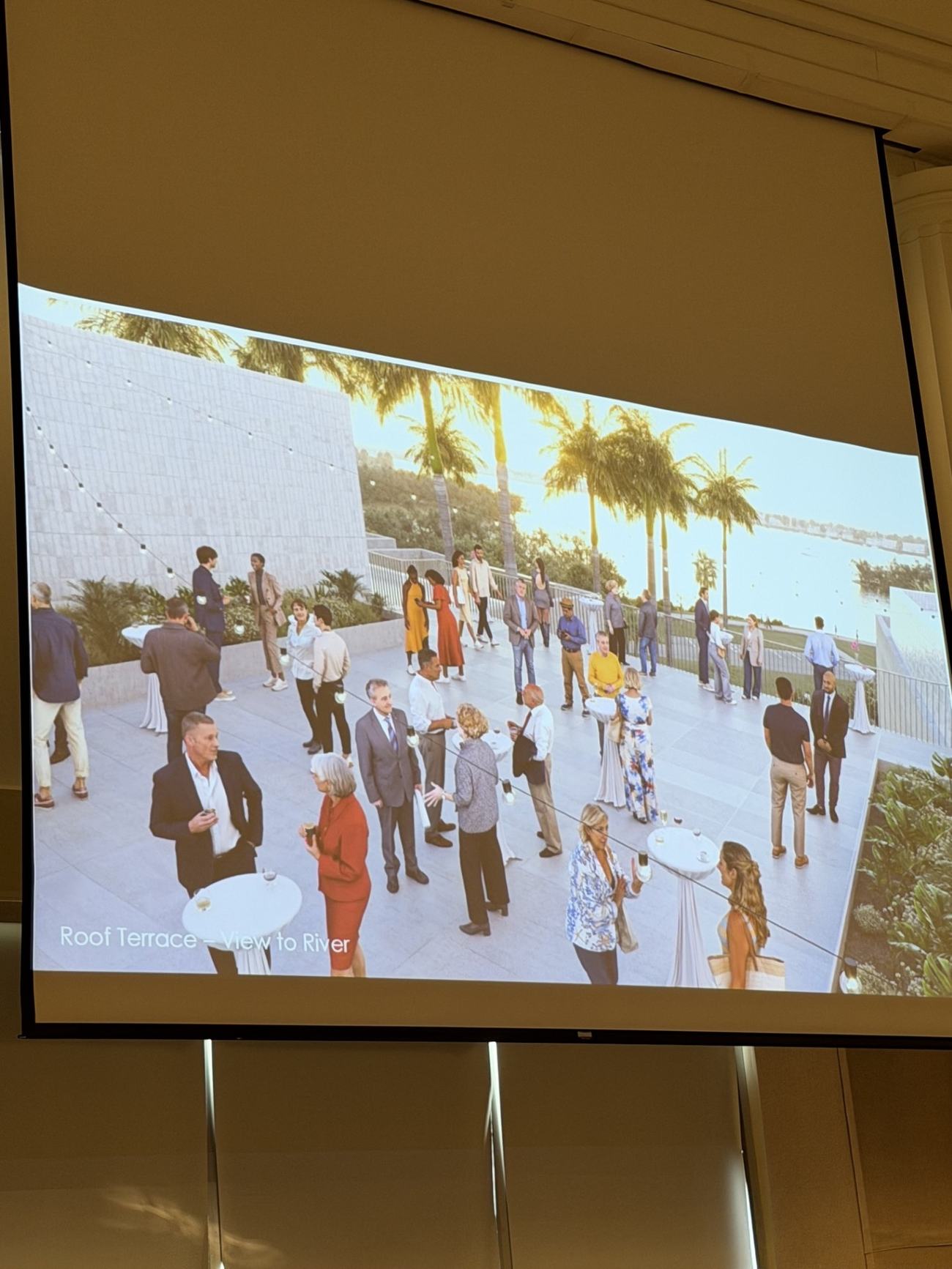
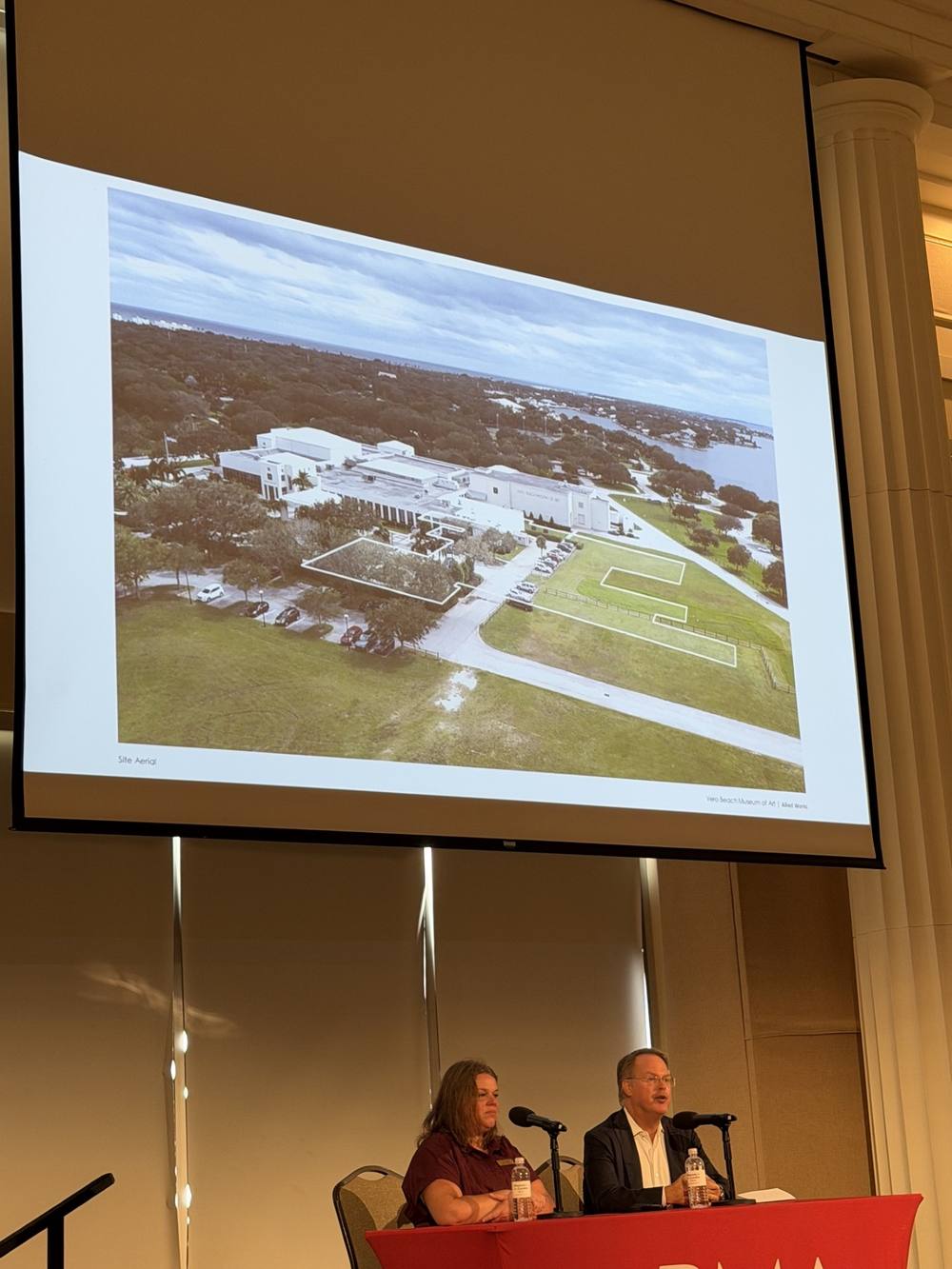
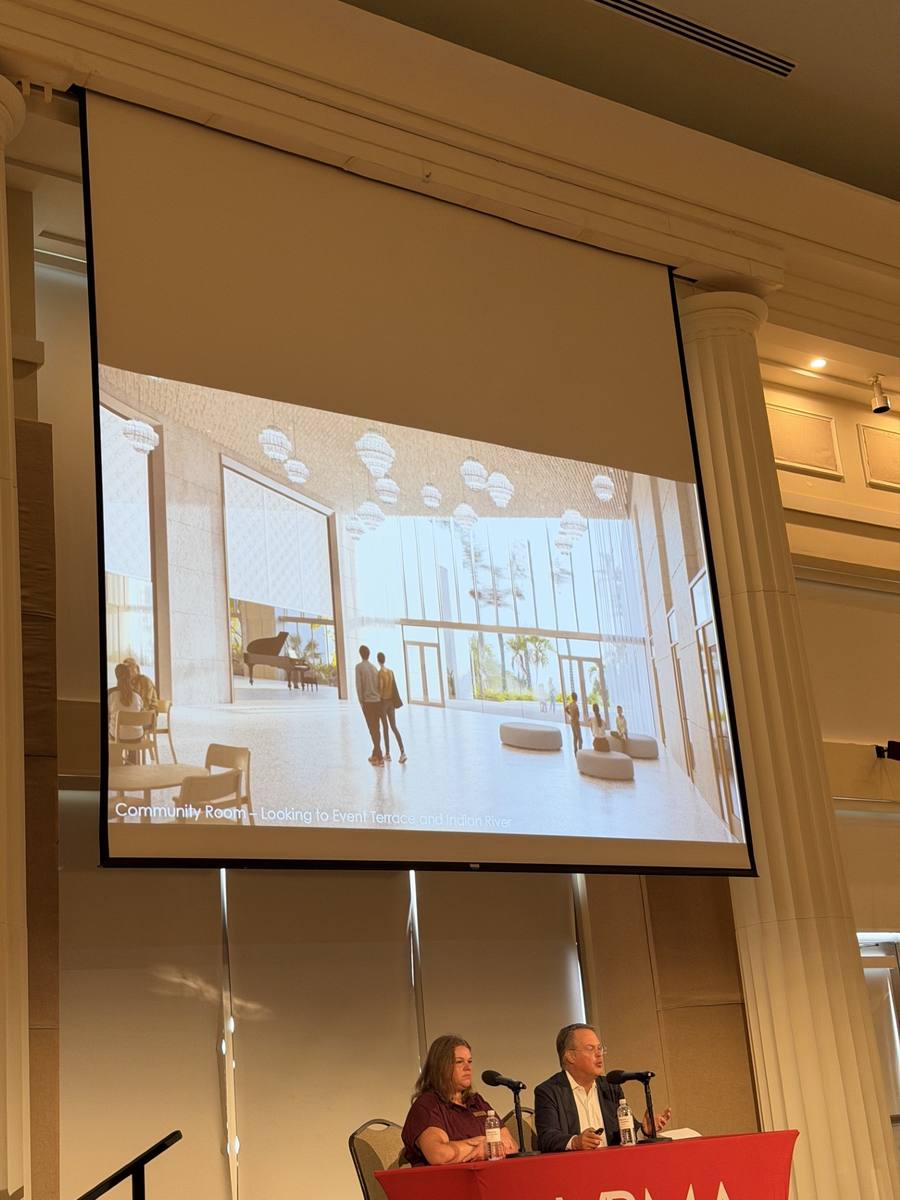
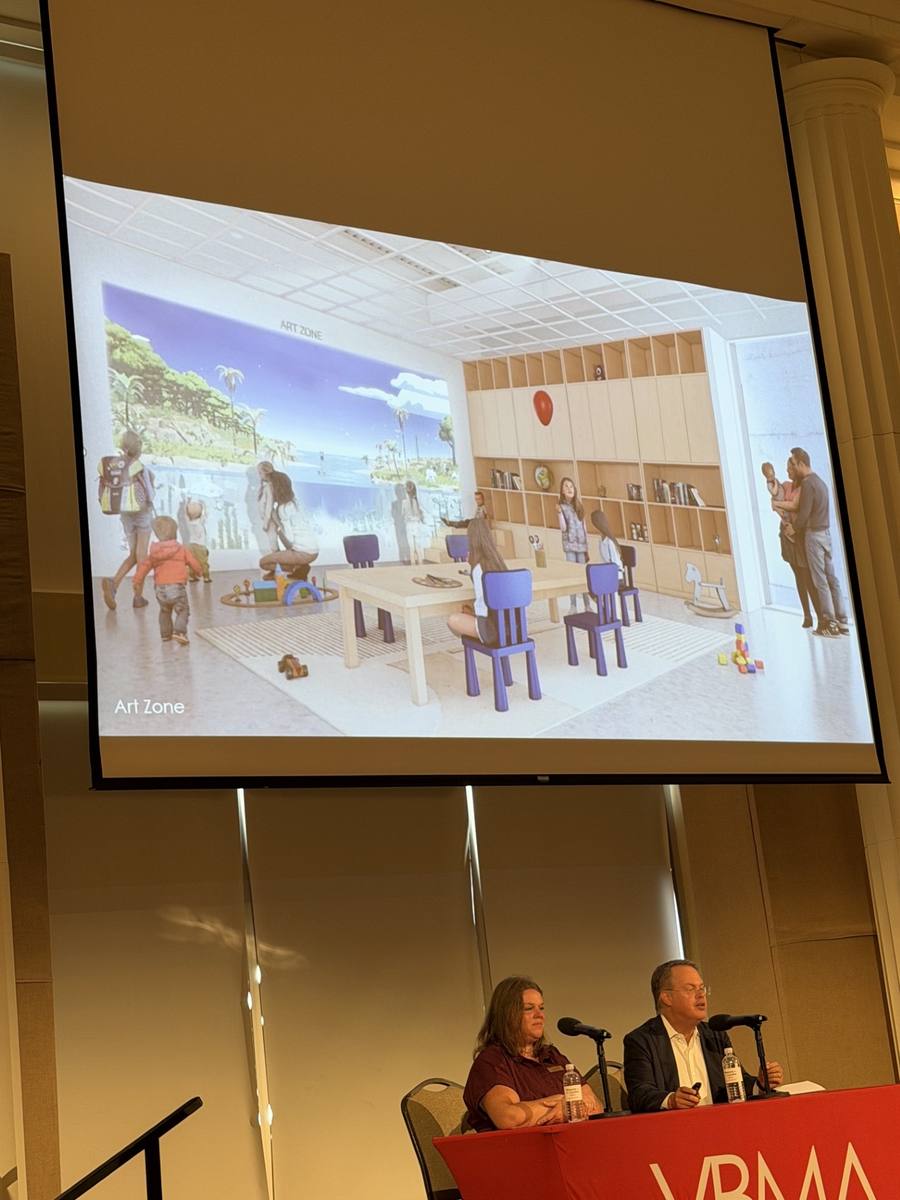
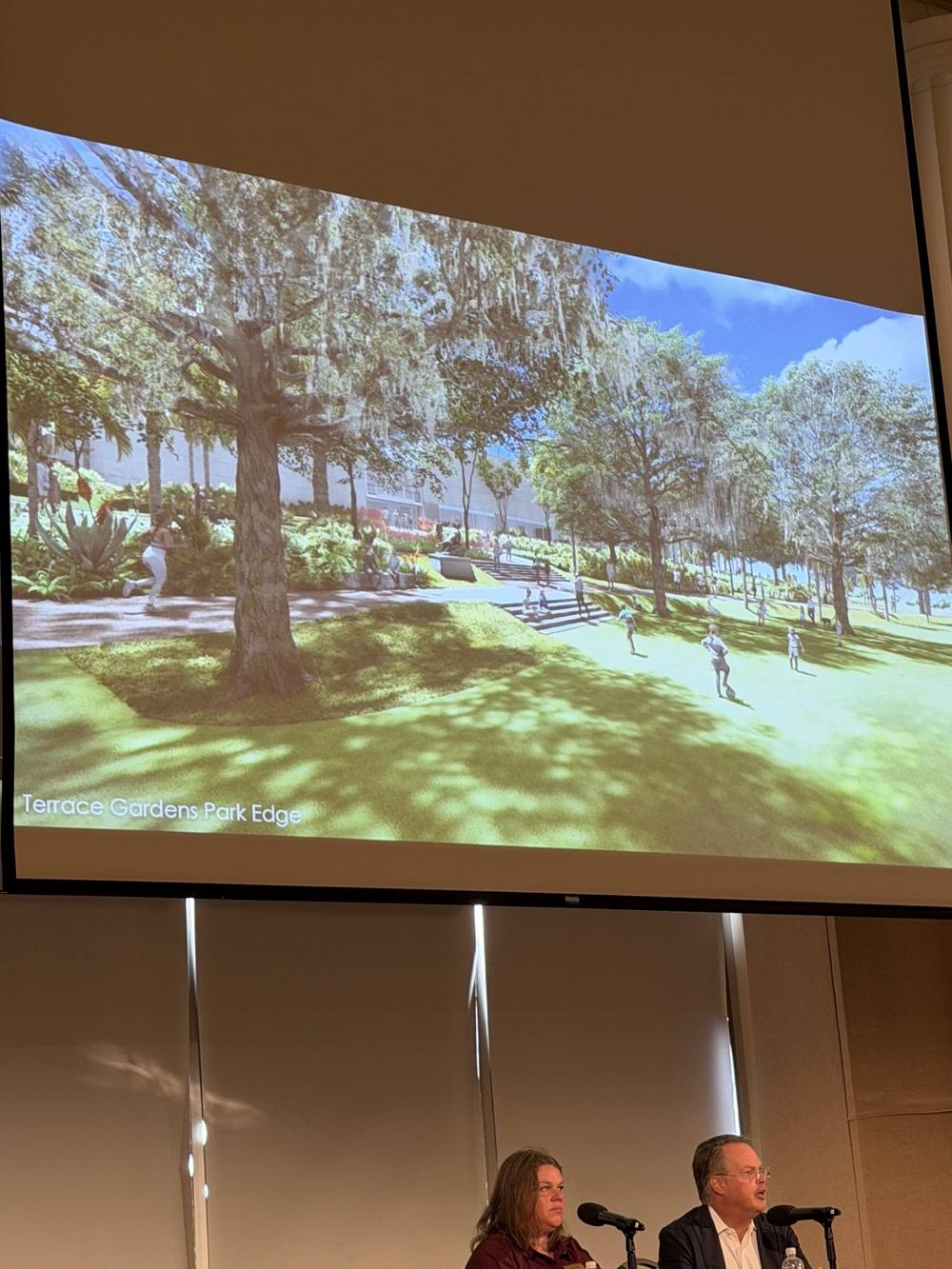
One by one, the renderings went up on the big screen. An aerial of the seven-acre Riverside Park campus with the new museum's footprint traced in crisp white lines across the lawn. A garden edge where joggers pass beneath moss-draped oaks on their way toward broad terrace steps. A soaring ticketing lobby built around a living tree, wrapped in a two-story veil of glass and light. A Community Room whose entire wall opens onto an event terrace and, beyond it, the Indian River itself. An Art Zone where children build block towers in front of a wall-sized, animated Florida shoreline.
We have been selling luxury real estate on this barrier island for a long time. We know a turning point when we see one. Thursday morning was a turning point.
The Project
The “Museum in the Garden,” by the Numbers
Here is what is actually being built a few hundred yards from the Merrill Barber Bridge, and why the numbers stopped the room.
The campaign behind the new Vero Beach Museum of Art has grown to $126 million — and more than $118 million of it is already committed, with donors stepping forward in waves since the ceremonial groundbreaking on November 7, 2025. Read that again. In a seaside city most Americans still cannot find on a map, philanthropists have quietly funded one of the largest cultural projects between West Palm Beach and Jacksonville — before the walls are even out of the ground.
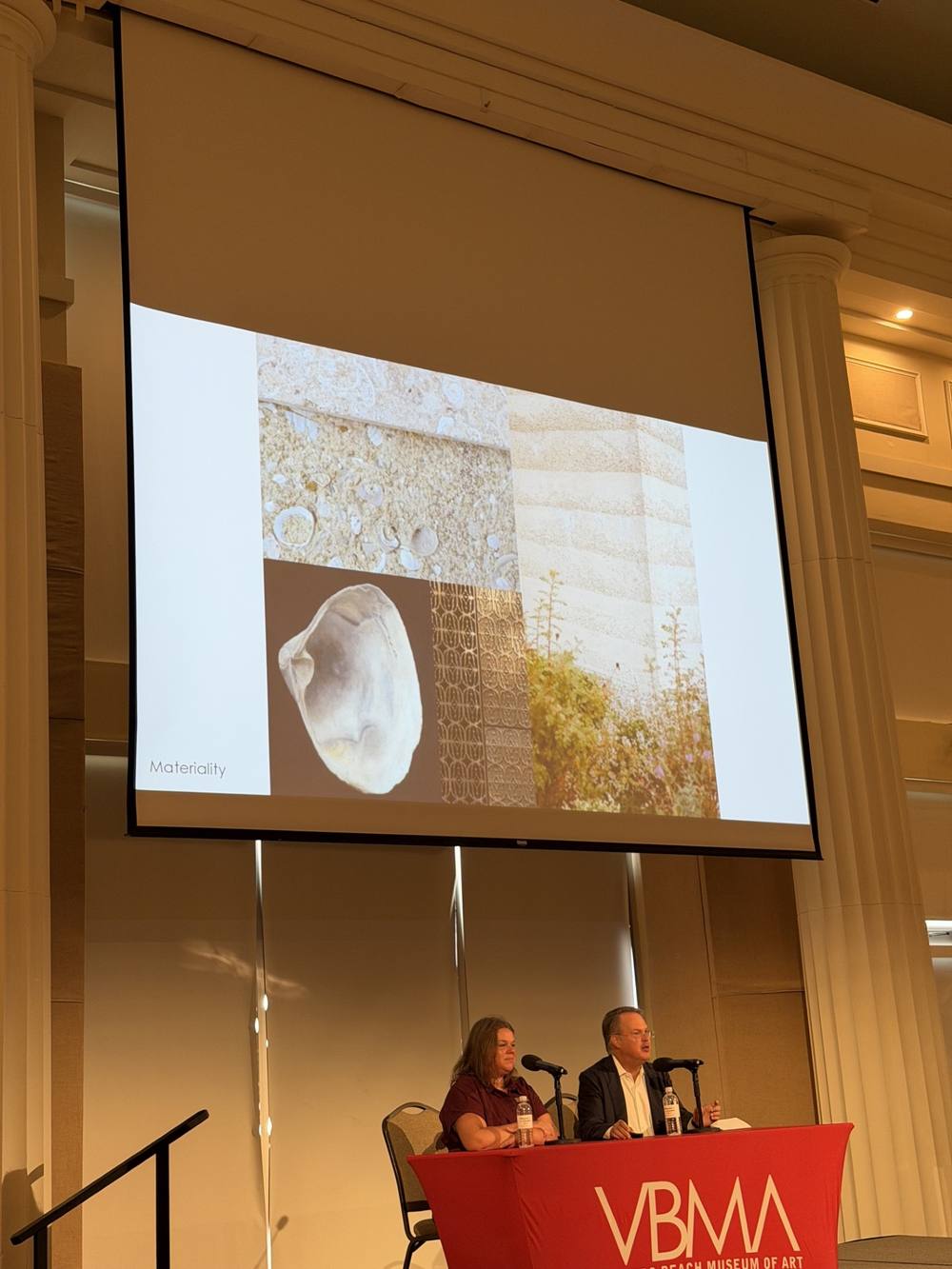
And what walls they will be. Construction crews on site have been blending oyster shell and Florida beach shell into the concrete mix for the museum's foot-thick walls — a building literally made of this coastline, engineered by Turner Construction to stand against it. The existing museum sits roughly seven feet above sea level on land closer to three; the new campus is designed as a series of earth terraces and walled gardens lifted well above the flood plain. This is resilience as architecture, built for the next hundred years.
The new building itself: two stories and 90,000 square feet, with 68,000 square feet of new construction. Gallery space more than doubles to 22,000 square feet for the museum's permanent collection of American Modernism and global contemporary art — an institution whose walls have held Picasso, Monet, Matisse, and Ansel Adams. Add 14,400 square feet of terraces and courtyards knitting the museum into Riverside Park, a purpose-built education wing for one of the most respected museum art schools in the country, a flexible auditorium with retractable seating, a new café, and a rooftop terrace overlooking the Indian River Lagoon. The entire first floor — studios, classrooms, and gallery — will be free to the public.
Anticipated opening: early 2028.
The Architect
Why the Architect Is the Story
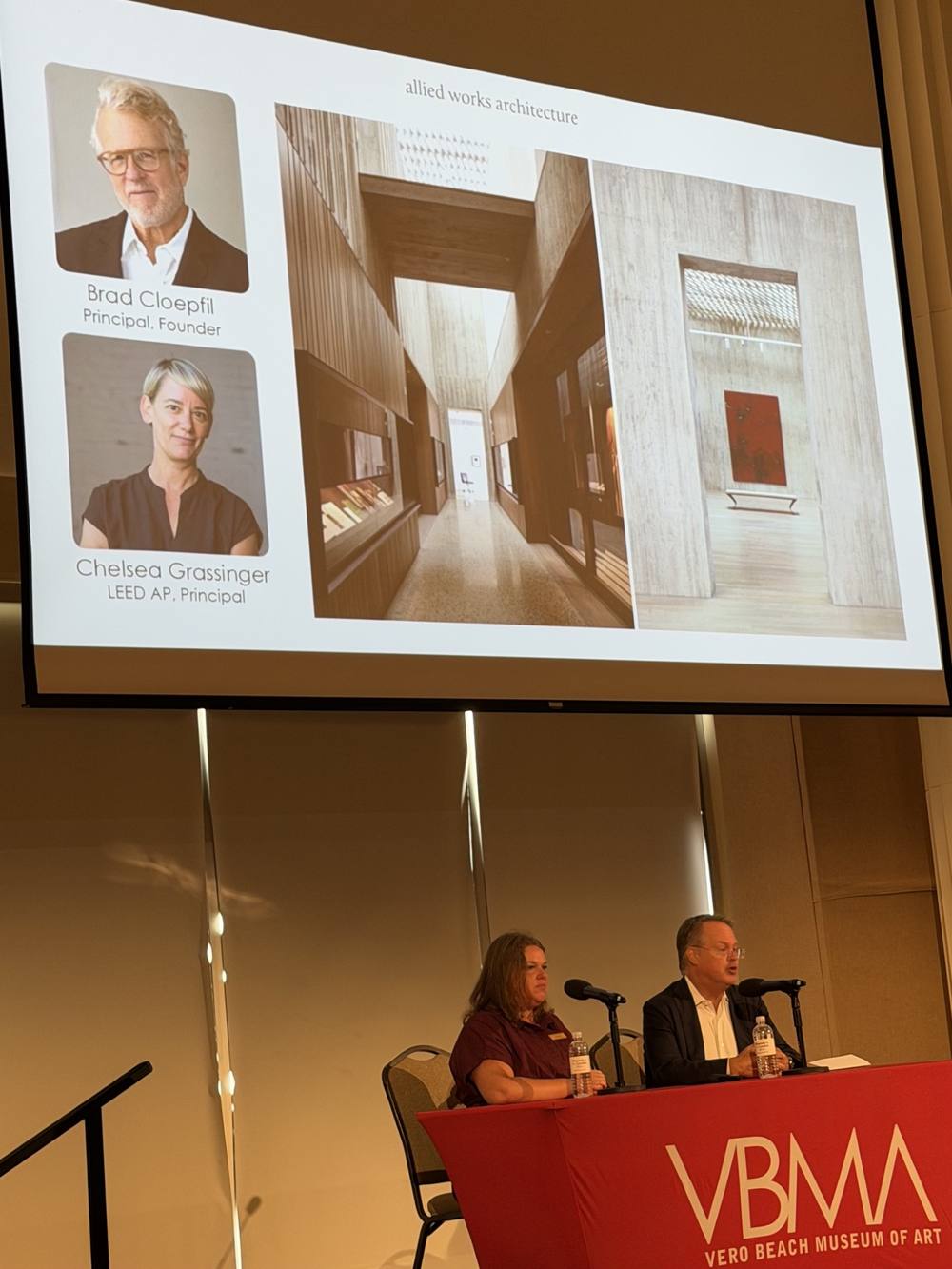
Serious buyers understand pedigree, so consider the pedigree here. After a nine-month national search that drew thirteen of the country's leading architecture firms, the museum selected Allied Works — the practice founded by Brad Cloepfil, whose portfolio includes the Clyfford Still Museum in Denver, the Seattle Art Museum expansion, the University of Michigan Museum of Art, and the National Music Centre of Canada. The landscape belongs to the acclaimed Unknown Studio, and it is not an afterthought; the gardens are the organizing idea, which is why the project carries the name “Museum in the Garden.”
Executive Director and CEO Brady Roberts has framed the design challenge simply, telling Vero Beach Magazine that “most museums are urban, and this is not” — the inspiration came instead from Europe's smaller, internationally regarded museums that are beloved by their communities and integrated with nature.
Architectural Record placed the project in the company it deserves: “Miami has the Pérez. West Palm Beach has the Norton. Miami Beach has the Bass.” And now the Treasure Coast's answer — already one of the best-attended small art museums in America, founded in 1986 as the humble Center for the Arts — is building a home worthy of the collection and the community around it.
“World-class architects do not design $126 million buildings for towns without a future.”
Here is the sentence that matters for anyone who owns, or wants to own, property in the 32963 zip code: institutions of this caliber make hundred-year bets, and they just made one on Vero Beach.
The Market
Cultural Capital Is Real Estate Capital
In our experience representing buyers arriving from Greenwich, Boston, Chicago, and Naples, no one relocates for a house alone. They relocate for a town — and they evaluate that town the way an analyst evaluates a portfolio. Healthcare. Access. Culture. Scarcity. Momentum.
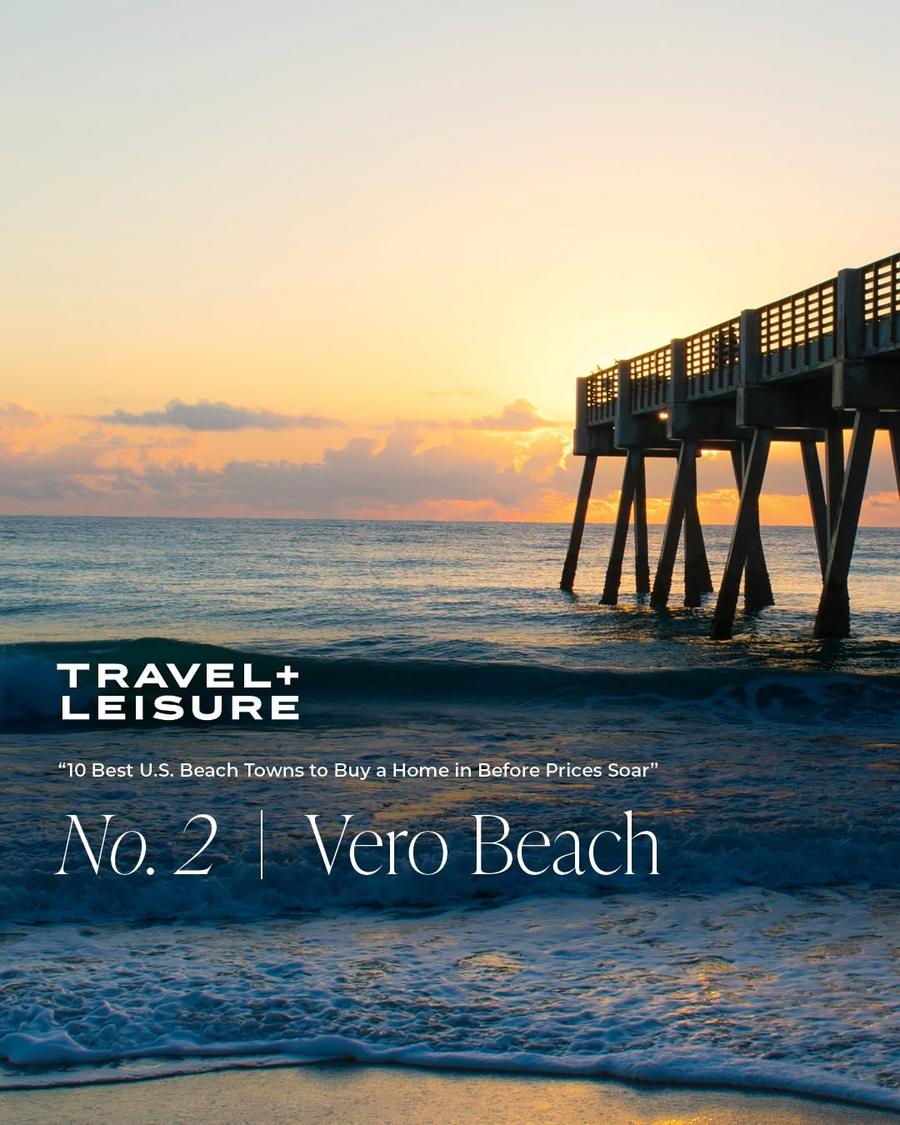
Watch how the Vero Beach portfolio is compounding. Travel + Leisure just named Vero Beach the No. 2 best beach town in America to buy a home in before prices soar. Cleveland Clinic Indian River Hospital earned High Performing marks in ten procedures and conditions in the newest U.S. News rankings. Coldwell Banker Global Luxury's 2026 Mid-Year Report identified Vero Beach as America's strongest cash market, with 62.7% of sales closing in all cash — the signature of permanent wealth, not leveraged speculation. Florida's economy has surged to $1.8 trillion, now the 14th largest on Earth, larger than Australia's. And while demand builds, supply tightens: Florida homebuilding permits fell 7% in the second quarter, and on a 26-mile barrier island, nobody is manufacturing more oceanfront.
Now layer a transformed museum onto that stack. Around the world, landmark cultural investment has been a reliable leading indicator for surrounding property values — it is why the Pérez re-energized downtown Miami's waterfront and why the Norton anchors West Palm Beach's cultural corridor. Museums do quietly what no marketing campaign can do loudly: they certify a town's permanence. When the doors open in early 2028, every home from Riverside Park to John's Island, Windsor, Orchid Island, Grand Harbor, and Sea Oaks will sit a few minutes from a nationally significant arts campus with free public galleries, riverfront terraces, and a rooftop over the lagoon.
That is not an amenity. That is an endowment for the entire barrier island.