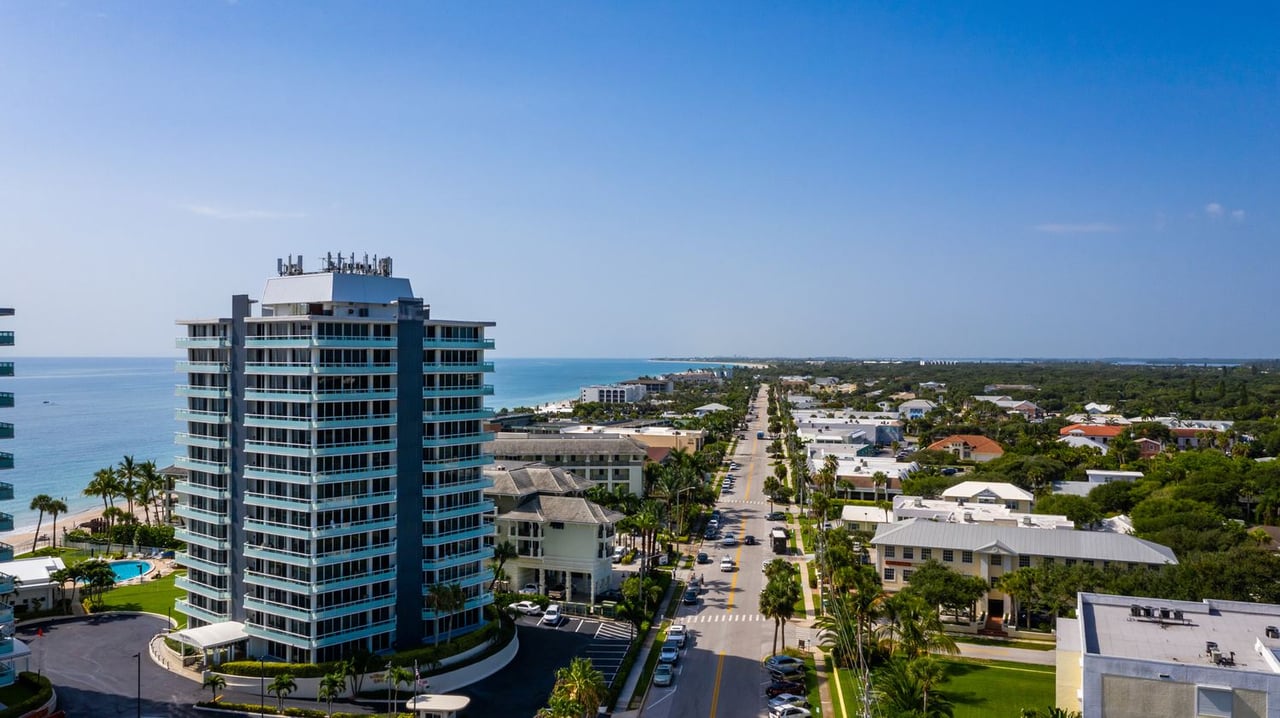
The August 3 Deadline That Decides Whether Your Vero Beach Condo Can Be Financed
Ben Bryk July 23, 2026
Ben Bryk July 23, 2026
Barrier Island / Condominium Market
A federal reserve-funding standard takes effect this month. For sellers along Ocean Drive, it has quietly rewritten the first question a serious buyer asks — and price is no longer at the top of the list.
Florida law has long permitted a reserve method known as baseline funding. Under it, an association keeps just enough in reserve that the balance never falls below zero across the study period. Boards liked it for an obvious reason: it holds monthly assessments down.
The secondary mortgage market has now closed that door. Effective August 3, 2026, Fannie Mae will no longer accept baseline-funded reserve schedules for condominium project eligibility. Where a reserve study presents more than one funding path, the budget must reflect the highest recommended allocation. The change follows coordinated updates that Fannie Mae and Freddie Mac issued in March 2026, under the Federal Housing Finance Agency, revising condominium and homeowners association project eligibility standards.
The practical consequence is blunt. An association can be fully compliant with Florida statute and still be unfinanceable in the eyes of a conventional lender. A buyer's loan does not fail because of anything wrong with the unit. It fails because of a line in the association's budget.
A building does not have to be in trouble to be uninsurable to a lender. It only has to be under-documented.
The federal shift lands on top of a state framework that finished tightening at the start of this year. Following the 2022 post-Surfside reforms, condominium associations with three or more habitable stories were required to commission a structural integrity reserve study, and — critically — lost the ability to vote away funding for the structural components that study identifies.
House Bill 913, effective July 1, 2025, granted a year of breathing room and reshaped several of the mechanics. It moved the study deadline to December 31, 2025, with a narrow allowance for buildings completing a milestone inspection alongside it. It raised the reserve-funding threshold from $10,000 to $25,000, indexed annually, with the state setting the 2026 figure at $25,675. It put insurance appraisals on a three-year cycle. It extended structural record retention to fifteen years. And it lengthened the window a prospective buyer has to review association financials from three days to seven.
Milestone inspection obligations run on a separate clock: buildings three stories or taller at thirty years of age, or twenty-five years when sited within three miles of the coast. On a barrier island, the shorter trigger is the operative one for nearly everything.
Three years ago the opening conversation with a condominium buyer concerned the view, the floor plan, and the parking. Today it concerns paperwork. The affluent buyer arriving from Fairfield County, Westchester, the North Shore of Long Island, or Chicago's suburbs has read four years of Florida condominium coverage and arrives with a checklist. That checklist runs roughly as follows.
Note what is absent from that list. Nothing about the kitchen, and nothing about the price per square foot. Those conversations happen afterward, and they happen on terms set by the answers above.
The extension of the buyer's financial review window from three days to seven was written as a consumer protection. Read from the sell side, it is a marketing deadline.
Seven days is enough time for a buyer's attorney to read a reserve study properly, run the funding gap, and form a view. If the documentation is organized, complete, and accompanied by a plain-language summary, that week builds confidence. If it arrives in fragments — a study here, a budget there, an insurance certificate to follow — the same week manufactures doubt. Buyers do not walk away from bad news nearly as often as they walk away from disorganization, because disorganization reads as concealment.
The associations that have handled this well tend to share one trait: they treat their financial disclosure package as a marketing asset. Since January of this year, Florida associations with twenty-five or more units have been required to post core records to a website or application, which lowers the friction considerably for boards that were already inclined toward transparency.
Here is the part that has not been widely absorbed on the island. The reserve regime has begun to split condominium values along a line that has nothing to do with the units themselves.
Two residences of identical size, floor, and exposure now trade differently depending on whether the association behind them clears a lender's file. The building with a completed study, a fully funded schedule, a current insurance appraisal, and no pending assessment sells to the entire buyer pool. The building that is short on any of those sells to a narrower pool — largely cash — and cash buyers price the uncertainty they are absorbing.
In most Florida markets that would be a punishing dynamic. Vero Beach is an unusual case. Roughly 62.7 percent of transactions here close in cash, which means the island retains a deep buyer pool that never files a loan application. That is a genuine cushion, and it is why the barrier island has held value while other Florida condominium markets have not.
But a cushion is not immunity. A cash buyer who cannot resell to a financed buyer three years from now understands exactly what he is purchasing, and he discounts accordingly. Restricting a listing to cash does not eliminate the reserve problem. It converts it into a price problem.
Restricting a listing to cash does not solve the reserve problem. It reprices it.
One correction is worth making, because the prevailing narrative is now several years out of date. Florida's property insurance market has materially improved. Following tort reform, carriers have filed rate reductions in the range of five to ten percent, roughly seventeen insurers have entered or returned to the state, and Citizens Property Insurance approved an average statewide decrease of 8.7 percent while shrinking from a peak of about 1.4 million policies in late 2023 to roughly 395,000 by January of this year.
That relief, however, is uneven. It concentrates inland and among newer single-family construction. Coastal buildings, older buildings, and condominium associations remain the slowest segment to benefit. A seller on the island should therefore never argue the point in the abstract. A current binder, a recent wind mitigation report, and the association's own renewal history are worth more in negotiation than any statewide statistic.
Assembled in advance, that file compresses the seven-day review into an afternoon. Assembled reactively, after a contract is signed, it becomes the reason a contract is renegotiated.
Clean documentation earns a listing access to the full buyer pool. It does not, by itself, find the buyer. That is a separate discipline, and on the barrier island it is where most condominium listings underperform.
Two tools in particular shape how we approach it.
Our practice operates a proprietary application on the Apple App Store — an Editors' Choice selection carrying a 4.9-star rating, and the only luxury real estate application of its kind within roughly a hundred miles of Vero Beach. It matters for an unglamorous reason: it collapses the distance between a buyer in Greenwich and a unit on Ocean Drive to a push notification. Listings marketed through it have historically moved about forty percent faster than those that are not. Every listing also receives its own dedicated website with AI-driven retargeting, so a buyer who views a residence once continues to see it.
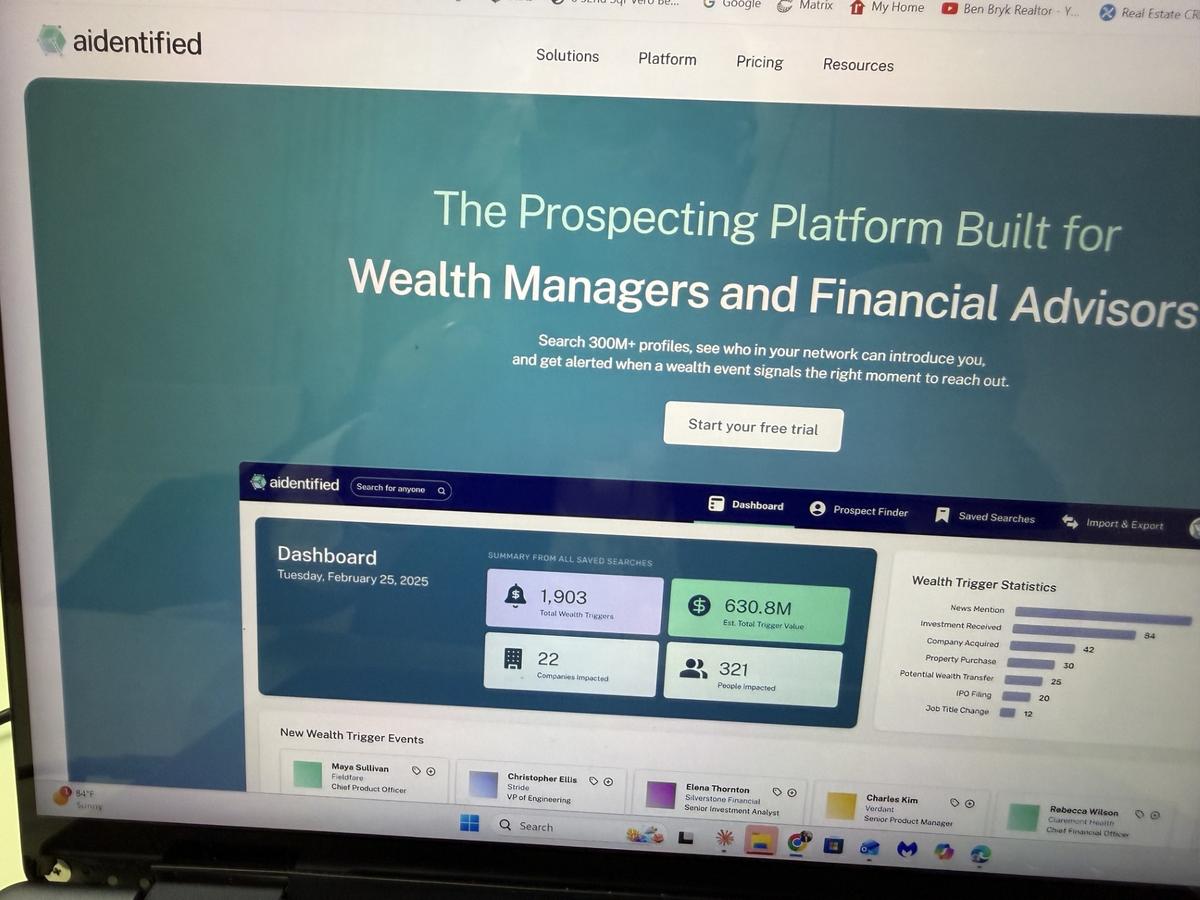
The more consequential tool works in the opposite direction. Vero Premier Properties is one of only four real estate practices in Florida with access to AIdentified, a wealth-intelligence platform indexing more than 300 million profiles. Rather than waiting for the right buyer to find a listing, it allows us to construct a profile of who that buyer is — wealth band, geography, industry, life stage — and identify the specific individuals who match, along with the liquidity events that signal the right moment to reach them.
For a barrier island condominium in 2026, that capability is not a luxury. It is the answer to the market's central problem. The pool of buyers willing to underwrite an association's paperwork is smaller than it was three years ago. When the pool narrows, precision replaces volume. No competitor in the Vero Beach market currently offers this.
Behind both sits our Financial Concierge Desk, which coordinates domicile attorneys, certified public accountants, and wealth advisors for buyers relocating from high-tax states. A Northeast buyer weighing a Vero Beach purchase is rarely making only a real estate decision, and the transaction moves faster when the adjacent questions are answered in the same room.
None of this is happening in a weak luxury market. Coldwell Banker's Global Luxury Mid-Year Report, released July 14, found that prospective buyer interest in United States luxury real estate doubled over the first five months of 2026, with California, New York, and Florida drawing the heaviest international attention. The report identified a pronounced shift toward larger footprints and unique properties — searches for one-of-a-kind estates rose 146 percent year over year — alongside a rise in all-cash purchasing and a widening divide between market tiers.
Vero Beach entered that environment carrying its own tailwind, having been named the second-best beach town in the country to buy a home by Travel + Leisure this month. Thirty-year mortgage rates near 6.6 percent, with jumbo product slightly above, remain a headwind nationally and a footnote in a market where most buyers do not borrow.
The demand is present. The capital is present. What has changed is the diligence standard standing between them and a signed contract.
Fannie Mae stops accepting baseline reserve funding as an acceptable method for condominium project eligibility. Where a reserve study offers multiple funding paths, the association's budget must reflect the highest recommended allocation. Associations that continue using the lower state-permitted method may find their buyers unable to obtain conventional financing.
No. It means the buyer pool may narrow to cash purchasers if the association's budget does not conform. In a market where roughly 62.7 percent of transactions close in cash, that is survivable — but cash buyers price the risk they absorb, so the effect typically shows up in the number rather than in whether a sale occurs.
The structural integrity reserve study requirement reaches condominium buildings with three or more habitable stories, so four stories is within scope. Milestone inspection timing depends on age and coastal proximity — thirty years generally, twenty-five within three miles of the coast, which captures most of the barrier island.
Seven days, extended from three under House Bill 913. Sellers should assume that week will be used carefully, and prepare the package accordingly.
Waiting has a cost that is easy to miss. August carries thinner buyer traffic than February, but it also carries thinner competing inventory, and it allows a seller to reach season already positioned, documented, and priced correctly rather than arriving alongside everyone else. Associations also need lead time to produce records, and that lead time does not compress.
That should be addressed before the listing goes live rather than during a contract. A missing study in mid-2026 is the single most damaging thing a buyer's attorney can discover, precisely because it is discovered rather than disclosed.
Your association's counsel and manager for the compliance posture, your lender for financing eligibility, and your agent for what both mean at the closing table. The three answers are related and are rarely delivered by the same person.
The instinct among condominium sellers this summer is to wait — for the deadline to pass, for the rules to settle, for someone to say the worst is over. That instinct misreads the situation. The rules are not becoming more permissive. Documentation obligations have expanded in each of the last four years, and the secondary mortgage market has now aligned itself with the stricter reading.
The advantage this August belongs to the seller who treats the association's paperwork as part of the offering. It is the least glamorous work in luxury real estate, and it is currently the highest-leverage.


Lead Real Estate Agent
Buying a home is a very emotional experience, especially for those who have not done it very often. My experience in sales can help guide buyers with an analytical approach.
Find Your Dream Home
Get assistance in determining current property value, crafting a competitive offer, writing and negotiating a contract, and much more. Contact us today.