The 2026 Generational Shift in Real Estate — and What It Means on the Barrier Island
The National Association of Realtors has just described an American housing market led by equity-rich buyers paying cash and relocating to be near family. On the Vero Beach barrier island, that is not a forecast. It is a description of the closings already on the calendar.
Every spring, the National Association of Realtors publishes its Home Buyers and Sellers Generational Trends Report, a 111-page accounting, drawn from the broader Profile of Home Buyers and Sellers, of how seven generations move through the housing market. The 2026 edition, released in April, is the rare industry document whose headline finding doubles as a strategic map. Read carefully, it explains precisely why a particular kind of property — gated, waterfront, club-adjacent, purchased outright — has become the most resilient asset class in residential real estate. It also explains why so many of those properties sit on a thirteen-mile stretch of barrier island in Indian River County.
The number that drew the headlines was a decline. First-time buyers fell to 21% of all purchases, down from 24% the prior year and the lowest share the association has recorded since it began tracking the figure in 1981. The typical first-time buyer is now 40 years old, roughly a decade older than the historical norm. Affordability, elevated mortgage rates, and thin entry-level inventory have pushed the on-ramp to ownership later into life than at any point in the modern record.
But the more instructive number was a constant. For the second consecutive year, Baby Boomers accounted for the largest share of buyers, at 42%, and the largest share of sellers, at 55%. They are the only generation dominating both sides of the transaction. Their advantage is not income. It is equity — decades of it, compounded through home-price appreciation and recycled, often in cash, into the next purchase.
The buyer NAR describes already lives here
The 2026 report does more than count Boomers. It explains their motives, and the explanation has changed. In earlier decades, this generation moved for the same reasons Millennials do now: a job, a growing family, the need for more space. Today, NAR's deputy chief economist notes, Boomers move by choice — to be closer to friends and family, to downsize, or to retire into a work-free life. More than half of both Younger and Older Boomers used the proceeds from a primary-home sale to fund the down payment on their next home.
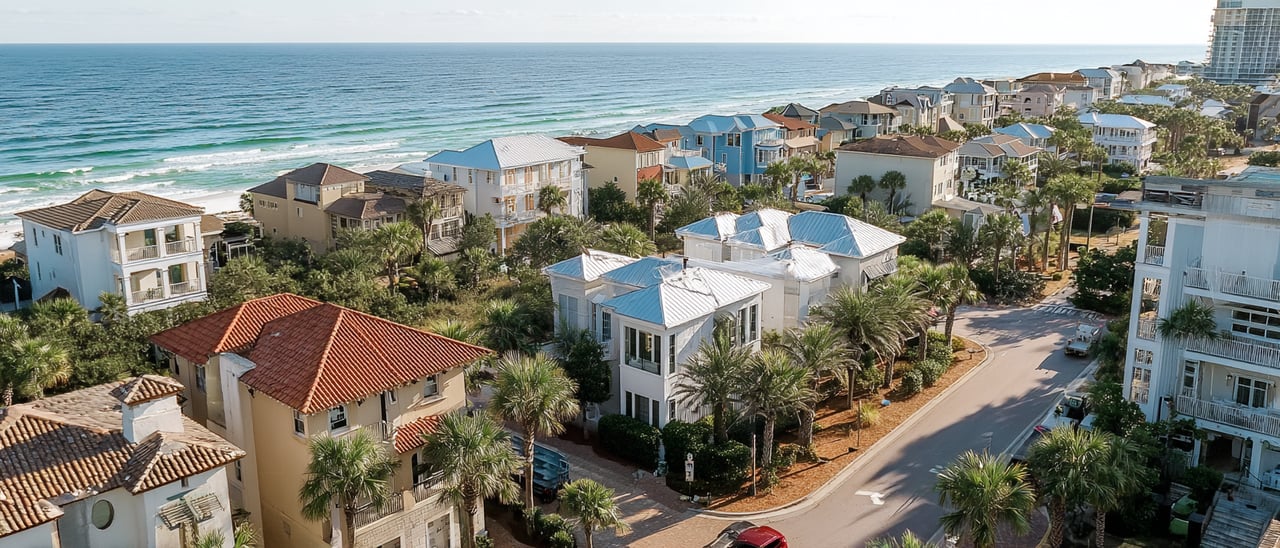
That sentence is a portrait of the barrier island buyer. The desire to relocate near family, financed by liquidated equity, with no employer dictating geography, is the engine of the Vero Beach luxury market. And it is reflected in the single statistic that separates this island from nearly every comparable destination in the country.
NAR's broader figures make the connection explicit: the share of buyers who finance a purchase falls as age rises. Older buyers lean on the sale of a previous residence rather than a mortgage. An island where nearly two in three transactions require no lender at all is, in effect, the purest expression of the national trend the report identifies — equity-rich households converting accumulated wealth into a primary residence, on their own timetable, free of rate sensitivity.
Multigenerational living, and the Gen X exception
One countercurrent in the 2026 report deserves the island's attention. Multigenerational home purchases declined overall, to 14% of buyers from 17% the year prior. But the decline was uneven. Generation X bought the highest share of any cohort, at roughly one in five, and across all generations the leading motivations were the same: caring for aging parents, cost savings, and adult children returning home.
This is the relocation that brings two generations south at once — the retiring Boomer and the Gen X family weighing where their own parents will age. The barrier island's larger estate product, its proximity to nationally regarded medical care, and its gated privacy answer that question better than most destinations attempting to serve both households under one roof. It is also where our Cleveland Clinic Preferred Physician Realtors designation, exclusive to Indian River County, becomes more than a credential. It is the practical infrastructure a multigenerational move requires.
The wealth they bring, and the structure that protects it
The 2026 report establishes that today's dominant buyer arrives with substantial equity. The question that follows — the one the report does not answer, because it is not its subject — is how much of that wealth survives the move. Here Florida's structure does the work that the Northeast's does not.
The Florida Financial Trifecta — zero state income tax, a homestead property tax near 1% capped by Save Our Homes, and zero state estate tax — is the reason the equity NAR describes goes further on this coast than on any other. A Boomer selling an appreciated home in Connecticut, Massachusetts, or New York and redeploying the proceeds on the barrier island is not merely changing addresses. They are moving the same capital into a jurisdiction that taxes it far more lightly, into product priced roughly two-thirds below comparable Naples waterfront. The 2026 report identifies the buyer. Florida's architecture explains where that buyer's money is best spent.
Why the agent still closes the deal
For all the talk of a market reshaped by demographics and technology, the 2026 report is unambiguous on one point. Across every generation, 88% of buyers purchased through an agent, and 91% said they would use that agent again or recommend them — a figure that climbs to 90% among Older Boomers and 92% among the Silent Generation. On the selling side, 91% of sellers worked with an agent, and homes sold at a median of 99% of the final list price.
The confidence is highest precisely where the stakes are highest: among the older, equity-rich, often all-cash buyers who define the barrier island. These are not transactions in which a buyer experiments with a discount platform. They are relocations involving substantial capital, tax consequences across state lines, and product that does not trade on a public exchange. They demand representation, and the data shows the most sophisticated buyers know it.
The intelligence behind the transaction
A market led by relocating, equity-rich buyers rewards advisors who understand both the destination and the wealth being moved into it. That is the standard Vero Premier Properties was built to meet. Ranked in the RealTrends top 1.5% nationally, with more than $1.2 billion in career sales across 2,000-plus transactions, the firm operates as the Signature Division of Coldwell Banker Global Luxury, with reach across the International Luxury Alliance's 60 global markets and a Financial Concierge Desk for buyers coordinating a move across state lines.
The 2026 NAR Report, in brief
What did NAR's 2026 Generational Trends Report find about first-time buyers?
First-time buyers fell to 21% of all purchases, down from 24% the prior year and the lowest share since NAR began tracking the figure in 1981. The typical first-time buyer is now 40 years old, about a decade older than the historical norm.
Which generation bought the most homes in 2026?
Baby Boomers, at 42% of all buyers and 55% of all sellers — the second consecutive year leading both sides of the market. Their edge is accumulated home equity, not income.
How does the 2026 data connect to the Vero Beach barrier island?
The report describes equity-rich buyers paying cash and relocating near family, to downsize, or to retire. On the barrier island, 62.7% of transactions close all-cash — the highest rate nationally — comparable waterfront product prices roughly 66% below Naples, and Florida's tax structure preserves the equity those buyers bring.
What is the Florida Financial Trifecta?
Zero state income tax, an effective homestead property tax near 1% protected by the Save Our Homes assessment cap, and zero state estate tax — together preserving more accumulated wealth than higher-tax Northeastern states.
Do buyers still use real estate agents?
Overwhelmingly. The 2026 report found 88% of buyers purchased through an agent and 91% would use theirs again, with confidence highest among older, equity-rich buyers.
Source: National Association of Realtors, 2026 Home Buyers and Sellers Generational Trends Report (April 2026). Survey of primary-residence buyers who purchased between July 2024 and June 2025.