Sherborn, Massachusetts to Vero Beach: What New England's Most Intimately Wealthy Town Preserves — When the Property Tax Math Finally Wins
Ben Bryk June 14, 2026
Ben Bryk June 14, 2026
Sherborn, Massachusetts is a town of fifteen hundred and eleven households. Not fifteen thousand. Not five thousand. Fifteen hundred and eleven — a number so precise, so intentionally contained, that it functions less as a population figure and more as a statement of values.
In Sherborn, you know your neighbors. You know the orchard — Dowse Orchards, founded in 1778, still operating, the oldest continuously running orchard in Massachusetts. You know Farm Pond, a glacial kettle lake fed by springs so clear the water is classified separately from the standard New England reservoir. You know the bridle paths through Rocky Narrows, the Bogastow Brook corridor, the 195-acre Millborn Farm that the Trustees of Reservations acquired in 2024 to protect Charles River frontage and active agricultural land. You know these things because Sherborn is the kind of place where people pay attention to the land they live on.
They pay for that attention in property taxes. And in Massachusetts, in 2026, the bill has become a financial argument that no amount of attachment to Farm Pond can fully answer.
Sherborn's FY2026 residential tax rate is $15.66 per $1,000 of assessed value — sourced directly from the town's own Assessor's Office. On the median assessed home of $1,026,800, that produces an annual bill of approximately $16,079. Ownwell's 2025 analysis places the median annual bill at $17,678, reflecting an effective rate of 1.66% — significantly above the Massachusetts state median of 1.15% and more than sixty percent higher than the national median of 1.02%. On a $1.5 million Sherborn home, the annual property tax bill approaches $23,500.
That bill has been arriving every year for twenty or twenty-five years, compounding against a Florida alternative that charges, under the Save Our Homes cap and HJR 1-F enhanced exemption, materially less — from the first year of Florida homestead. The math is not close. It has not been close for a long time. What has been missing, for many Sherborn households, is the legislative deadline that converts a perpetual deferral into a defined decision.
December 31, 2026 is that deadline.
Sherborn is known nationally for attracting older, wealthy residents. The characterization is not pejorative — it is a description of the household that chose Sherborn deliberately, typically after building significant professional capital over a twenty- or thirty-year career, and that now holds a property in one of New England's most conservation-protected communities while sitting on an accumulated wealth profile that Massachusetts has engineered a comprehensive plan to access.
The plan has three components. The first is the Millionaires Tax — nine percent on every dollar of income and capital gains above one million, permanent since January 2023. For a Sherborn household with combined income of $1.3 million from private equity distributions, consulting income, or professional partnership draws, the excess state tax versus Florida domicile is approximately $27,000 per year. Over fifteen years from Sherborn's median age of forty-two: $405,000 in cumulative excess taxation, before accounting for what that capital would have compounded to if invested rather than remitted to Beacon Hill.
The second is the property tax. At a 1.66% effective rate on a $1.17 million median home, Sherborn's annual bill is a more immediate, more visceral argument than the income surtax — because it arrives four times a year regardless of income, regardless of realized gains, regardless of whether the household has had a particularly productive year. It is a structural cost of remaining domiciled in Massachusetts, applied at a rate that is among the highest in the Commonwealth for a wealthy community and that has been rising steadily within Proposition 2½'s constraints for decades.
The third is the estate tax. Massachusetts triggers its estate tax above two million dollars in total estate value. A Sherborn homeowner with a $1.17 million home plus an investment account, retirement assets, and professional partnership interests crosses that threshold without difficulty — and many of Sherborn's older-skewing residents have crossed it by a wide margin. Florida has no state estate tax. The protection is generational.
In June 2026, the Florida legislature passed HJR 1-F, proposing a $250,000 increase to Florida's homestead exemption on top of the existing $50,000 benefit. The measure goes to Florida voters in November 2026.
The provision that makes 2026 structurally different from every prior year: buyers who establish Florida homestead by December 31, 2026 qualify immediately for the enhanced exemption — without the standard five-year waiting period. For a Sherborn household currently paying $16,079 to $17,678 per year in Massachusetts property taxes on a one-million-dollar home, the first-year Florida property tax relief is not abstract. It is numerically concrete and immediately visible on the first tax bill.
Florida's Save Our Homes cap then limits annual assessed value increases to 3% regardless of market performance. Against Sherborn's 1.66% effective rate — applied to assessed values that rise with market appreciation — the Florida alternative delivers a structural improvement in real terms every year from day one of homestead. For the Sherborn household that has been running this analysis and deferring action for three or four years, December 31, 2026 is not another year to consider. It is the year the legislative calendar demands a decision.
This is a legislative threshold. Not a sales deadline. For older, accumulated-wealth households in a town known for producing exactly this buyer, the distinction is the point.

The Sherborn household is not looking for a resort. It has never been looking for a resort. What it has spent twenty-five years building — in a town with no downtown, no chain restaurants, no commuter rail, fifteen hundred and eleven households that know each other by name — is a life organized around community belonging, natural environment, and the particular quality of quiet that only a very small, very intentional place can provide.
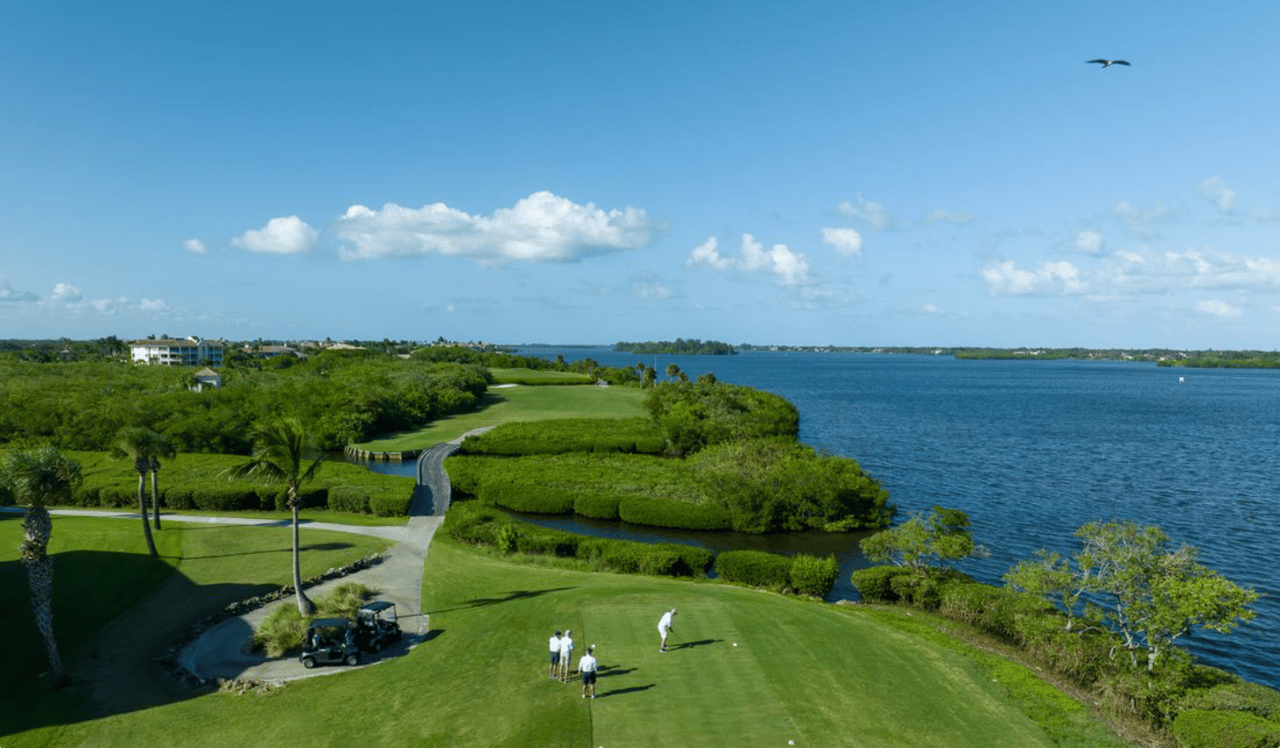
Vero Beach's barrier island delivers a version of that life with unusual fidelity. Not because it is rural — it is not. But because it operates at the same human scale, with the same resistance to density and commercialization, and with a natural environment that is neither a backdrop nor a selling point but a defining condition of daily life.
The Indian River Lagoon replaces Farm Pond — but it does so at a scale that transforms a summer swimming destination into a year-round living system. The same kayakers who paddle Bogastow Brook through Sherborn's conservation corridors find the Lagoon's mangrove channels, the Pelican Island National Wildlife Refuge, and forty-three miles of navigable Intracoastal waterway available on any morning they choose, in any month of the year. The water that was a seasonal pleasure in Massachusetts is a permanent condition in Vero Beach.
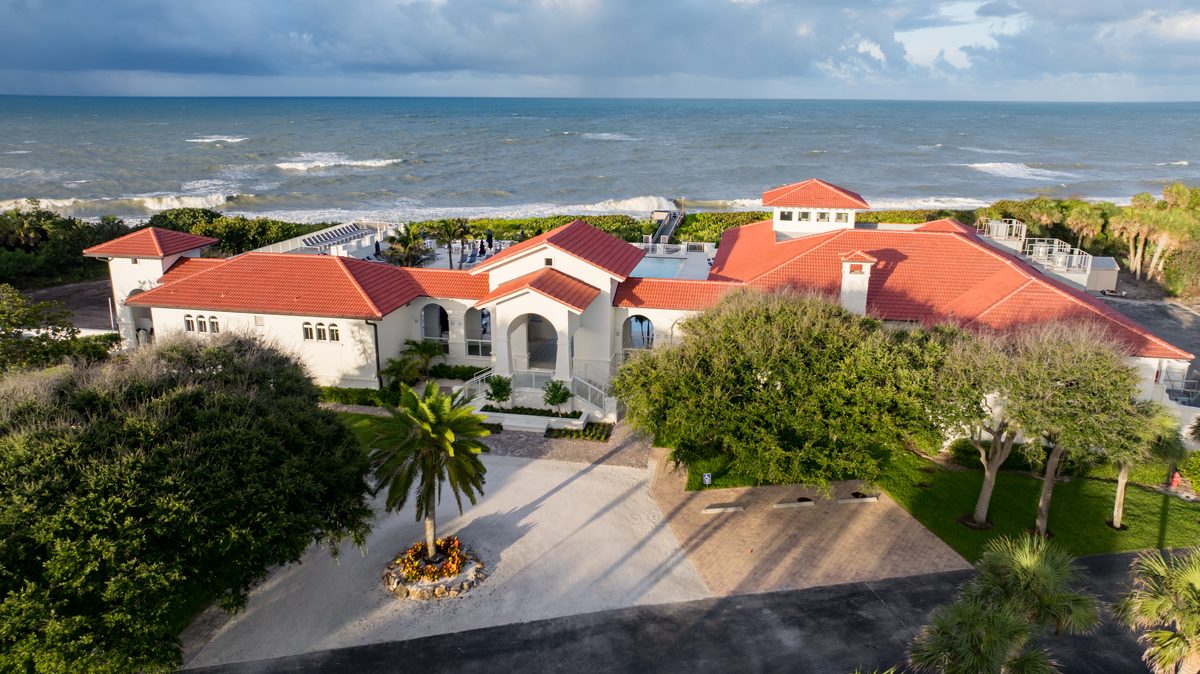
Grand Harbor's 750-plus acres on the Indian River Lagoon mirrors, in waterfront form, the conservation land character that Sherborn's Rural Land Foundation has spent decades acquiring and protecting. Sea Oaks' gated Atlantic oceanfront community operates at precisely the intimate residential scale — a small number of households who know each other, who chose the same community for the same reasons — that Sherborn's 1,511 households represent in rural Massachusetts. The Riverside Theatre and the Vero Beach Museum of Art serve a resident community that, like Sherborn, values cultural life conducted at a human rather than a metropolitan scale.
And Cleveland Clinic's presence on the Treasure Coast is a differentiator that carries particular weight for Sherborn's older-skewing demographic. The household that has spent twenty-five years depending on Partners HealthCare — Massachusetts General, Brigham and Women's, Dana-Farber — is not willing to compromise on medical infrastructure. Cleveland Clinic is not a compromise. It is a lateral transfer of capability, forty-five minutes from the barrier island, in a warmer climate.
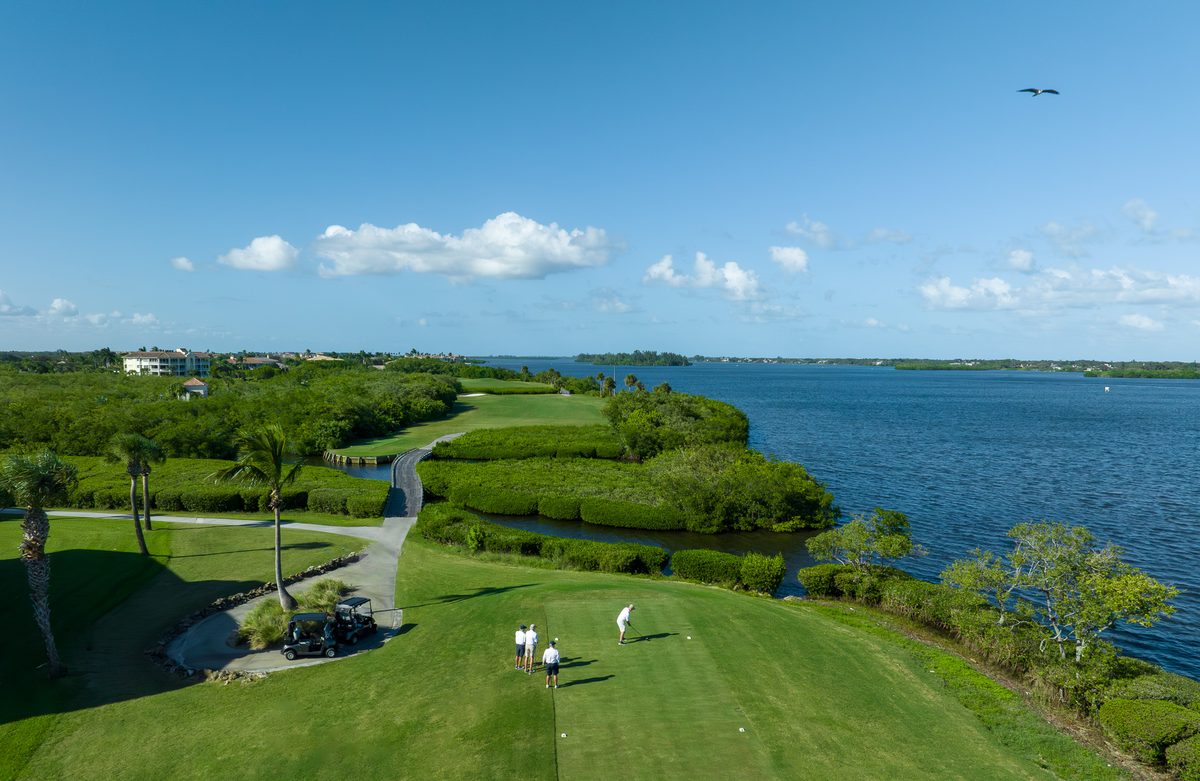
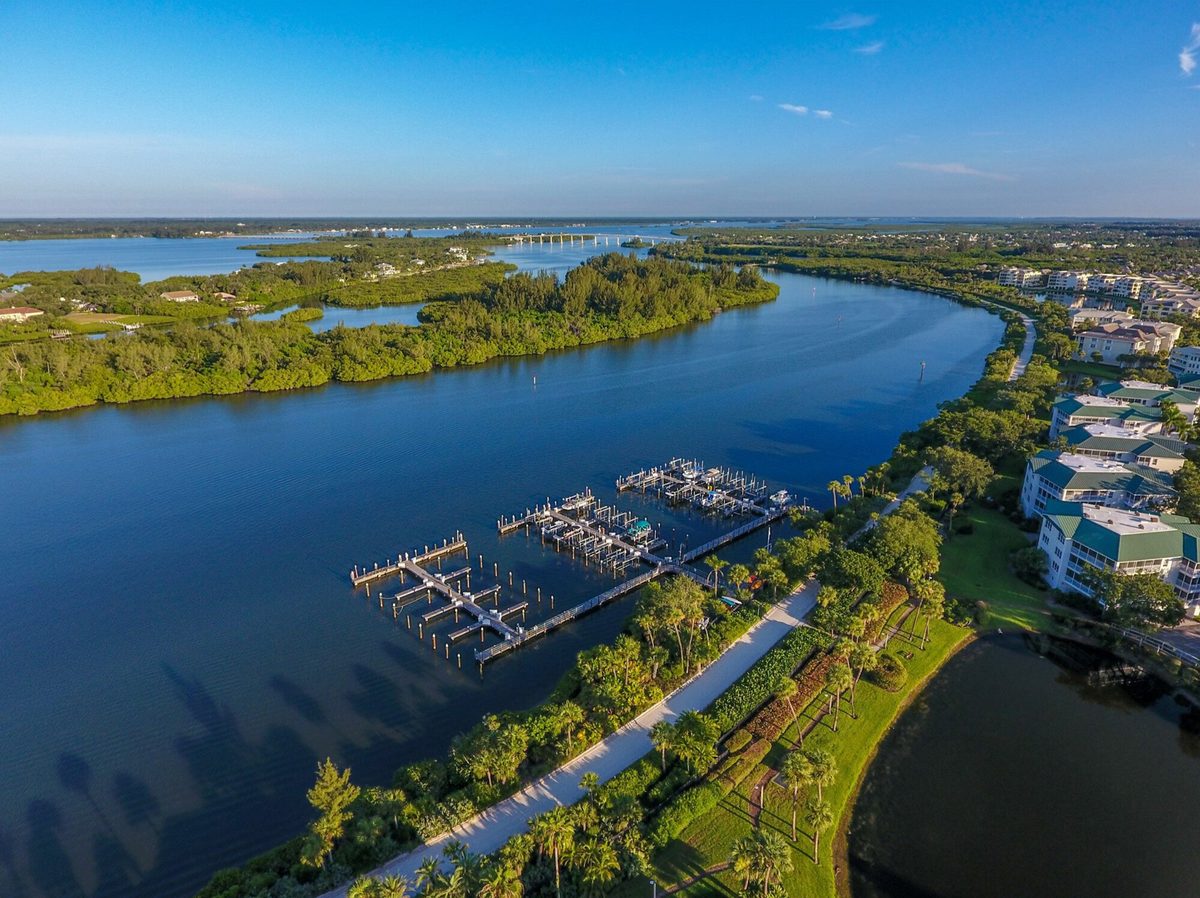
The Sherborn homeowner who has spent twenty-five years paying $16,079 to $17,678 per year in property taxes on a home worth $1.17 million arrives on the Vero Beach barrier island at a market where the average sale price is $1.99 million. This is not a downgrade dressed up as a financial argument. It is an equity upgrade: the capital built at Sherborn's 1.66% effective rate funds an entry point approximately $820,000 above the current home value, into a market with Atlantic oceanfront access, Indian River Lagoon waterway, Grand Harbor's 750-plus acres, and Sea Oaks' gated deep-water marina.
The barrier island's all-cash buyer rate of 62.7 percent is the highest of any luxury market in the United States — confirming a buyer pool that is liquid, equity-rich, and structurally similar to the Sherborn homeowner who arrives with two decades of compounded appreciation and no financing required. The market does not require debt to participate. It requires equity. Sherborn has been building exactly that, at exactly the wrong tax rate, for exactly long enough.
The price arbitrage against comparable Florida coastal markets is as relevant for Sherborn as for any town in the Northeast migration analysis. Vero Beach trades at 66 percent below Naples for the same Atlantic barrier island geography, the same low density, the same finite seven-mile supply constraint. The Sherborn household that has done the research — and this is a town where people research thoroughly — knows that the entry point available on the Vero Beach barrier island in 2026 is not permanent. The consensus that has priced Palm Beach and Naples at their current levels forms gradually. It is forming here.
Vero Premier Properties operates as a Signature Division of Coldwell Banker Global Luxury — a network reaching more than 40 countries and 60 global markets through the International Luxury Alliance. In Massachusetts, our referral relationships extend to the most productive Coldwell Banker offices and agents in communities including Sherborn, Dover, Weston, Wellesley, Needham, and Wayland — and to the estate attorneys, CPAs, and wealth managers in the MetroWest corridor who advise the households that have been running the Florida analysis for years.
The move from Sherborn to Vero Beach involves a defined sequence: an estate attorney who evaluates the domicile change and its impact on Massachusetts estate tax exposure, a CPA who models the income, capital gains, and property tax differential, a Sherborn listing agent who understands the town's conservation character and the specific buyer profile it attracts, and a Vero Beach buyer's representative who knows exactly which barrier island communities — Grand Harbor's 750-plus acres, Sea Oaks' gated marina, the intimate enclave of John's Island — align with what the Sherborn household has built its identity around. We coordinate every part of that sequence, and we have been doing so for decades.

For the Sherborn household, the Florida domicile decision delivers three simultaneous structural advantages — and the compound effect of all three, applied at Sherborn's specific tax profile, produces the clearest financial argument in the Massachusetts feeder market series.
The first is the property tax elimination. At a 1.66% effective rate producing $16,079 to $17,678 annually on median home values, Sherborn's property tax burden is the most immediately visible cost of Massachusetts domicile — and the most immediately relieved by Florida homestead. The HJR 1-F enhanced exemption, available without the standard five-year wait for buyers establishing homestead by December 31, 2026, combined with Florida's Save Our Homes 3% annual cap, begins reducing the effective tax rate from year one. For a community whose residents have been writing this check four times a year for two decades, the relief is not abstract.
The second is the elimination of state income tax. Florida's zero rate, constitutionally protected, applies to every dollar of Sherborn's income — earned, investment, partnership distribution, or capital gain — permanently, with no legislative revision available at the state level. Against Massachusetts' 9% surtax on amounts above $1 million, the Florida alternative is not an improvement at the margin. It is a structural transformation of the effective tax rate on all future income and gains.
The third is the elimination of Massachusetts estate tax exposure. For the Sherborn household at the wealth accumulation level this community represents — home equity, investment accounts, business interests, inherited assets — the Massachusetts estate tax above $2 million is not a peripheral concern. It is a primary planning liability, and Florida removes it entirely, for the current generation and for the generation that follows.

Ben Bryk and Vance Brinkerhoff offer confidential consultations for Sherborn, Dover, Weston, Wellesley, Wayland, and Needham households — and for the estate attorneys, CPAs, and wealth managers serving them — evaluating the complete Florida Financial Trifecta and the December 31, 2026 HJR 1-F homestead deadline. The conversation is calibrated to the estate structure, income profile, property tax burden, and generational planning priorities of the Sherborn household.
Ben Bryk · (772) 713-9455Vance Brinkerhoff · (772) 913-3426floridaeastcoastluxuryhomes.com

Lead Real Estate Agent
Buying a home is a very emotional experience, especially for those who have not done it very often. My experience in sales can help guide buyers with an analytical approach.
Find Your Dream Home
Get assistance in determining current property value, crafting a competitive offer, writing and negotiating a contract, and much more. Contact us today.