New York's Estate Tax Cliff Is One of the Most Punishing Wealth Transfer Traps in America. Florida Has No Estate Tax. Here Is the Math.
Ben Bryk June 5, 2026
Ben Bryk June 5, 2026

The cliff effect — where an estate worth one dollar more than the threshold pays tax on every dollar — is genuinely shocking to buyers who encounter it for the first time. This piece shows you exactly what it costs. And what Florida's zero-estate-tax environment means for the generation of wealth you are building.
Most high-net-worth New Yorkers are aware, in a general way, that New York has an estate tax. What most are not aware of — until they sit across from an estate planning attorney and see the calculation on paper — is the cliff. The specific, legally codified mechanism by which New York's estate tax can take more from a moderately wealthy estate than from a substantially wealthier one. The mechanism by which careful, lifelong wealth accumulation can be undone, at the moment of transfer, by a single dollar of excess value.
This piece explains the cliff precisely. It shows what it costs in real numbers. And it presents the alternative that an increasing number of Manhattan's most financially rigorous families have identified, evaluated, and acted upon.
Once a New York estate exceeds 105% of the exemption amount — $7.518 million in 2025 — the entire estate becomes subject to New York estate tax. Not merely the excess. Every dollar. The exemption is lost entirely. An estate worth $7.52 million can owe more in New York estate tax than an estate worth $7.4 million — because the smaller estate stays below the cliff.
New York State's estate tax exemption for 2025 stands at $7.16 million per person. For estates valued below that threshold, no New York State estate tax applies. For estates between the exemption and 105% of that amount — between $7.16 million and approximately $7.518 million — tax is calculated only on the excess above the exemption. This is the zone where the system behaves as most taxpayers expect it to.
Then the cliff arrives.
At the moment an estate's value crosses 105% of the exemption — at $7.519 million — New York eliminates the exemption entirely. The entire estate becomes taxable from the first dollar. Tax rates ranging from 3.06% to 16% apply not to the overage, but to the total value. The effective tax rate on the amount just above the cliff can exceed 100% — meaning a family can inherit less by receiving a larger estate than a smaller one.
The numbers in the table above are not hypothetical. An estate of $8 million — by no means extraordinary for a Manhattan family that has owned real estate, built a career, and accumulated retirement assets over four decades — faces a New York estate tax liability of approximately $773,200. An estate of identical character, domiciled in Florida, owes nothing. Not a reduced amount. Nothing.
And the cliff is not the only structural disadvantage New York's estate tax imposes. Unlike the federal system, New York allows no portability between spouses. When the first spouse dies, their unused exemption does not transfer. Without specific trust planning — credit shelter trusts, disclaimer trusts, carefully structured beneficiary designations — a surviving spouse faces the full cliff risk on their own estate. The federal system, by contrast, allows a surviving spouse to use the deceased spouse's unused exemption, effectively doubling the protection.
New York includes a three-year lookback on gifts. Assets transferred in the three years before death are added back into the taxable estate — potentially pushing an estate that would have stayed below the cliff over it retroactively. A gift made to reduce estate exposure can trigger the very tax liability it was designed to avoid if the donor does not survive three years from the gift date. Florida has no comparable clawback provision.
Florida imposes no estate tax and no inheritance tax. A Florida-domiciled estate of $8 million, $20 million, or $200 million owes New York State zero in estate tax. The calculation is not complex. There is no cliff to manage, no portability to engineer, no clawback window to survive. The estate planning conversation in Florida begins from a position of zero state estate tax liability — and focuses entirely on how to manage federal exposure, which begins at $13.99 million and allows full spousal portability.
For the New York family with an estate in the $7 million to $20 million range — the zone where New York's cliff creates the most disproportionate damage — Florida domicile eliminates an entire category of tax risk. Not reduces it. Eliminates it.
Florida's estate tax advantage does not stand alone. It is the third pillar of what estate planners and wealth advisors working with relocating clients call the Florida Financial Trifecta — three compounding advantages that, taken together, represent the most powerful legal wealth-preservation strategy available to high-net-worth households leaving New York.
The compounding effect of all three pillars, applied over a decade of ownership, is a wealth-preservation outcome that no financial instrument available in New York can replicate. The income tax savings fund the carrying costs of a Florida property many times over. The estate tax elimination protects the generational transfer that a career of accumulation was designed to achieve. And the property tax structure ensures that the Florida home does not become its own escalating liability.
New York's estate tax cliff is not a technicality. It is a wealth transfer mechanism — transferring assets that a family spent a lifetime building from their heirs to the state. Florida eliminates it entirely.
On June 2, 2026 — today — the Florida Legislature passed House Joint Resolution 1-F, sending to the November 2026 ballot a constitutional amendment that would increase Florida's homestead exemption from $50,000 to $150,000 in 2027 and $250,000 in 2028 on non-school property taxes. Governor DeSantis has expressed full support. The amendment requires 60% voter approval to pass — a threshold that current polling suggests is well within reach.
This development materially changes the calculus for high-net-worth buyers evaluating a Florida purchase. But it also creates a specific, time-sensitive consequence that every out-of-state buyer must understand precisely.
Under HJR 1-F as passed, buyers who establish Florida residency after January 1, 2027 must maintain Florida residency for five years before qualifying for the increased $250,000 exemption. The five-year clock does not start until after January 1, 2027 for late arrivals. Buyers who purchase a Florida property and establish homestead residency before December 31, 2026 qualify under existing rules — with no waiting period for the base exemption — and would be positioned to receive the full benefit of the increased exemption if it passes in November without the five-year delay.
The practical implication is categorical: a high-net-worth New York buyer who has been evaluating a Florida purchase — and particularly a Vero Beach barrier island property — now has a specific financial reason to execute before year end. The window is not unlimited. And the potential savings from the expanded exemption, on a luxury property, are not incidental.
The financial case for Florida domicile is airtight. But the buyer who makes this move well understands that the quality of life at the destination must justify the transition — not merely the tax savings. In Vero Beach, that case is made comprehensively, without apology.
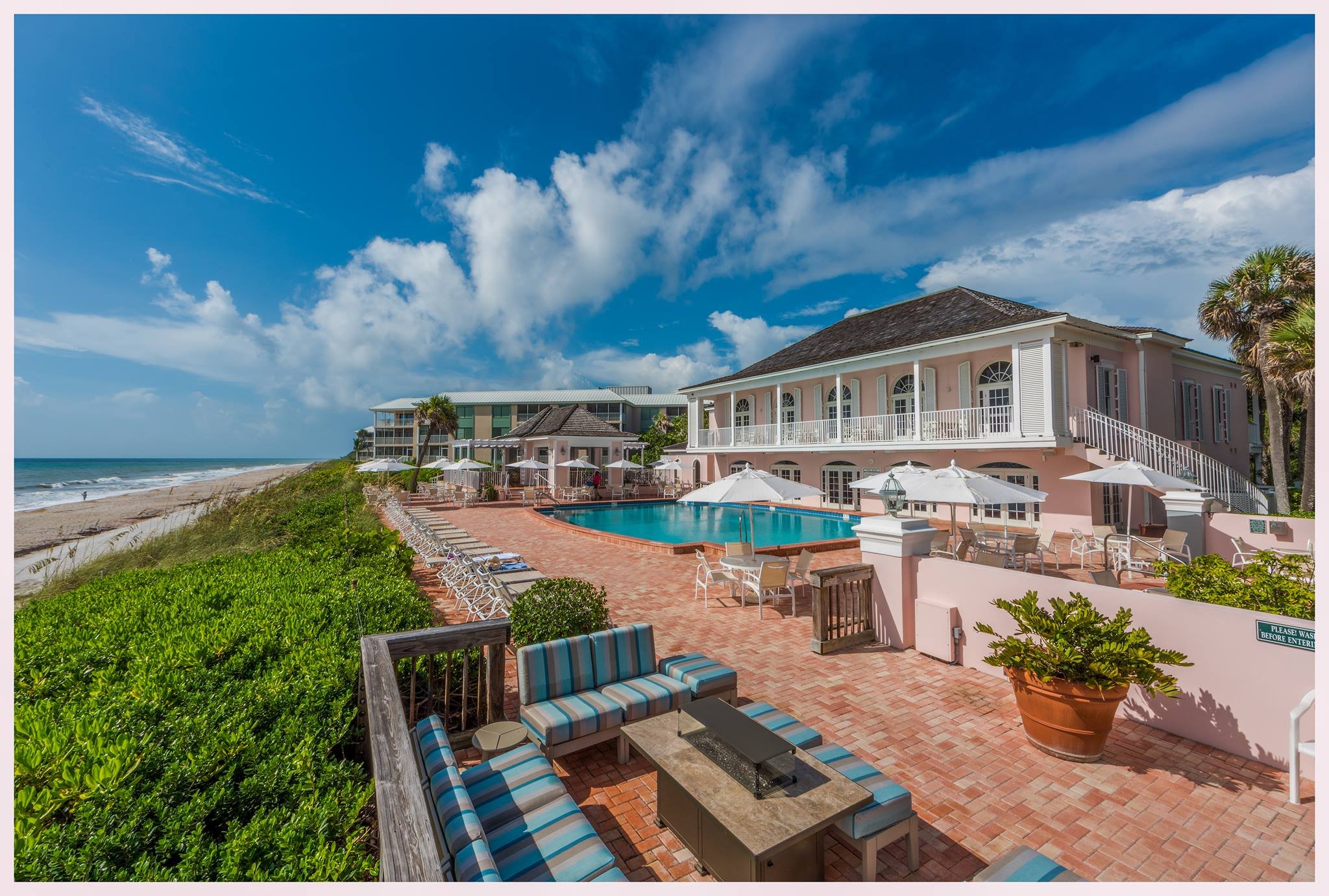
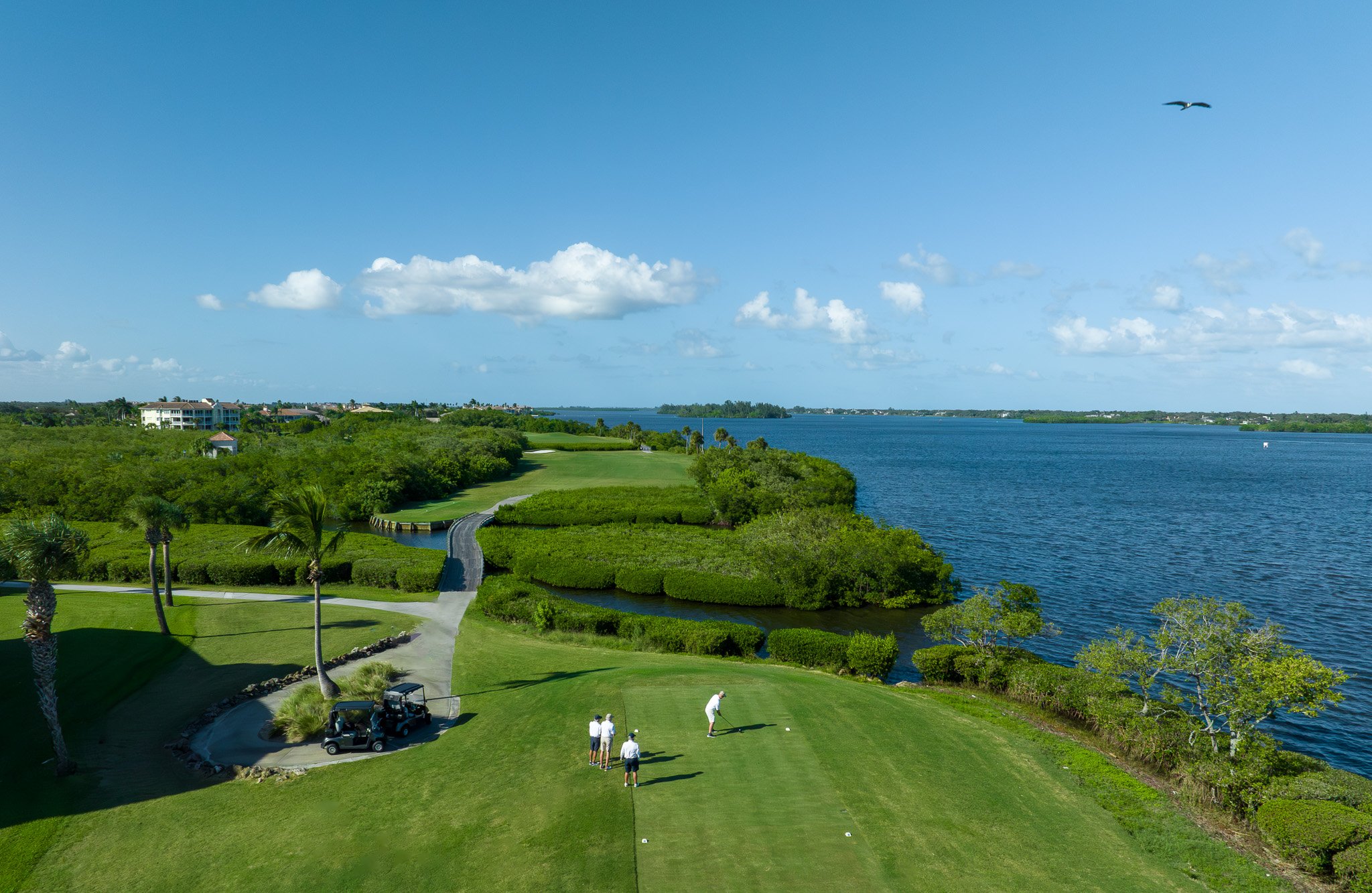
The barrier island communities of Grand Harbor and Sea Oaks offer the full complement of amenities that discerning buyers expect: championship golf on courses bordered by Indian River Lagoon, deepwater marina access, private beach clubs with Atlantic frontage, resort-quality wellness facilities, and an architectural character that the more crowded Florida markets have sacrificed to density. Grand Harbor is additionally investing in its own future — a new wellness center breaking ground this September, a clubhouse expansion planned for spring 2027. This community is not coasting on its legacy. It is building toward its next chapter.
The arts infrastructure of Vero Beach — anchored by the Vero Beach Museum of Art and the Riverside Theatre, a professional Equity theater of national standing — provides the cultural engagement that a buyer leaving Manhattan's density has every right to expect. Healthcare is answered by Cleveland Clinic's affiliation with Indian River Medical Center and the Scully-Welsh Cancer Center. The dining scene is intimate and chef-driven. The pace is not a compromise. It is the reason.
CNBC has ranked Florida the number one economy in the United States for three consecutive years. For the buyer relocating a business domicile alongside a personal one — maintaining professional engagement while establishing Florida residency — the state's operating environment has been validated at the highest level of independent analysis available.
JetBlue operates daily nonstop service from Vero Beach Regional Airport directly to John F. Kennedy International Airport. The airport sits fifteen minutes from the barrier island. There is no Long Island Expressway. There is no connection in Atlanta. There is a direct flight to the city — daily — whenever the buyer needs it.
Breeze Airways extends that connectivity to ten Northeastern cities. American Airlines provides nonstop service to Charlotte Douglas — the second-largest hub in the American network — placing Vero Beach within one connection of 180 global destinations. The estate planning, the domicile establishment, the professional obligations that remain in New York — none of them require abandoning access to the city. They require a direct flight.
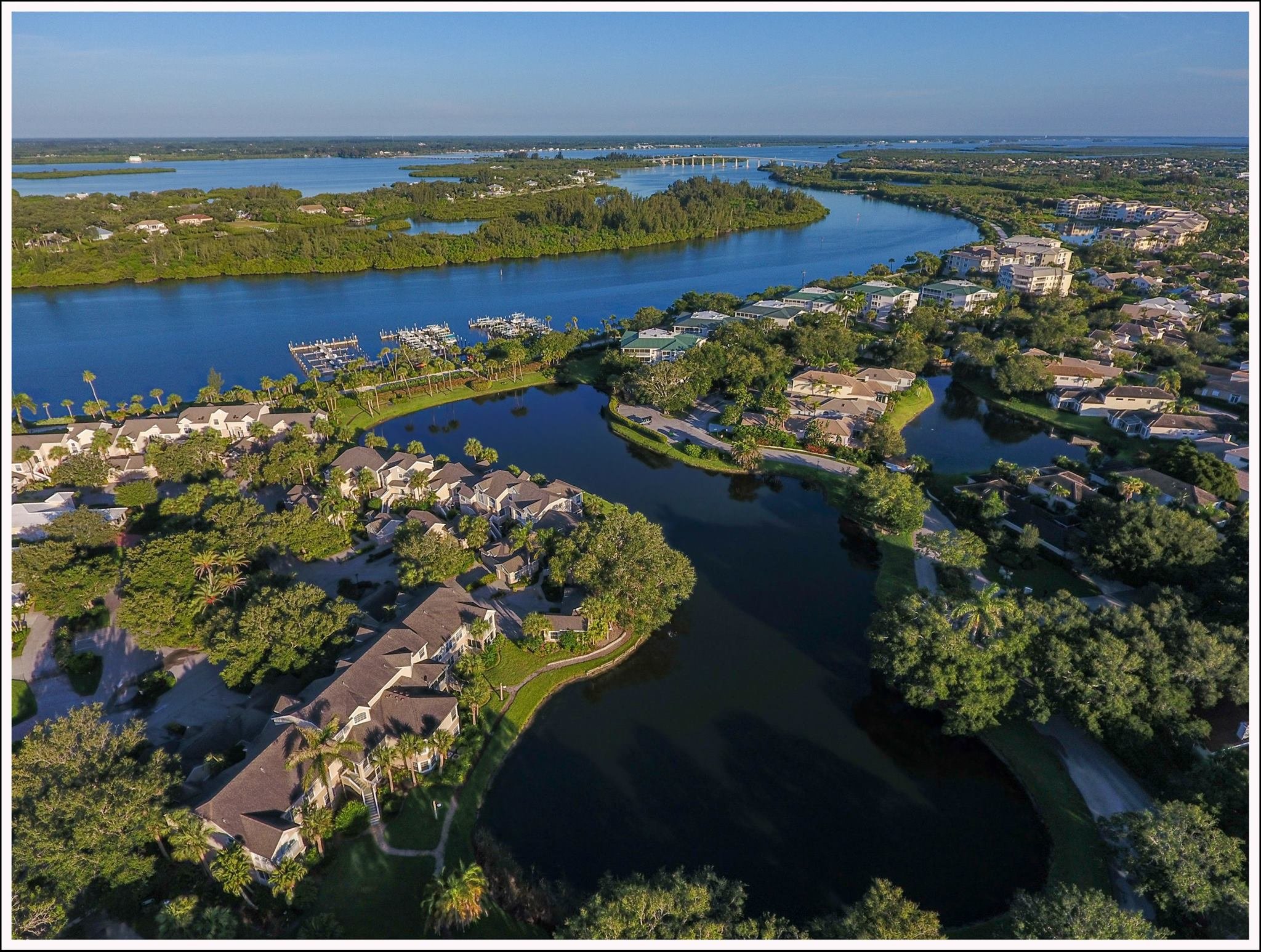
Established for the buyer who understands that eliminating New York's estate tax cliff, establishing Florida domicile, and capturing the December 31st homestead deadline requires a coordinated professional team — not a single conversation with a real estate agent.
Ben Bryk and J. Vance Brinkerhoff founded Vero Premier Properties with a specific focus: serving the high-net-worth buyer who arrives in Vero Beach having already concluded that the financial case is made — and who needs the representation, the professional network, and the local knowledge to execute the transaction with the same precision they apply to every other significant decision.
Their production is independently verified by RealTrends: $1.2 billion in career sales volume, 2,000+ closed transactions, 35+ years of combined experience concentrated specifically on the Vero Beach luxury market. A national ranking in the top 1.5% of all realtors in the United States. Named by Apple News among the Top 10 Most Trusted Realtors in the state of Florida for 2025 — one of ten teams recognized across a state of 22 million people.
Vero Premier Properties operates the only luxury real estate mobile application on the Apple App Store within 100 miles of Vero Beach. That platform produces a documented result: listings represented by Vero Premier sell 40% faster than the market average. In a market where the December 31st homestead deadline creates a specific incentive to close before year end, that speed advantage is not incidental — it is the difference between capturing the exemption and waiting five years for it.

The cliff has always been there. The homestead deadline is new. Together, they make the case for acting before December 31st the most financially compelling it has ever been.
New York's estate tax cliff is not an abstraction. It is a documented, precisely calibrated mechanism that has transferred hundreds of millions of dollars from New York families to the state treasury — in transactions that, with proper domicile planning, would have transferred those same assets to the next generation intact.
Florida eliminates it. Entirely. Permanently. And as of today — June 2, 2026 — the Florida Legislature has sent to voters a constitutional amendment that would expand the homestead exemption to $250,000, with a five-year waiting period for buyers who arrive after January 1st of next year.
The window is open. The deadline is December 31st. The conversation begins at FloridaEastCoastLuxuryHomes.com.
Vero Premier Properties is a boutique luxury real estate team and signature division of Coldwell Banker Global Luxury, based in Vero Beach, Florida. Ben Bryk and J. Vance Brinkerhoff specialize in barrier island properties in the 32963 zip code, including Grand Harbor and Sea Oaks. Production credentials independently verified by RealTrends. Estate tax figures are for illustrative purposes based on published 2025 New York State rates and exemption amounts. The Florida homestead exemption expansion (HJR 1-F) is a proposed constitutional amendment approved by the Legislature on June 2, 2026, subject to 60% voter approval in November 2026. Readers should consult a qualified estate planning attorney and CPA regarding their specific circumstances.
Vero Beach Barrier Island Specialists · Grand Harbor · Sea Oaks · 32963
$1.2B Verified Volume · 2,000+ Transactions · Top 1.5% Nationally


Lead Real Estate Agent
Buying a home is a very emotional experience, especially for those who have not done it very often. My experience in sales can help guide buyers with an analytical approach.
Find Your Dream Home
Get assistance in determining current property value, crafting a competitive offer, writing and negotiating a contract, and much more. Contact us today.