Needham, Massachusetts to Vero Beach: What the Town That Built Route 128 Finds When the Equity Vests in a State That Charges Zero
June 16, 2026
June 16, 2026
In 1952, a developer named Gerald Blakely broke ground on a gravel quarry in Needham, Massachusetts. What he built — the first master-planned business park on what would become Route 128, the nation's first beltway-style highway — was the prototype for the entire American technology corridor. The defense contractors, research laboratories, and eventually the software companies, biotechnology firms, and the digital economy itself followed the model that Needham established on that former gravel quarry and extended it up and down the highway that encircles Boston.
The careers built along that corridor — the engineering careers, the biotech careers, the private equity and venture capital careers that turned Route 128 companies into national and global enterprises — are now concentrated in the homes of a community that GoBankingRates ranks as the 42nd wealthiest suburb in the United States. Average household income: $267,951. Incomes in the 99th percentile nationally. Average single-family sale price: $1,950,115.
And Massachusetts has a nine percent plan for the equity those careers generated.
Not a proposal. Not a pilot program. Law, since January 2023, applied to every dollar of income and capital gains above one million — including the restricted stock unit vesting schedules, the option exercise events, the acquisition distributions, and the private equity liquidity events that are the primary compensation vehicle for the household that built its career on the Route 128 technology corridor. The financial structure that enabled Needham to become one of the forty-two wealthiest suburbs in America is now subject to a nine percent surtax at the state level, applied to the precise income events that created that wealth.
Florida's rate on all of it: zero.
Route 128 was designed as a bypass — a circumferential highway around Boston intended to relieve the city's congested arterial roads. What it became was something that no one fully anticipated: the East Coast's answer to Silicon Valley, a corridor of defense contractors, research institutions, technology companies, and eventually the entire modern biotechnology economy, stretching from the outer ring of Boston's suburbs in a forty-mile arc that defines the region's economic character to this day.
Needham was not just adjacent to that corridor. It was its origin point. The first master-planned business park on Route 128 was built in Needham in the early 1950s. The town sits directly on I-95/Route 128, giving its residents faster highway access to the corridor than virtually any other community in the metropolitan area — a competitive advantage that real estate guides consistently identify as making Needham "one of the easiest commutes you can find" for anyone whose job is along the 128 belt rather than downtown Boston.
Needham's resident profile reflects the career that Route 128 produces: highly credentialed, equity-compensated, and financially sophisticated. Eighty-one percent of adults hold bachelor's degrees or higher. Twenty-nine percent of residents are in the 45 to 64 peak earning cohort. The compensation structure of Route 128's technology and biotechnology executives — base salary supplemented by restricted stock unit awards, performance bonuses, option grants, and partnership distributions — creates a household income profile that, in strong years, crosses the Massachusetts Millionaires Tax threshold with regularity.
That threshold, once crossed, is billed at nine percent. On every dollar above one million. Permanently. By a law passed in 2022 that had not yet been signed when many of the equity grants that will vest in 2025 and 2026 were first awarded.
The Massachusetts Millionaires Tax argument operates differently for the Needham household than for any other community in this series. In Wellesley or Winchester, the income surtax is a recurring annual cost applied to dual-income professional salaries. In Needham, the critical exposure is concentrated — it arrives in the specific year that a career-defining equity event occurs.
Consider the arithmetic. A Needham senior engineer at a Route 128 biotech company has a $550,000 base salary and $600,000 in RSUs vesting this year. Total compensation: $1.15 million. Massachusetts takes nine percent on the $150,000 above the threshold: $13,500 in state surtax, above and beyond the standard Massachusetts income tax on the full amount.
Now consider the event that the Needham founder, the early-stage employee, or the venture-backed executive has been working toward for a decade: the acquisition. The IPO. The secondary offering that converts paper equity into realized gains. A $3 million capital gain on the exercise of options granted before the company's Series B. Massachusetts takes nine percent on the $2 million above the threshold. That is $180,000 in state capital gains surtax — $180,000 that a Florida-domiciled holder of the same equity does not pay. Not this year. Not in any year. Florida has no state capital gains tax.
The critical implication — and it is one that the Route 128 household running this calculation already understands — is that the domicile decision must precede the taxable event. Massachusetts assesses tax based on the taxpayer's domicile at the time the gain is realized. Establishing Florida primary residence after the acquisition closes, after the options are exercised, after the RSUs have vested and been sold: too late. The decision that saves $180,000 in state tax on a $3 million event is made eighteen months earlier, when the company's acquisition timeline is becoming visible and the December 31, 2026 legislative deadline is still on the horizon.
The equity event argument is the most powerful case for Needham — but it is not the only one. The Needham household faces three simultaneous Massachusetts tax exposures, each of which is already in effect and each of which a Florida domicile addresses permanently.
The first is the property tax. Needham's FY2026 residential rate is $10.83 per $1,000 — set at the November 25, 2025 Select Board tax classification hearing and reported by the Needham Observer. Needham maintains a split tax rate, with commercial property taxed at $20.09 per $1,000. The Select Board adopted the maximum allowable commercial-to-residential shift, saving the average residential homeowner $1,880 annually. Even with that structural advantage, the annual property tax bill on Needham's $1,950,115 average single-family home is approximately $21,119 — and the Ownwell median annual bill of $13,484 on the median assessed value reflects a 1.06 percent effective rate on a nationally expensive asset base.
The second is the recurring income surtax. In any year that a Needham professional's combined income — salary, bonus, vesting RSUs, investment income — exceeds one million dollars, Massachusetts takes nine percent on the excess. For the Route 128 household whose compensation structure routinely includes equity components that push total annual income above the threshold, this is a predictable annual cost in strong years, not a speculative future risk.
The third is the estate tax. Massachusetts triggers its estate tax above two million dollars in total estate value. A Needham homeowner with a $1.95 million home plus an investment portfolio and retirement accounts accumulated over a thirty-year career is inside that threshold by a margin that grows with each year of home appreciation and each year of investment compounding. Florida has no state estate tax. The protection is permanent and generational — extending to the household that inherits what the Route 128 career built.
In June 2026, the Florida legislature passed HJR 1-F, proposing a $250,000 increase to Florida's homestead exemption on top of the existing $50,000 benefit. The measure goes to Florida voters in November 2026.
The critical provision: buyers who establish Florida homestead by December 31, 2026 qualify immediately for the enhanced exemption — without the standard five-year waiting period. Florida's Save Our Homes cap then limits annual assessed value increases to 3% regardless of market performance. For a Needham household currently paying approximately $21,119 per year in Massachusetts property taxes on the average single-family home, the first-year Florida relief under the enhanced homestead exemption is numerically concrete.
But for the Needham Route 128 household, the December 31 deadline carries a second and more significant implication: it is the date by which Florida primary domicile must be established to ensure that any 2026 capital gains events — RSU vesting, option exercises, equity distributions, or partial liquidity events — are taxed under Florida law rather than Massachusetts law. The household that is twelve to eighteen months from a significant equity event, and that has been deferring the domicile decision because it requires effort and planning, needs to understand that December 31, 2026 is not an administrative deadline. It is the financial threshold that determines whether the next equity event is taxed at nine percent or zero.
This is a legislative threshold, not a sales deadline. For the Route 128 executive who has spent a career running financial models, the distinction is the point.

The average single-family sale price in Needham in 2025: $1,950,115. The average sale price on the Vero Beach barrier island, January through May 2026: $1.99 million. The difference is $40,000 — less than two percent of the transaction value, within the range of normal quarterly market fluctuation on either side. This is, for practical purposes, the same price.
Same price. Different tax code. Different water. Different calendar.
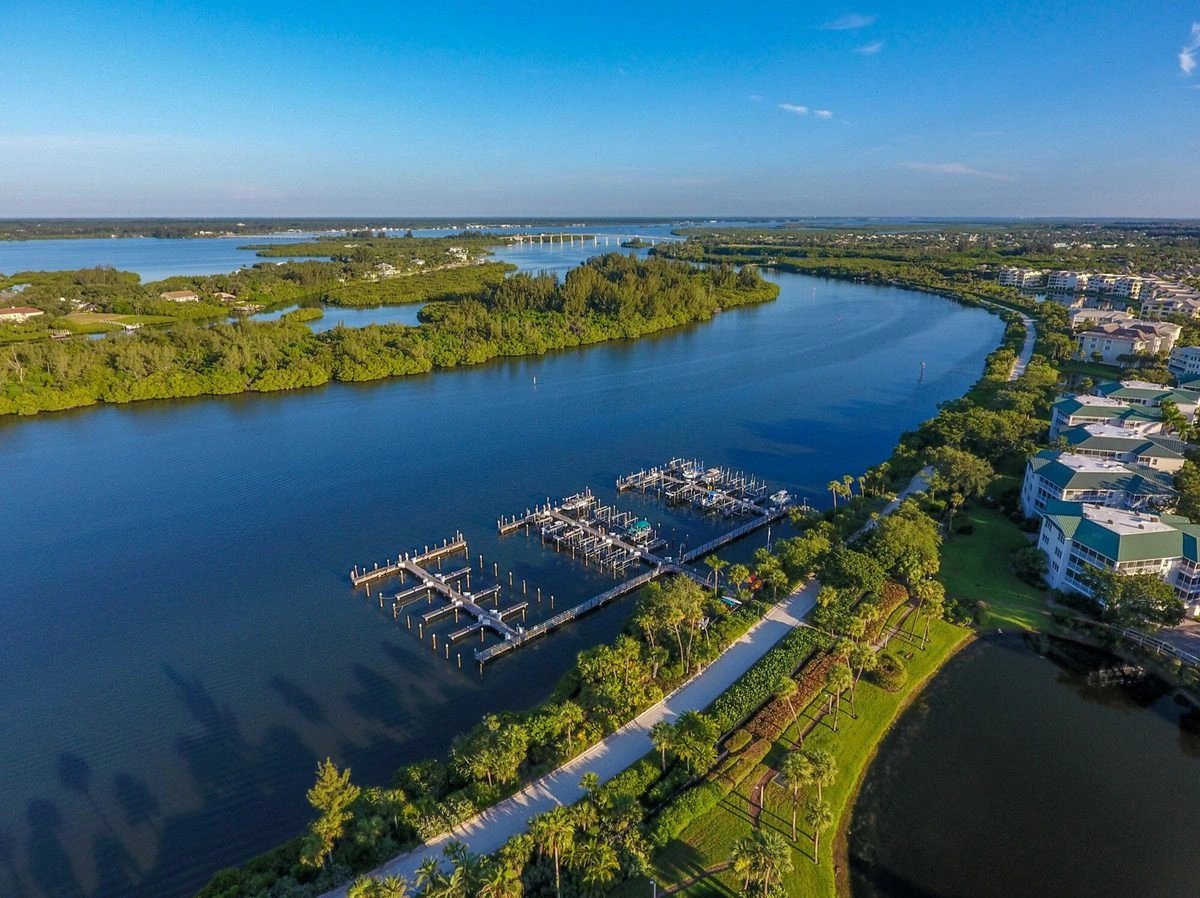
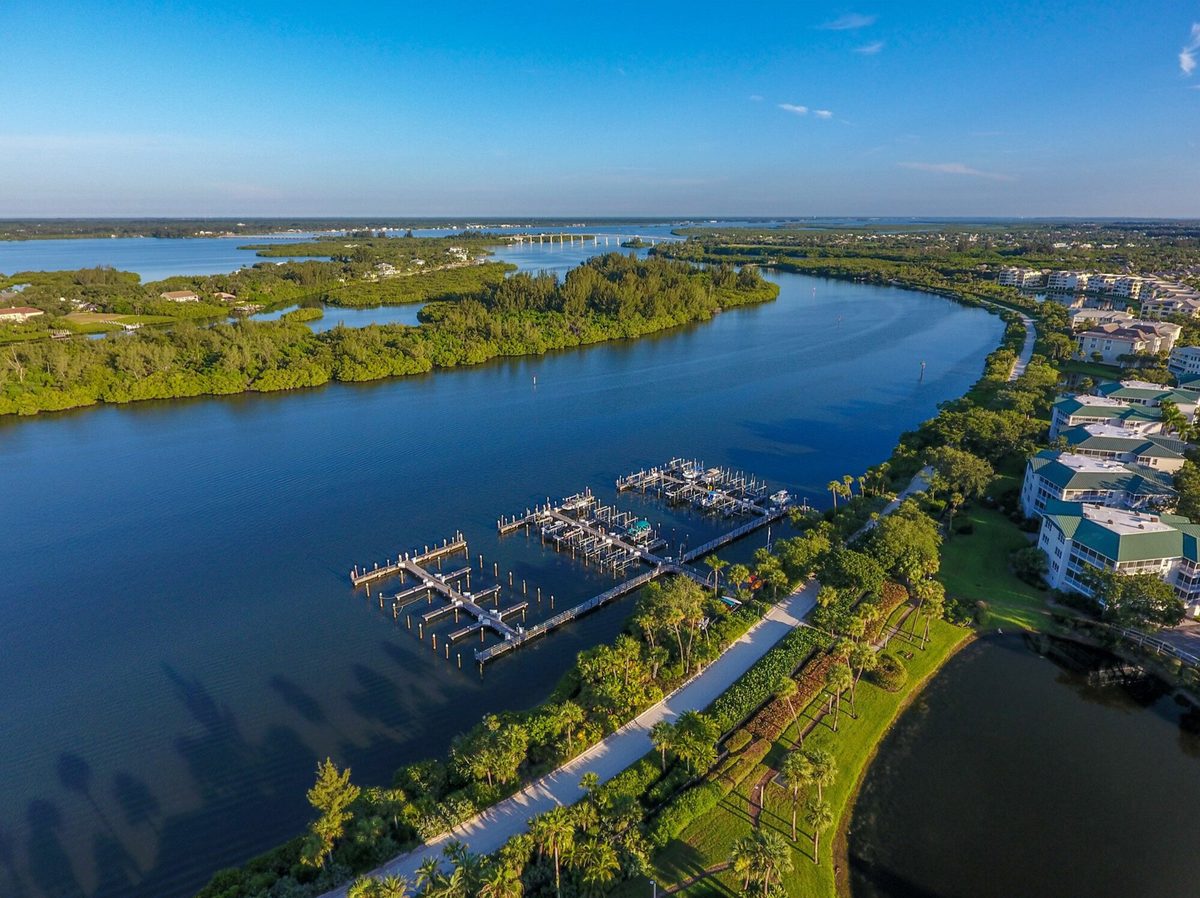
Route 128's suburban geography — optimized for highway access, school quality, and proximity to Boston's economic infrastructure — does not offer the Atlantic Ocean. It does not offer the Indian River Lagoon. It does not offer a gated deep-water marina where the same executive who spent thirty years commuting to Waltham or Burlington can now keep a boat in the water twelve months a year rather than pulling it for the winter in November.
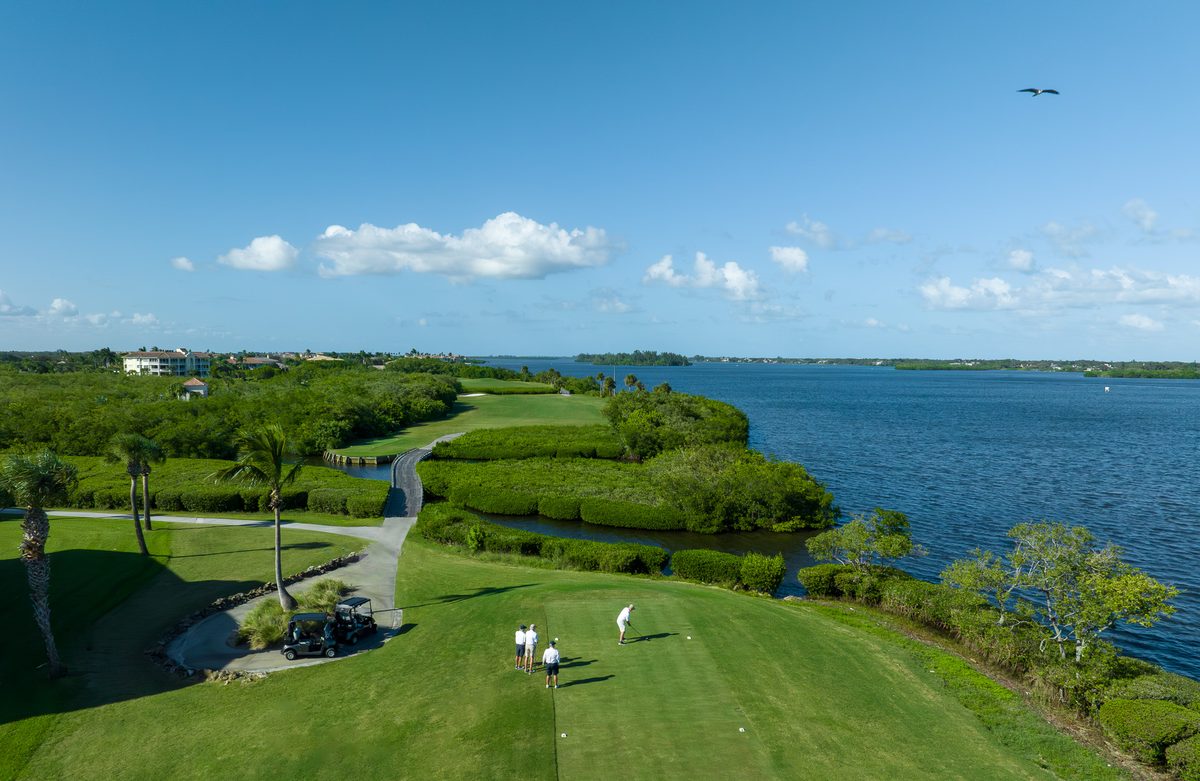
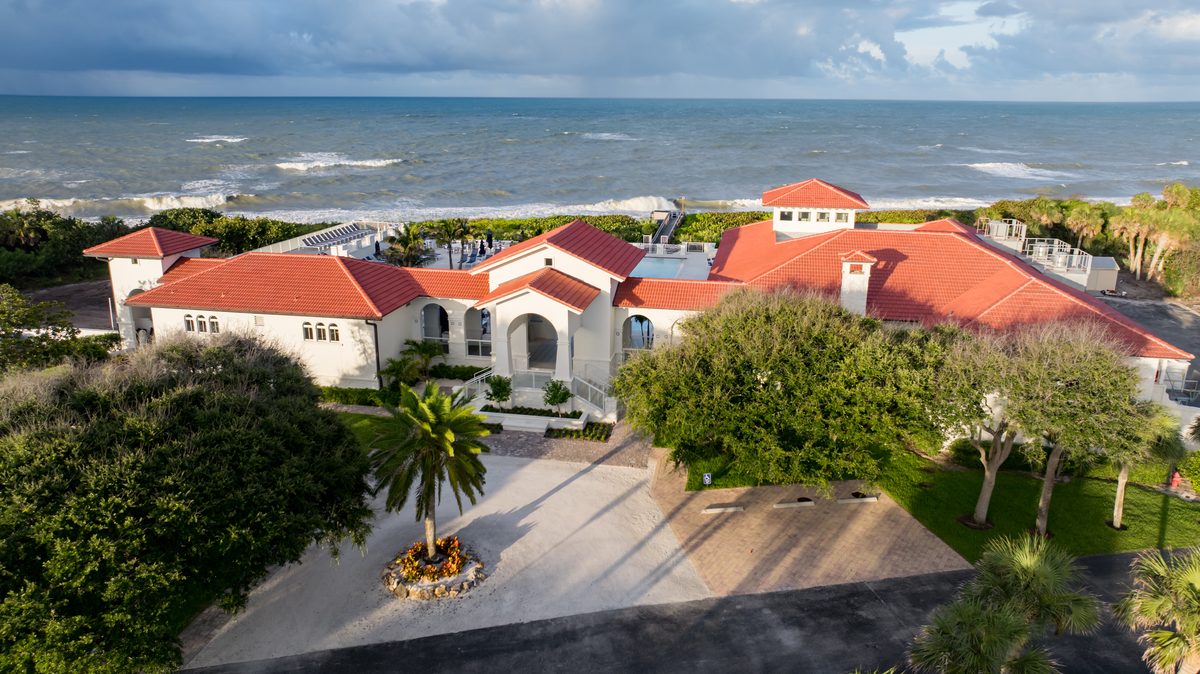
Vero Beach's barrier island delivers the assets that Needham's Route 128 career was always building toward but that Route 128's geography structurally cannot provide. Grand Harbor's championship waterfront golf course on the Indian River Lagoon — for the Needham household that has been playing at the local clubs but has never played thirty-six holes on a championship layout with the Lagoon running along the fairway. Sea Oaks' gated Atlantic oceanfront community — for the household that has built a net worth on the Route 128 corridor and now has the capital to deploy it at a barrier island price point that is 66 percent below Naples for the same geography.
Ocean Drive's walkable village mirrors Needham's town center in civic register — resident-first, independent, a community built around the people who live there rather than the people who visit. The Riverside Theatre and the Vero Beach Museum of Art serve a year-round resident community that, like Needham's, values cultural life as a function of where it chooses to live. Cleveland Clinic on the Treasure Coast, forty-five minutes from the barrier island, for the household at median age 43.1 that has been depending on Partners HealthCare and does not intend to compromise on medical infrastructure.
The Vero Beach barrier island's all-cash buyer rate of 62.7 percent is the highest of any luxury market in the United States. It reflects a buyer pool that is not dependent on financing — a pool that has built its capital through careers, equity compensation events, and compounding investment growth over decades. This is, precisely and without approximation, the profile of the Needham Route 128 household that arrives at the barrier island having converted a career's worth of restricted stock units and options and carried interest into a capital position that requires no mortgage on the other end.
Vero Beach trades at 66 percent below Naples for the same Atlantic barrier island geography, the same low density, the same finite seven-mile supply constraint with no high-rise development permitted. The Needham household that has been watching Needham's own supply constraint compound home values — 4.5 percent appreciation in 2025 on an already-expensive base — understands what constrained supply does to pricing over time. The barrier island's constrained supply is structural and permanent. The pre-consensus pricing that places it 66 percent below Naples is not.
Vero Premier Properties operates as a Signature Division of Coldwell Banker Global Luxury — a network reaching more than 40 countries and 60 global markets through the International Luxury Alliance. In Massachusetts, our referral relationships extend to leading Coldwell Banker offices and their top-producing agents in Needham, Winchester, Lexington, Wellesley, Weston, and Newton — and to the estate attorneys, CPAs, and wealth managers in the Route 128 corridor who specialize in the specific tax planning that equity-compensated executives require.
The move from Needham to Vero Beach involves a specific and time-sensitive coordination: an estate attorney who evaluates the Massachusetts domicile change and its impact on equity compensation taxation, a CPA who models the capital gains exposure on pending vesting events and advises on the optimal timing of Florida domicile establishment relative to the equity calendar, a Needham listing agent who understands the market that produced 4.5 percent appreciation in a single year, and a Vero Beach buyer's representative who knows exactly which barrier island communities — Grand Harbor's lagoon frontage, Sea Oaks' marina, John's Island's private register — align with the profile of a household that built its wealth on Route 128. The coordination is time-sensitive because the equity calendar does not wait for convenient planning cycles, and neither does December 31, 2026.
The Needham household that establishes Florida primary residence before December 31, 2026 makes three simultaneous financial decisions — and the compound effect of all three, applied at the Route 128 income and equity profile, produces the largest potential first-year financial impact of any community in the Massachusetts series.
The first is the property tax. At approximately $21,119 annually on the average Needham single-family home, the HJR 1-F enhanced homestead exemption and the Save Our Homes 3% cap deliver first-year property tax relief that is numerically concrete — available from the first Florida tax bill, without a waiting period, for buyers who establish homestead before December 31.
The second — and for Needham, by far the most significant — is the elimination of Massachusetts capital gains surtax on equity events. For the Route 128 executive whose compensation includes equity that will vest or be realized in 2026 or later, the nine percent state surtax on gains above one million dollars is not a recurring annual cost. It is a concentrated exposure that arrives with the career-defining financial event. Establishing Florida domicile before that event eliminates the exposure entirely. The same event, same gain, same company — zero state capital gains tax in Florida. Nine percent in Massachusetts. The difference on a $3 million event: $180,000.
The third is the elimination of Massachusetts income tax on all future earned and investment income above the threshold, and the elimination of the Massachusetts estate tax above two million in total estate value. For the Needham household at median age 43.1 with a $1.95 million home and an investment portfolio accumulated over a Route 128 career, the estate tax elimination is a planning decision with a thirty-year horizon. Florida's protection is permanent and generational.

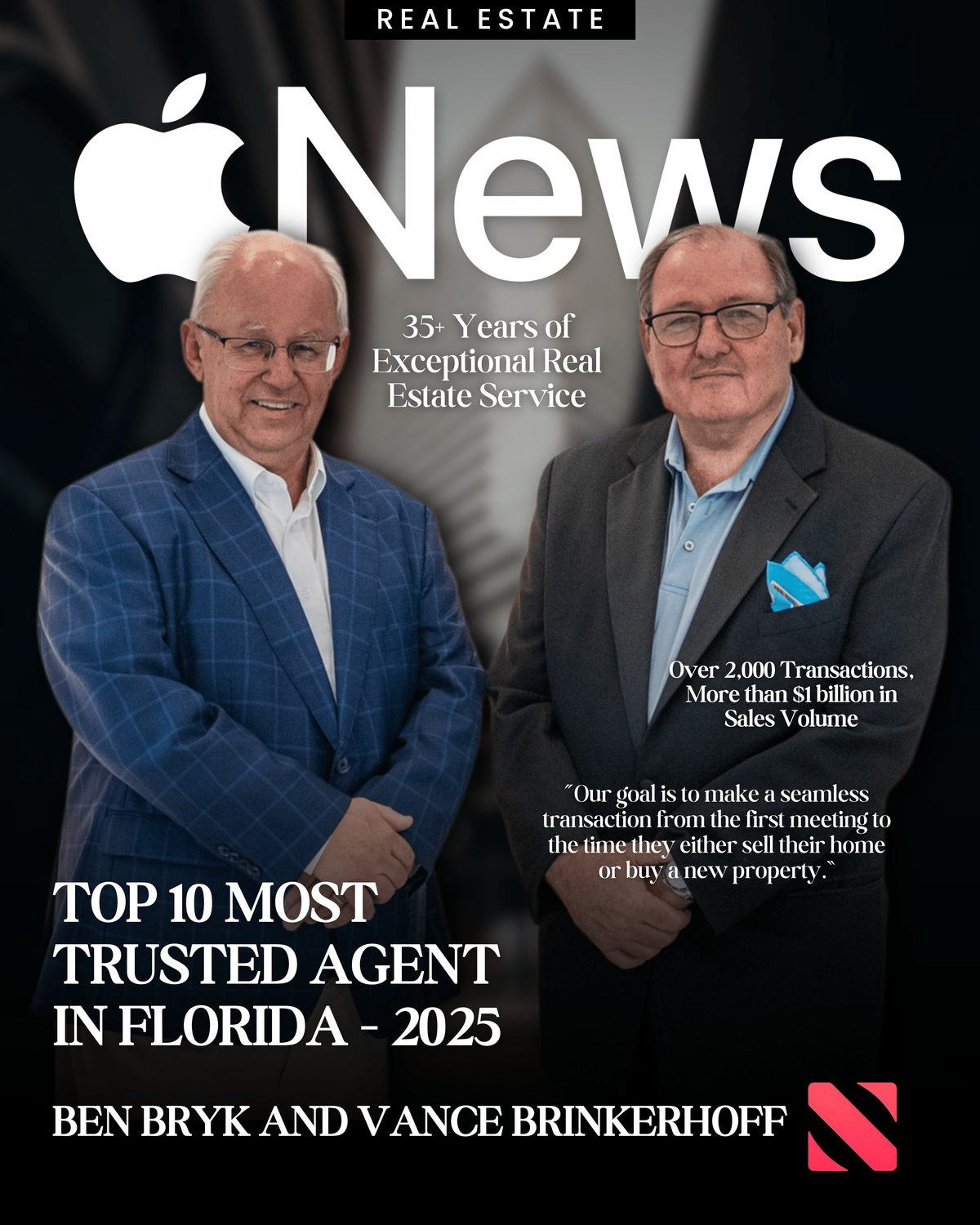
Ben Bryk and Vance Brinkerhoff offer confidential consultations for Needham, Winchester, Lexington, Wellesley, and Weston households — and for the estate attorneys, CPAs, and equity compensation tax advisors serving Route 128 corridor executives — evaluating the Florida Financial Trifecta and the December 31, 2026 HJR 1-F homestead deadline. The conversation is calibrated to the equity compensation timeline, the pending vesting calendar, the capital gains exposure, and the specific barrier island communities that represent the destination the Route 128 career was building toward.
Ben Bryk · (772) 713-9455Vance Brinkerhoff · (772) 913-3426floridaeastcoastluxuryhomes.com
Lead Real Estate Agent
Buying a home is a very emotional experience, especially for those who have not done it very often. My experience in sales can help guide buyers with an analytical approach.
Find Your Dream Home
Get assistance in determining current property value, crafting a competitive offer, writing and negotiating a contract, and much more. Contact us today.