Manchester-by-the-Sea, Massachusetts to Vero Beach: What Old Boston Money Finds When the North Shore Finally Meets the Atlantic on Its Own Terms
Ben Bryk June 15, 2026
Ben Bryk June 15, 2026
Manchester-by-the-Sea became internationally known in 2016, when Kenneth Lonergan's film of the same name won the Academy Award for Best Original Screenplay. But Manchester-by-the-Sea was internationally significant long before that — to the Boston families who had been summering there for a century before Hollywood discovered it, who maintained their harbor moorings and their Singing Beach memberships and their shingle-style estates on the Atlantic the way their grandparents had, with a particular combination of understated certainty and genuine indifference to whether anyone else had heard of it.
That indifference is the tell. Manchester-by-the-Sea is not a town that courts attention. It is a town where the attention was already settled, generations ago, and what matters now is the quality of the harbor, the condition of the beach, the character of the neighbors, and the school that children attend before they go to the schools that were always assumed.
It is also a town where the median home has just sold for $1,312,500 — up 19 percent year over year — and where the luxury segment trades at a median of $2.25 million, on lots that exceed 26,200 square feet and in homes that average over 3,100 square feet, with Atlantic ocean views from the upper floors of properties that have been in some families for forty years and are now, for the first time in a long time, being reconsidered.
Massachusetts has a nine percent plan for what that reconsideration produces.
Manchester-by-the-Sea's resident profile is not a demographics table. It is a social register that goes back to the Gilded Age, when the Boston families who had made their money in shipping, finance, and law began building their summer estates on Cape Ann's southern shore — on the bluffs above Singing Beach, along the harbor, on the wooded roads that connect Good Will Park to Masconomo Park along the Atlantic edge. They came because the water was cold and the community was private and the light in August was the specific quality of light that the North Shore produces and that no other coastal community in New England quite replicates.
Many of them never left. Their grandchildren are there now, maintaining the harbor moorings their grandfathers established, walking the same stretch of Singing Beach on summer mornings, driving the same Route 128 to their offices in Boston's financial district and returning in the evening to a town whose character has resisted, through a combination of civic will and constrained supply, the forces that have altered every comparable coastal community north of the Cape.
The Massachusetts Millionaires Tax — nine percent on every dollar of income and capital gains above one million, effective January 2023 — does not care about any of this. It is applied to the investment income, the partnership distributions, the capital gains from the stock accounts that were established with the proceeds of careers that funded the Manchester estate in the first place. It is applied to the gain on the Manchester home when the family decides, after forty years, that the time has come. And it is applied to the estate, when the Massachusetts estate tax above two million dollars triggers on a property whose value has compounded through four decades of North Shore real estate appreciation into a figure that crosses the threshold with room to spare.
Florida's rate on all three of those events: zero. Constitutionally. Generationally. Permanently.
The median home in Manchester-by-the-Sea sold for $1,312,500 over the most recent twelve-month period — an increase of 19 percent from the prior year. The luxury segment trades at a median listing price of $2.25 million. These are not incidental figures. They represent the accumulated result of constrained supply, Atlantic waterfront location, a community that has not permitted the kind of density or commercial development that dilutes residential character, and decades of Boston wealth concentration on a coastline that Boston wealth has always preferred.
They also represent, for the household that purchased a Manchester home in 2010 or 2005 or twenty years ago and is now evaluating the position, a capital gain of a magnitude that triggers the Massachusetts Millionaires Tax's capital gains surtax — nine percent on every dollar of realized gain above one million — in any year when combined gains from the home sale, investment accounts, and other capital events push total realized gain above the threshold.
A Manchester household that purchased at $800,000 in 2008 and sells today at $2.25 million has a gain of $1.45 million. After the $500,000 federal exclusion for a married couple, the taxable gain is $950,000. Below the threshold in isolation. But in a year when the investment portfolio is also being rebalanced, when the stock options from a Boston financial services career are being exercised, when the partnership distribution from a twenty-year investment arrives — the combined gain crosses one million, and Massachusetts takes nine percent on the entire amount above the line.
The family that has been on Manchester-by-the-Sea for forty years is not thinking about this calculation every morning. But the estate attorney and the CPA who serve them are. And they know that the difference between establishing Florida primary residence before December 31, 2026 and establishing it the year after is measured in the state capital gains surtax applied to what may be the household's largest single capital event.
In June 2026, the Florida legislature passed HJR 1-F, proposing a $250,000 increase to Florida's homestead exemption on top of the existing $50,000 benefit. The measure goes to Florida voters in November 2026.
The critical provision: buyers who establish Florida homestead by December 31, 2026 qualify immediately for the enhanced exemption without the standard five-year waiting period. Florida's Save Our Homes cap then limits annual assessed value increases to 3% regardless of market performance — protecting the cost of homeownership from the kind of compounding appreciation pressure that has driven Manchester's own market up 19 percent in a single year.
For the Manchester household that has been evaluating the Florida move for longer than they have admitted — and the North Shore families who have been looking south are more numerous than the community's public character suggests — December 31, 2026 is not a deadline imposed from outside. It is the date that converts a long-standing consideration into a defined financial decision with a maximum value. The enhanced homestead exemption, the Save Our Homes cap, and the elimination of Massachusetts income, capital gains, and estate tax exposure are all available before December 31. After that date, the five-year wait for the enhanced exemption applies, and the tax advantage of having acted before the deadline — whatever capital event occurs in 2027 — is not recoverable.
This is a legislative threshold, not a sales deadline. For the Manchester household that has always made its significant decisions carefully and well, the distinction is the point.

Manchester-by-the-Sea's relationship with the Atlantic is not transactional. It is constitutional. Singing Beach — the fine-grained quartz sand that produces its distinctive sound — is not an amenity in the brochure sense. It is the reason. The harbor, with its working and pleasure boats and the particular morning light on the water before the summer crowd arrives, is the reason. The walk from Masconomo Park to Tuck's Point in October, when the summer people have left and the town is again the town — that is the reason.
The Manchester household that has organized its life around those reasons is not looking for a warmer version of New Hampshire's coast. It is looking for the specific thing that the North Shore has always delivered — privacy, Atlantic access, a community that values restraint over spectacle — in a place where the season does not end in October and the tax code does not take nine percent of what the season's career produced.
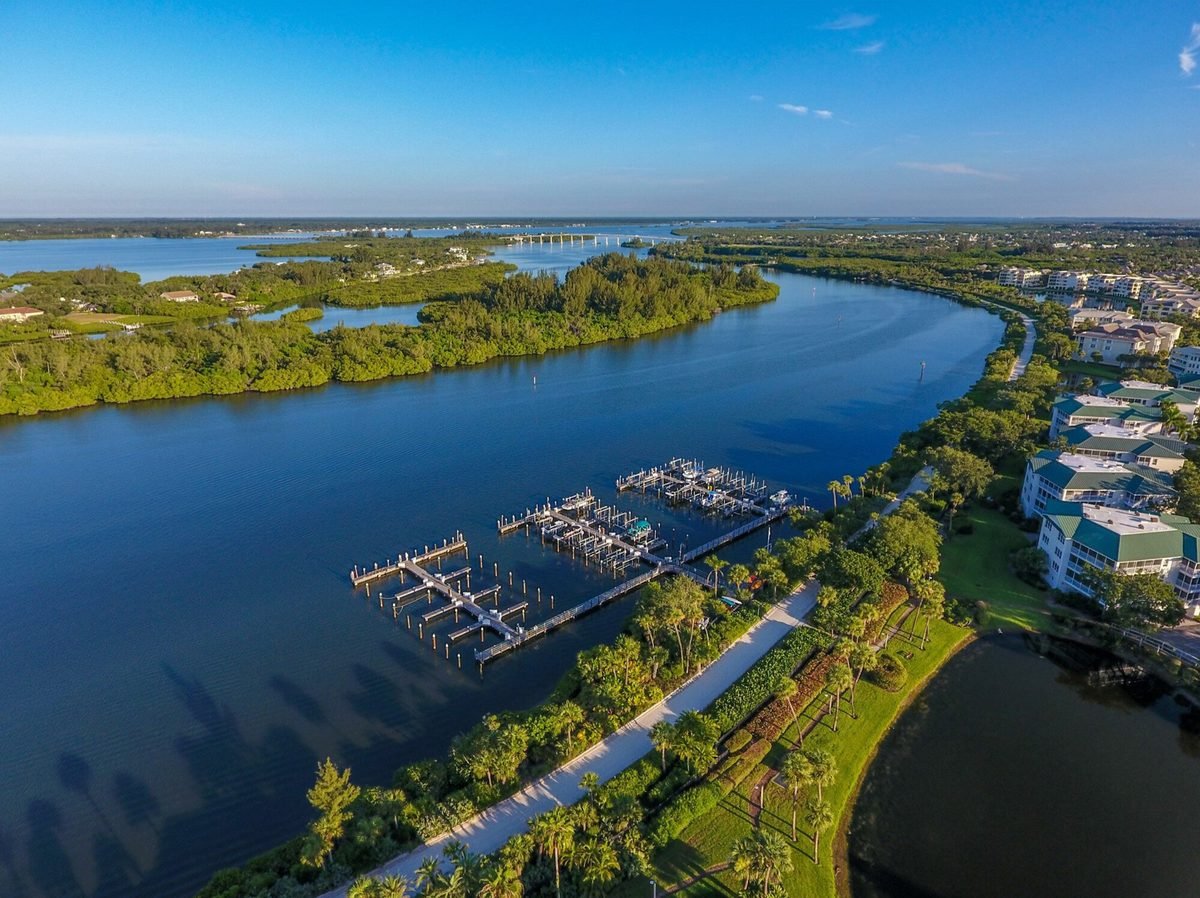
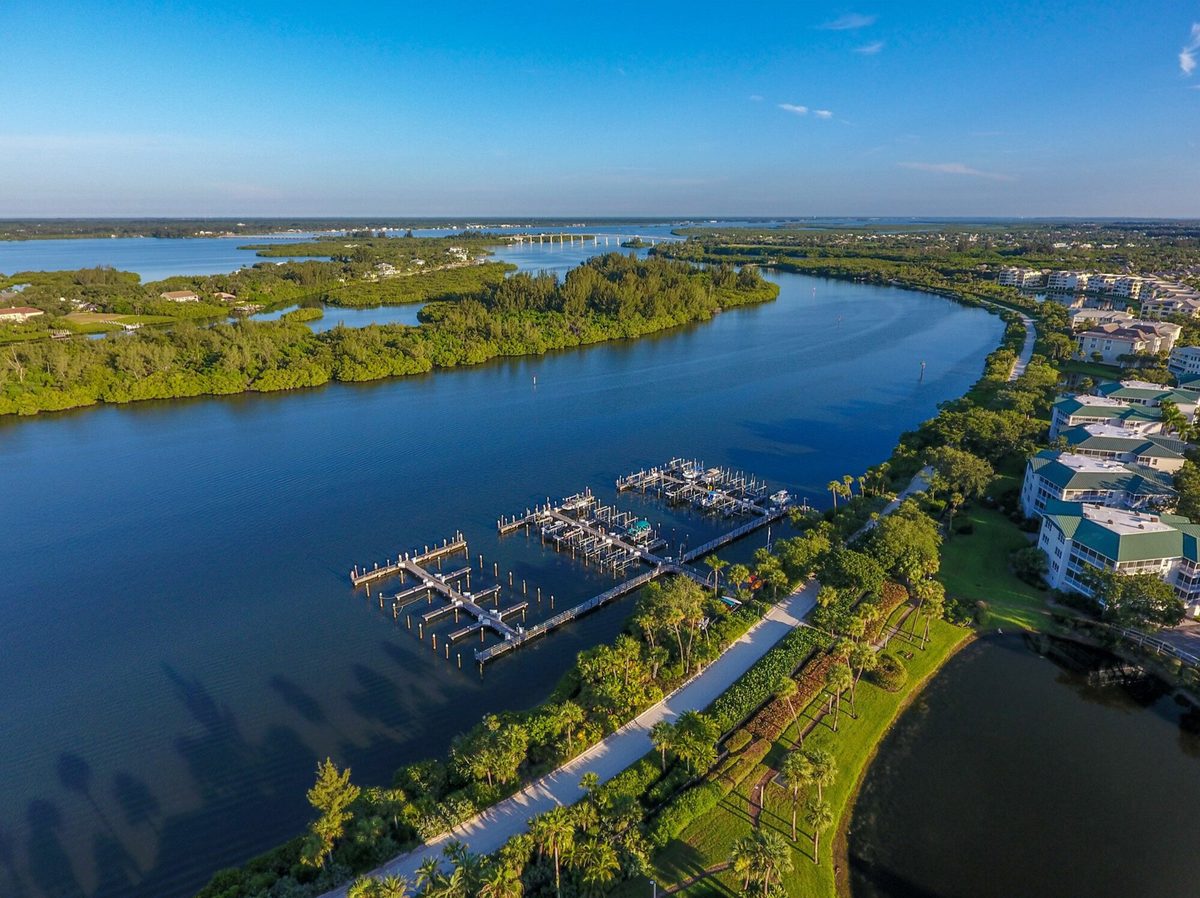
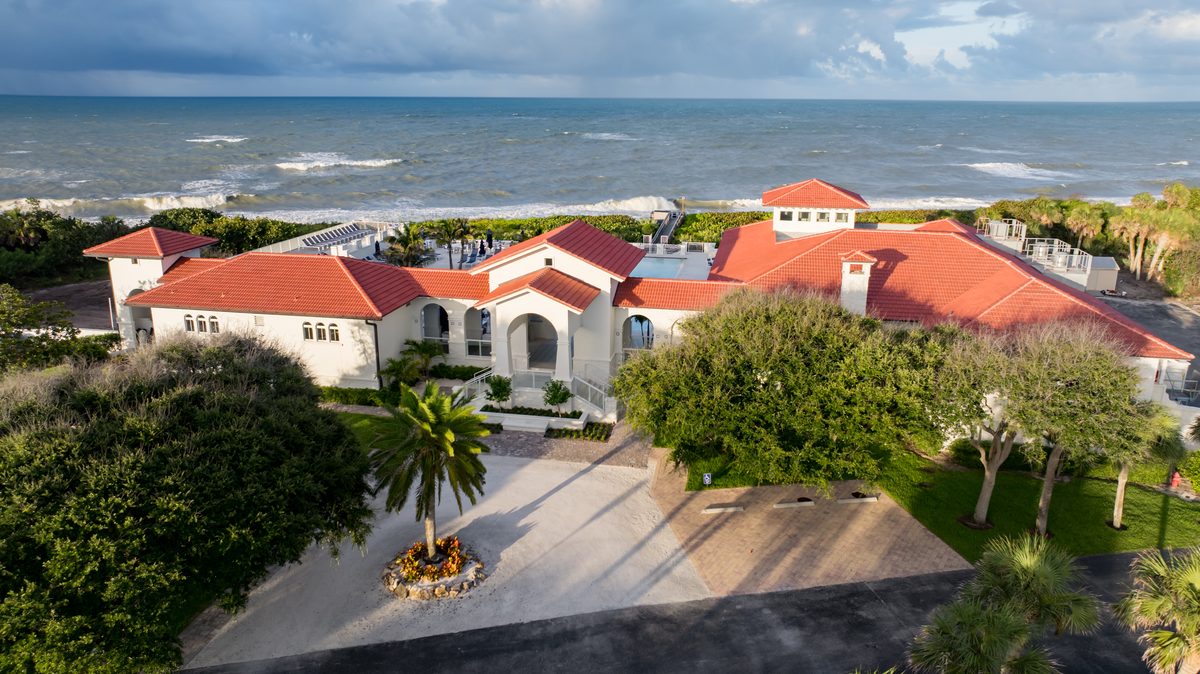
Vero Beach's barrier island delivers that transfer with more fidelity than any other Florida coastal market. Sea Oaks' gated Atlantic oceanfront community — a private residential enclave where access is by design restricted and the beach is for the people who live there — is not a resort. It is not a tourist destination. It is organized around the same principle that Manchester-by-the-Sea has always operated on: the community exists for its residents, and its residents chose it specifically because it does not exist for anyone else.
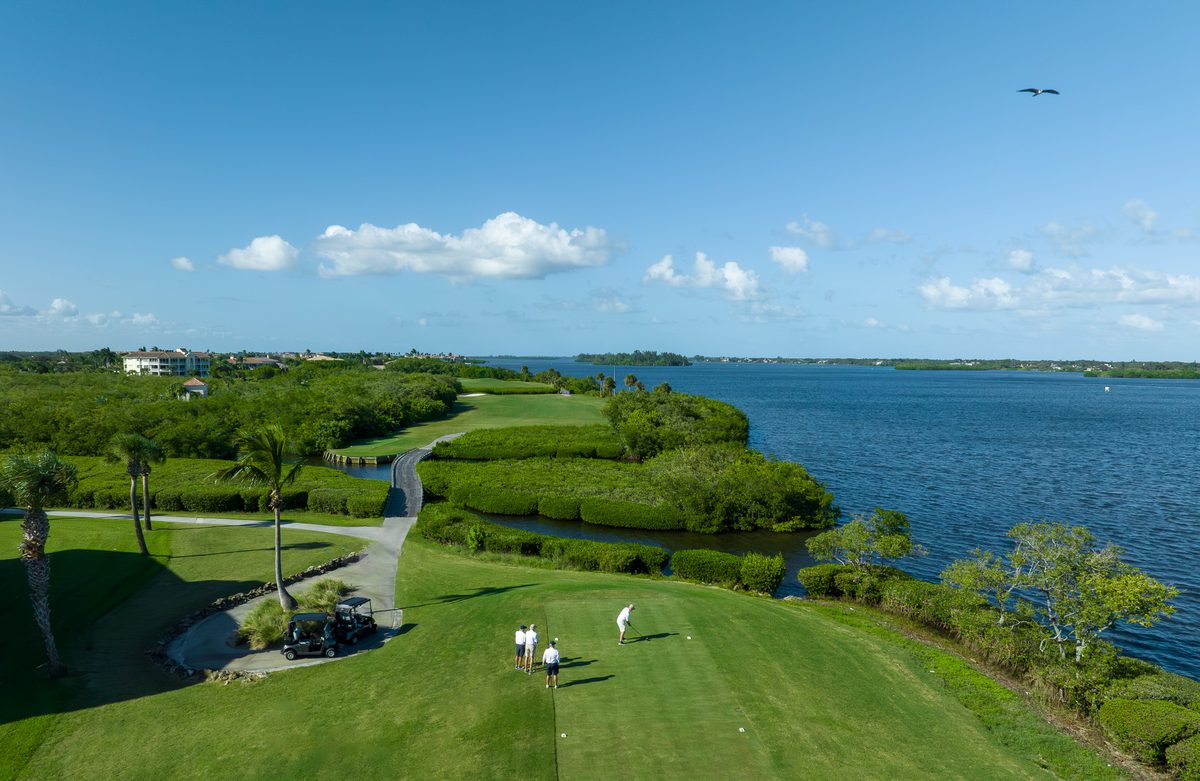
Grand Harbor's championship waterfront golf course on the Indian River Lagoon — 750-plus acres of low-density residential and club land on a protected waterway — provides the inland-water dimension that Manchester's harbor provides on the North Shore: a navigable, ecologically intact body of water that defines the character of the community around it. The Riverside Theatre and the Vero Beach Museum of Art serve a year-round resident community with the same civic investment in cultural life that Manchester's historical society and arts programs have maintained for generations. Ocean Drive's walkable village center operates the way Manchester's downtown does: as a place for the people who live there, not a commercial draw for those passing through.
And the MBTA Newburyport/Rockport Line, which delivers Manchester residents to North Station in approximately thirty minutes, means the Massachusetts professional relationships that funded the Manchester estate can be maintained from a Florida primary domicile through the same bicoastal approach that Winchester and Needham households have been evaluating throughout this campaign. Florida primary residence requires spending more than 183 days per year at the Florida address. The thirty-minute train from Manchester to North Station makes maintaining the Boston professional calendar from Vero Beach as a primary residence a structurally viable optimization — not a departure from the professional life that made the Manchester estate possible, but the tax structure that preserves more of what it produced.
The Vero Beach barrier island's all-cash buyer rate of 62.7 percent is the highest of any luxury market in the United States. That statistic describes, with precision, the buyer profile that arrives from Manchester-by-the-Sea: a household that does not need financing, that has built its capital through career income and compounding real estate equity and the kind of multigenerational wealth concentration that defines the North Shore's established families, and that arrives at the barrier island with the capacity to participate in a market that does not reward the leveraged buyer.
The average barrier island sale price of $1.99 million as of January through May 2026 is above Manchester's $1,312,500 twelve-month median — but below Manchester's luxury tier of $2.25 million. For the Manchester household that has been living at the luxury end of the North Shore market, the Vero Beach barrier island entry point is a lateral or slightly discounted move into an Atlantic oceanfront community, in a tax environment that is the structural inverse of Massachusetts.
Vero Beach trades at 66 percent below Naples for the same Atlantic barrier island geography, the same low density, the same seven-mile finite supply with no high-rise development permitted. The established families of Palm Beach discovered their barrier island decades before national attention concentrated the consensus around it. The established families of Manchester-by-the-Sea — who have always preferred to know a thing before the rest of the world does — have the same opportunity on the Vero Beach barrier island in 2026 that they would not have on Palm Beach Island at any price.
Vero Premier Properties operates as a Signature Division of Coldwell Banker Global Luxury — a network reaching more than 40 countries and 60 global markets through the International Luxury Alliance. In Massachusetts, our referral relationships extend to the leading Coldwell Banker offices and their top producers on the North Shore — in Manchester-by-the-Sea, Rockport, Essex, Ipswich, and Beverly Farms — and to the estate attorneys, trust officers, CPAs, and wealth managers who serve the multigenerational Boston families that populate this campaign.
The move from Manchester-by-the-Sea to Vero Beach involves a specific and careful coordination: an estate attorney who evaluates the Massachusetts domicile change and its impact on income tax, capital gains surtax, and estate tax exposure; a CPA who models the capital gains position on a North Shore home that has been appreciating for decades; a Manchester listing agent who understands the market that just posted 19 percent appreciation in a single year; and a Vero Beach buyer's representative who knows exactly which barrier island communities — Sea Oaks' Atlantic oceanfront, Grand Harbor's 750-plus acres and Lagoon frontage, John's Island's private register — align with the Manchester household's specific values. We have been managing this sequence for decades, and we have been serving the Northeast feeder market — Connecticut, New York, New Jersey, and Massachusetts — for the full duration of our thirty-five years on this barrier island.

The Manchester-by-the-Sea household that establishes Florida primary residence before December 31, 2026 makes three simultaneous financial decisions — and the compound effect of all three, applied at the North Shore's specific wealth profile, produces a structural financial advantage that begins on day one and improves every subsequent year.
The first is the elimination of Massachusetts income tax. For the Manchester household whose income includes investment returns, dividends, partnership distributions, and carried interest that regularly push total annual income above one million dollars, the nine percent surtax is a recurring annual cost that Florida removes permanently. At $2 million in total income, that is $90,000 per year in excess state tax that a Florida-domiciled household earning the same amount does not pay. Florida's zero rate is constitutionally protected.
The second is the elimination of Massachusetts capital gains surtax on the Manchester home itself and on investment portfolio events that accompany a generational financial transition. The household that has held a Manchester estate for twenty or forty years and is now realizing gains that exceed the one-million-dollar threshold — in a year when other gains may also be realized — faces a Massachusetts capital gains surtax of nine percent on the amount above the line. Florida eliminates that exposure entirely, for the sale of the Manchester home, for the rebalancing of the investment portfolio, and for every capital event that follows in a Florida-domiciled year.
The third is the elimination of the Massachusetts estate tax above two million dollars — an exposure that every Manchester household with a $1.3 to $2.25 million home plus a career's worth of financial assets and multigenerational wealth faces directly, and that grows with every year of North Shore home appreciation. Florida has no state estate tax. The protection is permanent, and it extends to the generation that inherits what the Manchester family built.

Ben Bryk and Vance Brinkerhoff offer confidential consultations for Manchester-by-the-Sea, Rockport, Essex, Beverly Farms, and North Shore households — and for the estate attorneys, trust officers, CPAs, and wealth managers serving multigenerational Boston families — evaluating the Florida Financial Trifecta and the December 31, 2026 HJR 1-F homestead deadline. The conversation is calibrated to the specific capital gains position, estate structure, income profile, and coastal identity of the Manchester household, and to the specific Vero Beach barrier island communities that share everything Manchester-by-the-Sea has always valued.
Ben Bryk · (772) 713-9455Vance Brinkerhoff · (772) 913-3426floridaeastcoastluxuryhomes.com

Lead Real Estate Agent
Buying a home is a very emotional experience, especially for those who have not done it very often. My experience in sales can help guide buyers with an analytical approach.
Find Your Dream Home
Get assistance in determining current property value, crafting a competitive offer, writing and negotiating a contract, and much more. Contact us today.