 On the morning of April 19, 1775, approximately seventy members of the Lexington militia stood on the Battle Green and faced eight hundred British troops. Captain John Parker's words are inscribed on a boulder at the site: "Stand your ground; don't fire unless fired upon, but if they mean to have war, let it begin here." The Battle of Lexington lasted less than twenty minutes. The principle it established has lasted two hundred and fifty years.
Lexington has always been a town that makes considered decisions under real cost. The households that have built their lives here — that bought the Colonial on a quiet street off Waltham Street or the expanded Cape near the Battle Green, that chose this specific town for a specific reason, that have watched their home appreciate 13 percent in a single year and sell to buyers willing to pay more than list — understand what it means to stand your ground when the stakes are clear.
The Massachusetts tax code is presenting those households with a different kind of cost analysis. And the principle that governs the response is the same one Captain Parker applied: you assess the situation, you identify what the cost of staying actually is, and you make a decision that serves your interests and your household's future.
The cost of staying in Lexington, Massachusetts — calculated with the same precision the town's biotech executives and defense engineers apply to every significant financial decision — is approximately $25,805 per year in property taxes on the median home. Plus nine percent on every dollar of income and capital gains above one million. Plus an estate tax that triggers above two million in total estate value. Florida charges none of the above. Constitutionally. Permanently.
The School-Era Equity Unlock: When the Reason You Came Has Been Fulfilled
Most Lexington homeowners can identify the specific conversation in which they decided to buy here. It almost always involves schools. Lexington Public Schools average a 9 out of 10 GreatSchools rating — among the highest in Massachusetts. School quality is documented as the primary driver for the majority of buyers entering the Lexington market, creating a demand structure so persistent that it has maintained price appreciation through rate cycles, recessions, and competitive pressures that have softened other Boston-area markets.
Lexington's median age is 47.3. The town has 7,430 residents over the age of 65. These numbers describe a substantial and growing cohort of households for whom the primary reason they purchased in Lexington — those nine-out-of-ten schools — is no longer operationally relevant. Their children graduated. The schools delivered on the promise that justified the premium. The annual property tax bill of approximately $25,805 has not noticed.
This is the school-era equity unlock argument, and it is unique to Lexington in the Massachusetts feeder market series. No other town in this campaign has a community where the primary motivation for purchase has been completed, where the evidence of value creation is in the appreciation numbers — 13 percent last year, 102.7 percent of list price — and where the annual cost of remaining domiciled in that community has decoupled from the personal benefit it once provided. The household that bought Lexington for the schools, in 2005 or 2010 or 2015, made a correct and well-rewarded decision. The question now is whether the annual cost of the decision that was correct then is still the correct decision for the household it has become since.
The Full Tax Exposure: Three Arguments at Once
The Lexington homeowner sits at the intersection of three simultaneous Massachusetts tax exposures, each of which is already in effect and each of which a Florida domicile addresses permanently.
The first is the property tax. At $13.00 per $1,000 — the FY2026 official rate from the Town of Lexington's own website — the annual bill on the $1.985 million median home is approximately $25,805. This is the highest absolute dollar annual property tax obligation in the Massachusetts feeder market series, exceeding Sherborn's $17,678, Wellesley's $16,983, and Dover's $14,686. The rate itself ($13.00) is lower than many Massachusetts communities because Lexington's assessed values are so high — but the bill is the bill, and it arrives regardless of whether anyone in the household is still attending Lexington High School.
The second is the Massachusetts Millionaires Tax. Lexington's employment profile — Raytheon Intelligence and Space, MIT Lincoln Laboratory, Biogen, Moderna, Pfizer, and the broader Route 2 biotech and defense corridor — creates a significant concentration of households earning above the one-million-dollar threshold through salary, equity compensation, partnership distributions, and investment income. Nine percent on every dollar above that threshold, on top of the standard five percent rate, is already applied to this demographic's tax returns. It has been since January 2023. Florida's income tax rate is constitutionally protected at zero.
The third is the capital gains exposure on the home itself. A Lexington homeowner who purchased at $900,000 in 2012 and is now holding a home worth $1.985 million — conservatively — has a gain of approximately $1.085 million. After the $500,000 federal exclusion for a married couple, the remaining $585,000 is subject to Massachusetts capital gains. If investment gains, stock compensation, or business proceeds are realized in the same year, the total may exceed the one-million-dollar threshold for the surtax. Massachusetts takes nine percent on the portion above that line. Florida takes nothing.
HJR 1-F: The December 31 Deadline That Changes the First-Year Math
In June 2026, the Florida legislature passed HJR 1-F, proposing a $250,000 increase to Florida's homestead exemption on top of the existing $50,000 benefit. The measure goes to Florida voters in November 2026.
The decisive provision: buyers who establish Florida homestead by December 31, 2026 qualify immediately for the enhanced exemption — without the standard five-year waiting period. For the Lexington household currently paying approximately $25,805 per year in Massachusetts property taxes, the first-year Florida property tax relief under the enhanced homestead exemption is not a future projection. It is a quantifiable, immediate reduction in the annual cost of homeownership — available on the first tax bill of Florida residency, without a waiting period, to buyers who act before December 31.
Florida's Save Our Homes cap then limits annual assessed value increases to 3% regardless of market performance. For a Lexington buyer entering the Vero Beach barrier island at $1.99 million in a market that has been appreciating above that ceiling, the tax position improves in real terms every year from day one — creating the same compounding structural advantage that made Lexington's original purchase decision correct.
December 31, 2026 is a legislative threshold. Not a sales deadline. The Lexington household that has spent twenty years making principled, data-driven decisions about where to live and how to allocate capital will recognize this for what it is: a defined entry point to a structurally superior tax position, with a closing date that is already on the calendar.
Same Price. Different Tax Code.
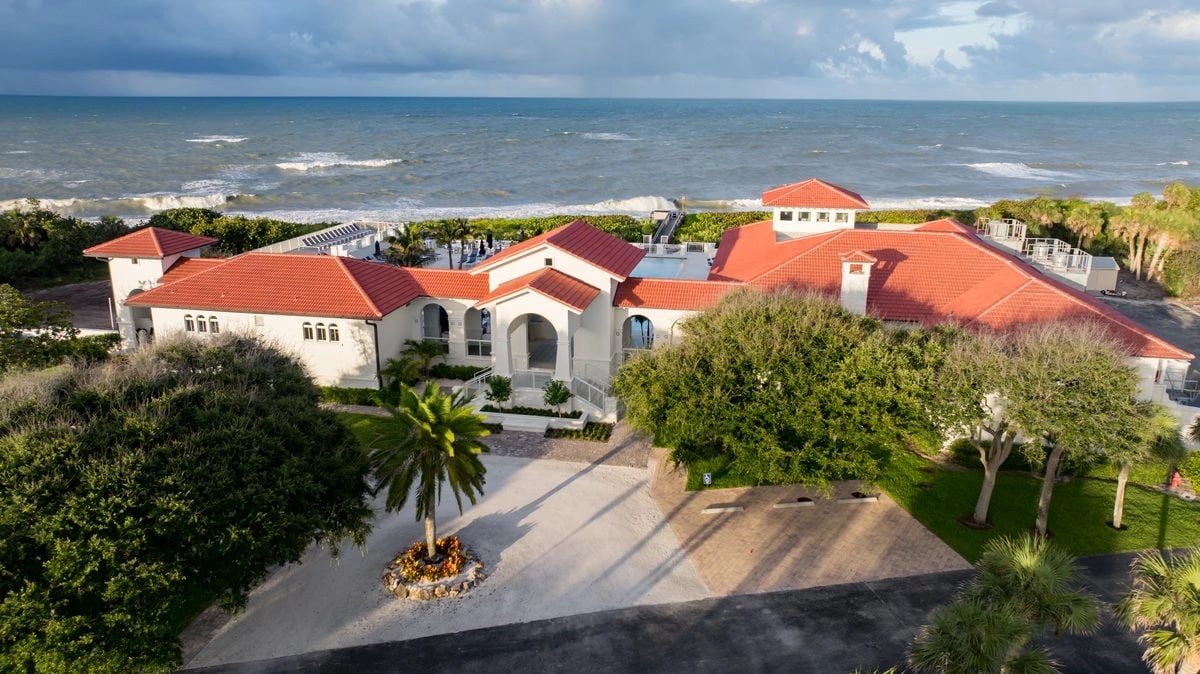
The average sale price on the Vero Beach barrier island as of January through May 2026 is $1.99 million. Lexington's median single-family home price was $1,985,000 through July 2025. The difference is five thousand dollars. This is not a rough approximation or a marketing comparison. It is, within the range of normal market fluctuation, the same number.
Same price. Different tax code.
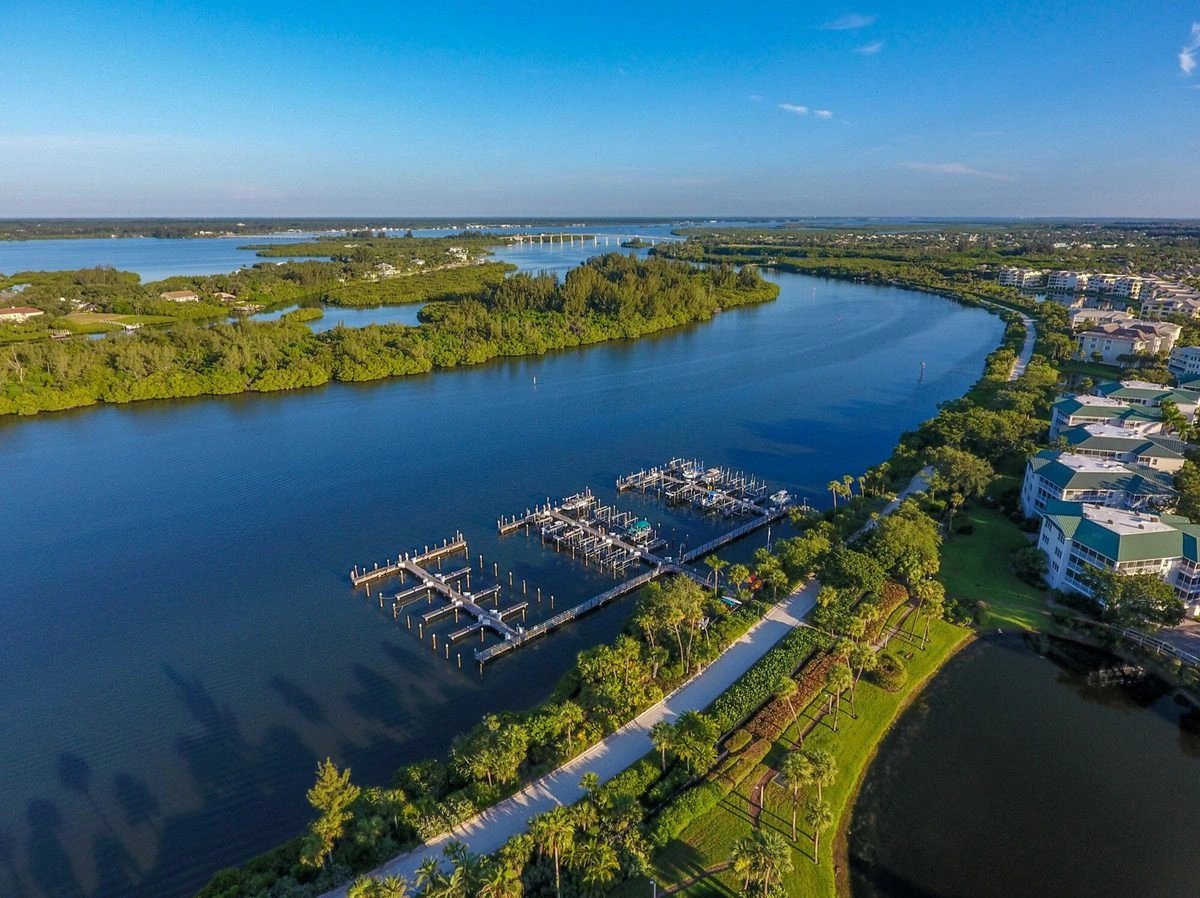
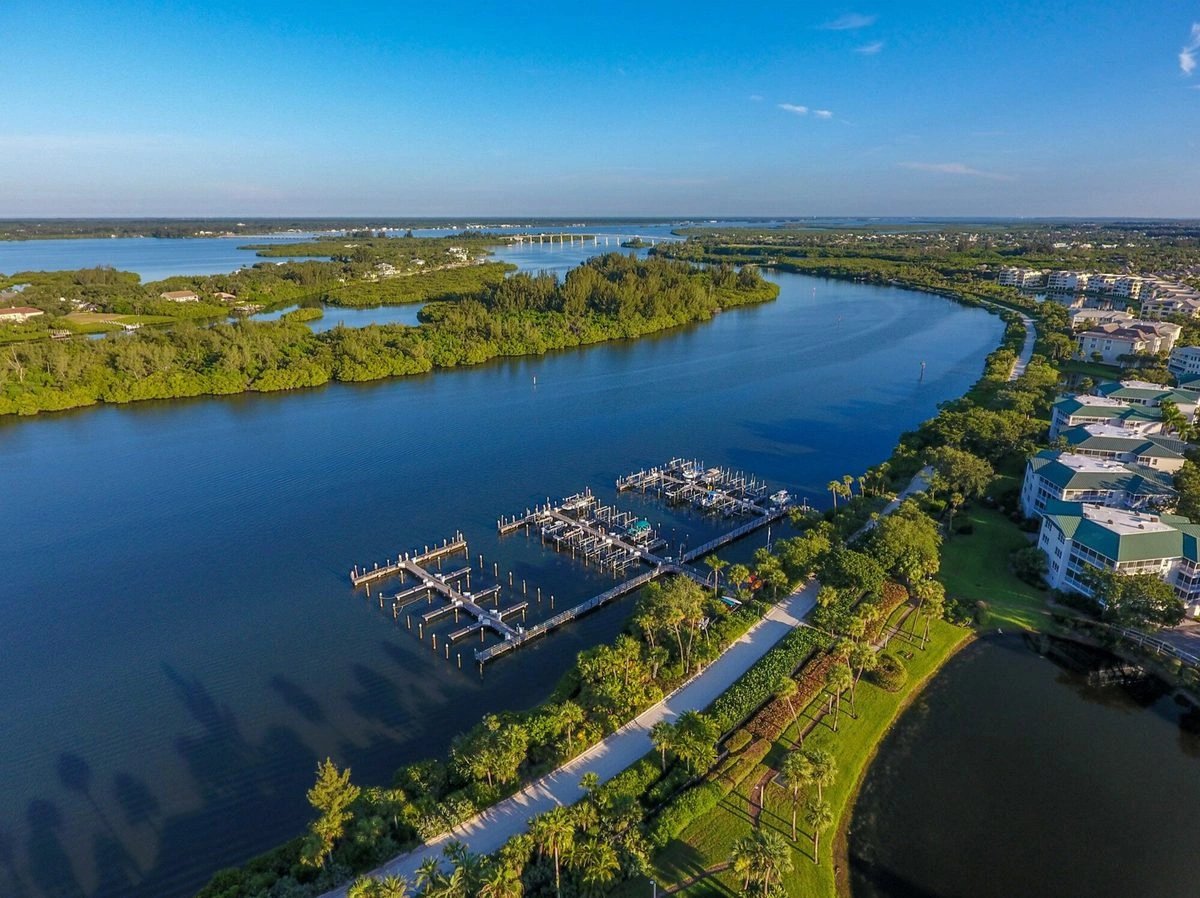
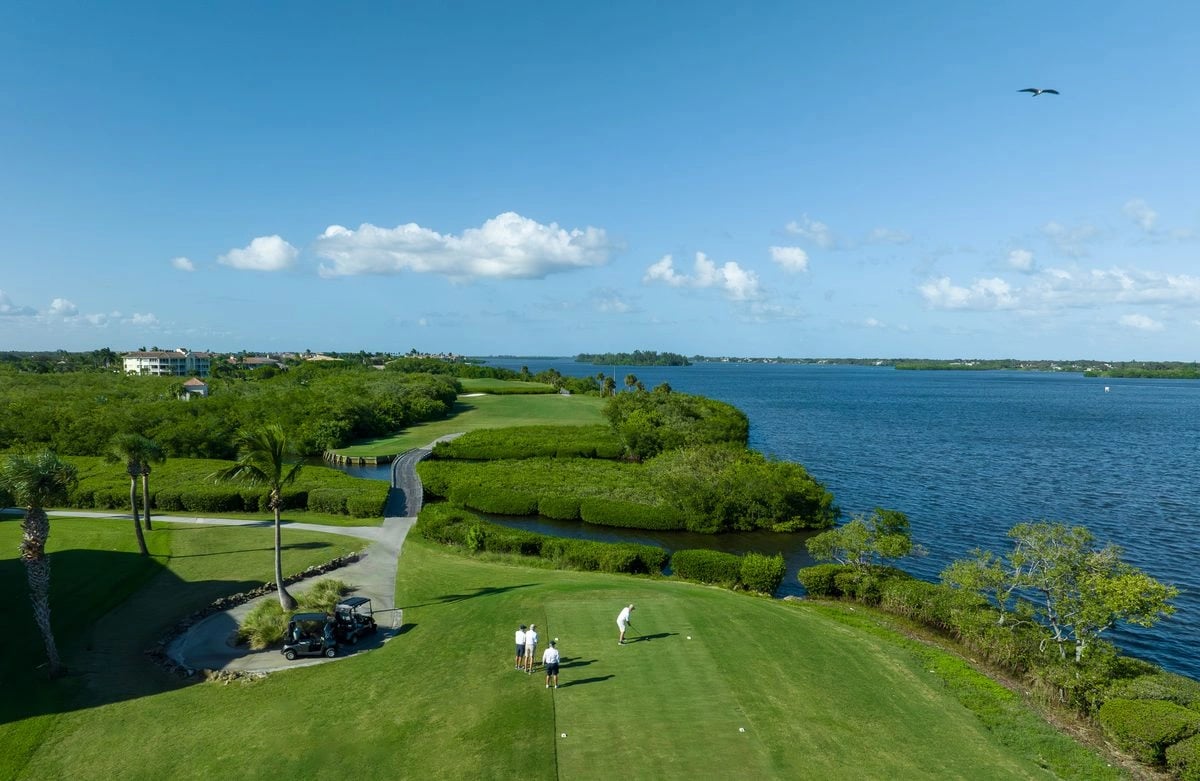
For that same price, the Lexington household moving to Vero Beach receives Atlantic oceanfront access and the Indian River Lagoon — the water-centered outdoor life that landlocked Middlesex County has never been able to provide year-round. Grand Harbor's 750-plus acres on the Lagoon, with a championship waterfront golf course. Sea Oaks' gated deep-water marina and private Atlantic beach club. The Riverside Theatre and the Vero Beach Museum of Art — the same civic investment in cultural life that Lexington has maintained since long before the Battle Green was a National Historic Landmark. Ocean Drive's walkable village, which functions the way Lexington Center does: as a neighborhood for the people who actually live there, not as a destination for visitors passing through.
Cleveland Clinic's world-class medical center on the Treasure Coast — forty-five minutes from the barrier island — addresses the specific concern of the Lexington household at median age 47.3 that has spent decades benefiting from Partners HealthCare, Lahey, and the Beth Israel Deaconess network. The care does not have to be compromised. Only the tax code does.
And for the Lexington household that has been navigating the MBTA Fitchburg Line and Route 2 for two decades — the Vero Beach Regional Airport, Palm Beach International seventy-five minutes south, and Fort Lauderdale ninety minutes south maintain the Northeast connectivity that the biotech executive, the defense contractor, or the Boston-based professional partnership requires. Florida does not require severing the professional relationships that built the equity being repositioned.
The Vero Beach Market: The Entry Point That Mirrors Lexington's Logic

The Vero Beach barrier island's all-cash buyer rate of 62.7 percent is the highest of any luxury market in the United States. It reflects a buyer pool that is liquid, equity-rich, and not dependent on financing conditions — the same financial profile as the Lexington homeowner who has spent fifteen years watching appreciation compound and is now sitting on a capital position that requires no mortgage on the other end.
Vero Beach trades at 66 percent below Naples for comparable Atlantic barrier island geography, the same low density, the same finite seven-mile supply constraint. The consensus that has priced Palm Beach and Naples at their current levels — built over decades of national press coverage and social capital — is still forming in Vero Beach. When it finishes forming, the entry point available in 2026 will be priced the way all such entry points eventually are: higher, and with a different buyer profile competing for it.
The Lexington buyer who purchased at 102.7 percent of list price in a competitive Middlesex County market understands, intuitively, what it means when the sellers have all the leverage. On the Vero Beach barrier island in 2026, they do not. The window that is open today reflects the pre-consensus pricing of a market that has not yet been discovered by the national press cycle. That condition is not permanent.
The Referral Network: From Lexington to Vero Beach
Vero Premier Properties operates as a Signature Division of Coldwell Banker Global Luxury — a network reaching more than 40 countries and 60 global markets through the International Luxury Alliance. In Massachusetts, our referral relationships extend to leading Coldwell Banker offices and their top-producing agents in communities including Lexington, Weston, Wellesley, Winchester, Needham, and Newton — and to the estate attorneys, CPAs, and wealth managers in the Route 2 corridor who serve the professional households this campaign is designed to reach.
The move from Lexington to Vero Beach involves a specific coordination: an estate attorney who evaluates the Massachusetts domicile change and its impact on income, capital gains, and estate tax exposure; a CPA who models the differential across the school-era equity unlock, the Millionaires Tax, and the property tax; a Lexington listing agent who understands the dynamics of a market where buyers pay 102.7 percent of list; and a Vero Beach buyer's representative who knows exactly which barrier island communities — Grand Harbor, Sea Oaks, John's Island — match the Lexington household's specific profile. We have been managing this sequence for decades.

Ben Bryk and Vance Brinkerhoff, Vero Premier Properties | Coldwell Banker Global Luxury. 35+ years. 2,000+ transactions. $1.2B+ in career sales. Serving Lexington and Middlesex County households through the Coldwell Banker Global Luxury referral network.
The Florida Financial Trifecta: Standing Your Ground on Three Fronts Simultaneously
The Lexington household that establishes Florida primary residence before December 31, 2026 does not make one financial decision. It makes three simultaneously — and the compound effect of all three, applied at Lexington's specific profile, produces the most precise financial argument in the Massachusetts series.
The first is the property tax. At $25,805 annually on the median home — the highest absolute dollar obligation in the series — the immediate HJR 1-F homestead exemption and Florida's Save Our Homes 3% cap deliver first-year relief that is quantifiable before the first Florida tax bill arrives. Against the Massachusetts baseline that has been rising within Proposition 2½'s limits for decades, the Florida alternative is not a marginal improvement. It is a structural replacement.
The second is the elimination of state income tax. For the Lexington biotech executive, the defense contractor, the MIT Lincoln Laboratory principal investigator — households whose compensation includes salary, restricted stock units, equity grants, and partnership distributions that routinely push total income above the one-million-dollar threshold — Florida's zero rate is a recurring annual savings that compounds in real terms every year from the first year of domicile. The Massachusetts 9% surtax, already in effect, already applied, is not a future risk. It is a present cost.
The third is the estate tax elimination. Massachusetts triggers above two million in total estate value. The Lexington homeowner with a $1.985 million home plus a career's worth of investment assets, retirement accounts, and potentially stock compensation from the biotech and defense corridor is inside that threshold by a margin that grows every year the home appreciates. Florida has no state estate tax. The protection is permanent and generational.

The only luxury real estate mobile app within 100 miles — Apple App Store ID 6744754515. Search barrier island listings, access live market data, and connect directly with our team.
Ben Bryk and Vance Brinkerhoff offer confidential consultations for Lexington, Winchester, Weston, Wellesley, and Needham households — and for the estate attorneys, CPAs, and wealth managers serving them — evaluating the Florida Financial Trifecta and the December 31, 2026 HJR 1-F homestead deadline. The conversation is calibrated to the Lexington household's specific income profile, capital gains position, estate structure, and the school-era equity unlock timing that makes 2026 the right year to act.