How to Sever Your New York Tax Residency Without Getting It Wrong
Ben Bryk May 26, 2026
Ben Bryk May 26, 2026

The households that end up in audit proceedings are not the careless ones. They are the careful ones — the ones who counted the days, hired the accountants, and followed every piece of conventional guidance. The problem was not their diligence. It was that the guidance was incomplete.
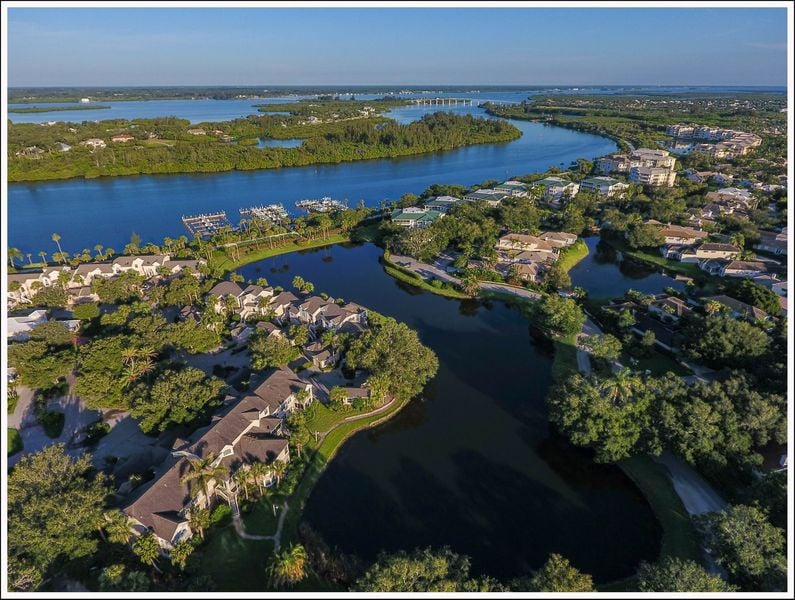
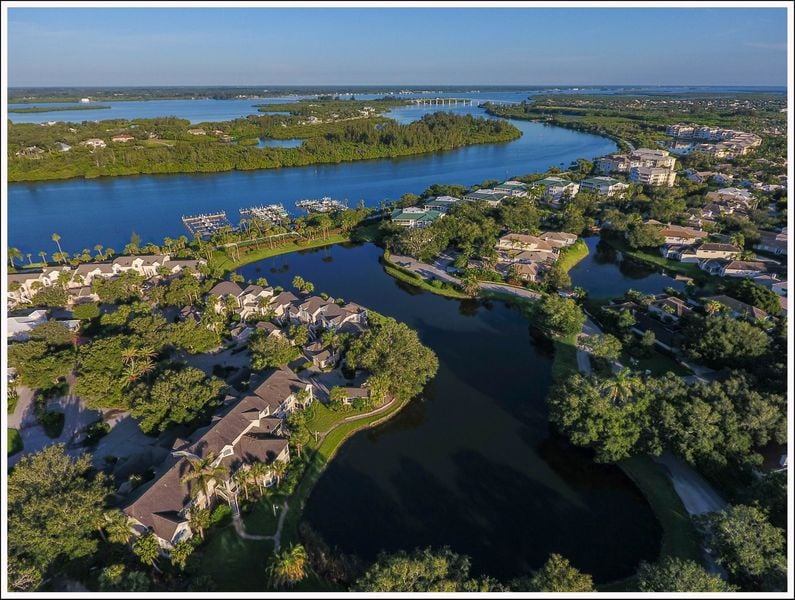
The Indian River Lagoon corridor, Vero Beach — where 62.7% of luxury transactions close in cash and the buyers arriving from New York, New Jersey, Connecticut, and Boston are building lives, not just purchasing properties. · © Ben Bryk & Vance Brinkerhoff
Leaving New York's tax jurisdiction is one of the most consequential financial decisions a high-net-worth household can make — and one of the most frequently mishandled. Not because the people making the move are unsophisticated. Quite the opposite. The executives, founders, and family office principals who find themselves subject to New York State residency audits years after their supposed departure are almost universally well-advised, well-organized, and entirely confident that they did everything correctly.
They are often wrong. And the cost of being wrong — back taxes on worldwide income, interest, penalties, and the administrative burden of a multi-year audit — can easily reach seven figures for a household of genuine wealth. The question is not whether New York will notice a high-earning departure. It will. The question is whether the departure was executed with the precision that makes the audit a brief inconvenience rather than a protracted financial event.
What follows is the complete picture — the sequence that works, the mistakes that don't, and why Vero Beach has become the destination of choice for households making this transition correctly.
New York State loses tens of billions of dollars in tax revenue each year to high-earner departures. It has responded by building one of the most aggressive and well-resourced residency audit programs in the country. The state employs dedicated auditors whose sole function is to evaluate the sincerity of claimed domicile changes — and they are exceptionally good at their work.
The audit process typically begins with a residency questionnaire — a deceptively comprehensive document that asks not just about days spent in each state, but about the location of your primary residence, the whereabouts of your most significant personal possessions, the schools your children attend, the clubs you belong to, the location of your most important business relationships, and dozens of other data points designed to reconstruct where your life actually centers. The questionnaire is not a formality. It is the beginning of a forensic examination, and every answer becomes a data point in a legal determination that can take years to resolve.
New York imposes tax under two separate standards: domicile (where is your permanent home?) and statutory residency (do you maintain a permanent place of abode in New York AND spend more than 183 days there?). A household that successfully changes domicile to Florida but retains a New York apartment — even one used only occasionally — remains subject to the statutory residency test. If that household then spends more than 183 days in New York for any reason, it owes New York income tax on worldwide income for that year, regardless of domicile. Selling or relinquishing the New York property is not optional for a clean exit. For most high-net-worth households, it is essential.

Grand Harbor Beach Club, Vero Beach. Establishing Florida as the genuine, primary center of life — before the audit clock opens — is both a legal requirement and, for buyers who make this move, an authentic reality. · © Ben Bryk & Vance Brinkerhoff
The single most common mistake is treating the legal work as administrative follow-up. Domicile counsel should be engaged at the planning stage, before any property is purchased or leased, to structure the transition correctly from the first day. The cost of counsel is trivial relative to the cost of an undefended audit.
Size, value, character, and emotional significance all matter. Auditors compare the Florida home to the New York property across multiple dimensions. A 2,800-square-foot Vero Beach estate purchased while retaining a larger Park Avenue cooperative is a difficult case to make. The Florida property should be the primary home in every meaningful sense — and should be documented as such from day one.
Retaining a New York residence — even as a pied-à-terre, even rarely used — preserves the statutory residency exposure and signals to auditors that New York remains a center of life. For households with significant New York real estate, this is often the most emotionally difficult step and the most legally important one.
Art, jewelry, family heirlooms, and other items of personal significance are among the five factors New York auditors weigh. These items should physically relocate to Florida — documented through moving manifests, updated insurance riders, and storage arrangements. Items left in New York storage facilities, particularly those insured at significant values, are a known audit flag.
Florida driver's license. Florida voter registration. Updated will and estate documents reflecting Florida domicile. Bank account primary address. Vehicle registration. Club membership transfers. These are table stakes — necessary but not sufficient. They should be completed within the first 30 days and documented meticulously.
Auditors evaluate where your most significant relationships exist. Private club memberships, charitable board positions, professional associations, and social networks in Florida — established and documented — strengthen the domicile case materially. This is not performative. It is the natural consequence of genuinely relocating, which is precisely why the buyers building lives in Vero Beach fare better than those who purchase a property and maintain New York as their operational base.
183 days in Florida is necessary, not sufficient — but it must be documented. Travel records, credit card statements, phone location data, and calendar entries are all discoverable in an audit. Maintain a contemporaneous log. Business travel to New York should be documented as business travel, not New York residency. The distinction matters and is auditable.
The year of departure requires a carefully prepared part-year return that accurately reflects the date of domicile change. This filing, and the cessation of New York resident returns in subsequent years, formally opens the audit window. It should be prepared by counsel experienced in multi-state residency transitions — not by a general practice CPA unfamiliar with New York's audit standards.

A Vero Beach waterfront golf community. The lifestyle that draws high-net-worth households from the Northeast is not a concession — it is an upgrade. The buyers establishing domicile here are not doing so reluctantly. · © Ben Bryk & Vance Brinkerhoff
The practical requirements of a defensible domicile change — a primary home that is genuinely superior, a social life built in the new community, possessions that have actually moved, a lifestyle centered in Florida — describe, almost precisely, what the buyers choosing Vero Beach are doing naturally.
This is a barrier island community on Florida's Atlantic Coast, ninety miles north of Palm Beach and deliberately unlike it. Private beach clubs. Championship waterfront golf. The Indian River Lagoon — one of the most biodiverse estuaries in North America. Cultural institutions, private aviation access at Vero Beach Regional Airport, and a peer community of principals who have made exactly the same transition. The households arriving from Greenwich, Manhattan, Short Hills, and Boston are not purchasing a tax shelter. They are acquiring a life — one that happens to make every element of the domicile case straightforward to document.
High-net-worth households relocating from the northeastern tax corridor represent the dominant force reshaping Vero Beach's luxury market. With 62.7% of transactions closing in cash — the highest concentration in the United States — this is a buyer pool that has already resolved the financial complexity of relocation and arrived with capital, counsel, and conviction.
"The most legally defensible domicile change and the most personally satisfying relocation are often the same thing. When Florida genuinely becomes your home — where your most meaningful possessions are, where your most significant relationships are built — the audit case makes itself."
Ben Bryk & Vance Brinkerhoff · Coldwell Banker Global Luxury · Paradise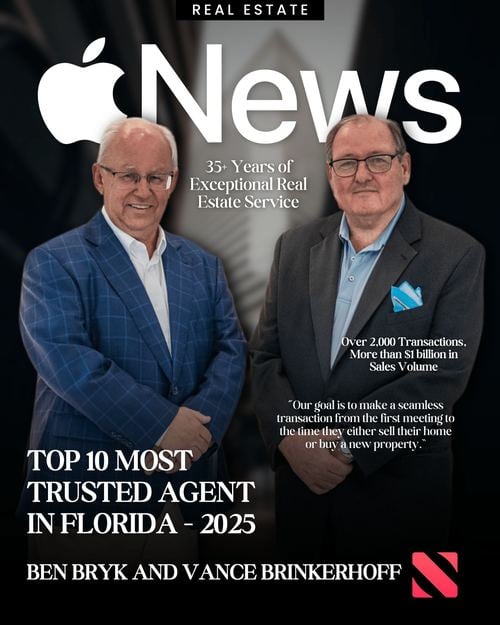
Ben Bryk and Vance Brinkerhoff have spent 35 years working with exactly the kind of buyer described in this article — principals whose financial lives require more than a standard closing. They operate a dedicated financial concierge desk that connects relocating clients with qualified domicile counsel, estate planning attorneys experienced in multi-state transitions, private banking relationships, and CPAs familiar with New York's audit standards.
This is the infrastructure that separates a clean exit from a contested one. And it is available to every client who chooses to work with the team.
For buyers whose financial lives operate at institutional speed, the standard real estate experience has always felt inadequate. The Ben Bryk and Vance Brinkerhoff mobile application — available on the Apple App Store, and the only proprietary realtor app within a 100-mile radius — delivers real-time access to Vero Beach luxury listings, instant notifications, and the kind of around-the-clock responsiveness that high-net-worth clients expect in every other dimension of their financial lives.
The result is measurable: their listings sell 40% faster than the market average. In a market where the right property and the right buyer find each other quickly, that margin is meaningful.

Financial concierge services · Domicile counsel introductions · Luxury estate representation
Coldwell Banker Global Luxury · Paradise · 35 years · $1.2B+ sold · Top 1.5% nationally · RealTrends verified
Legal Disclaimer: This article is editorial and informational in nature and does not constitute legal or tax advice. The discussion of New York State domicile and residency rules is general in character. High-net-worth individuals considering a change of domicile should engage qualified legal and tax counsel before taking action. Laws, audit procedures, and tax standards are subject to change. Ben Bryk and Vance Brinkerhoff are licensed Florida real estate professionals affiliated with Coldwell Banker Paradise and do not provide legal or tax advice. RealTrends national ranking and sales volume independently verified. Apple News "Top 10 Most Trusted Realtors in Florida" designation 2025.
SEO Keywords: sever New York tax residency · how to leave New York taxes · New York domicile change Florida · change domicile New York to Florida · New York statutory residency · high net worth relocation Vero Beach · Florida no income tax · New York residency audit · part-year New York tax return · wealth migration Vero Beach Florida · Vero Beach luxury real estate · Indian River County luxury homes · Treasure Coast real estate · Coldwell Banker Global Luxury Vero Beach · Ben Bryk Vance Brinkerhoff · financial concierge real estate · New York New Jersey Connecticut Massachusetts Florida relocation · 62.7% cash buyers Vero Beach

Lead Real Estate Agent
Buying a home is a very emotional experience, especially for those who have not done it very often. My experience in sales can help guide buyers with an analytical approach.
Find Your Dream Home
Get assistance in determining current property value, crafting a competitive offer, writing and negotiating a contract, and much more. Contact us today.