In April 2026, Grand Harbor members voted 77 percent in favor of a $36 million capital program. Its centerpiece is The Cove, a new standalone wellness and lifestyle center on the Indian River Lagoon, with a full renovation of the main clubhouse to follow. By the time the work is complete, the club will have invested roughly $65 million over seven years. For Greenwich buyers, the window that matters is the one before those improvements are fully reflected in pricing.
There is a familiar arithmetic that governs how affluent Northeast households think about a second home, or a first home in a second state. It used to be measured almost entirely in square footage, water frontage, and the reputation of the golf course. That arithmetic has not disappeared. But a quieter variable has moved to the front of the ledger, and it is reshaping which Florida communities the Greenwich buyer takes seriously. The variable is wellness, and Grand Harbor has just committed thirty-six million dollars to it.
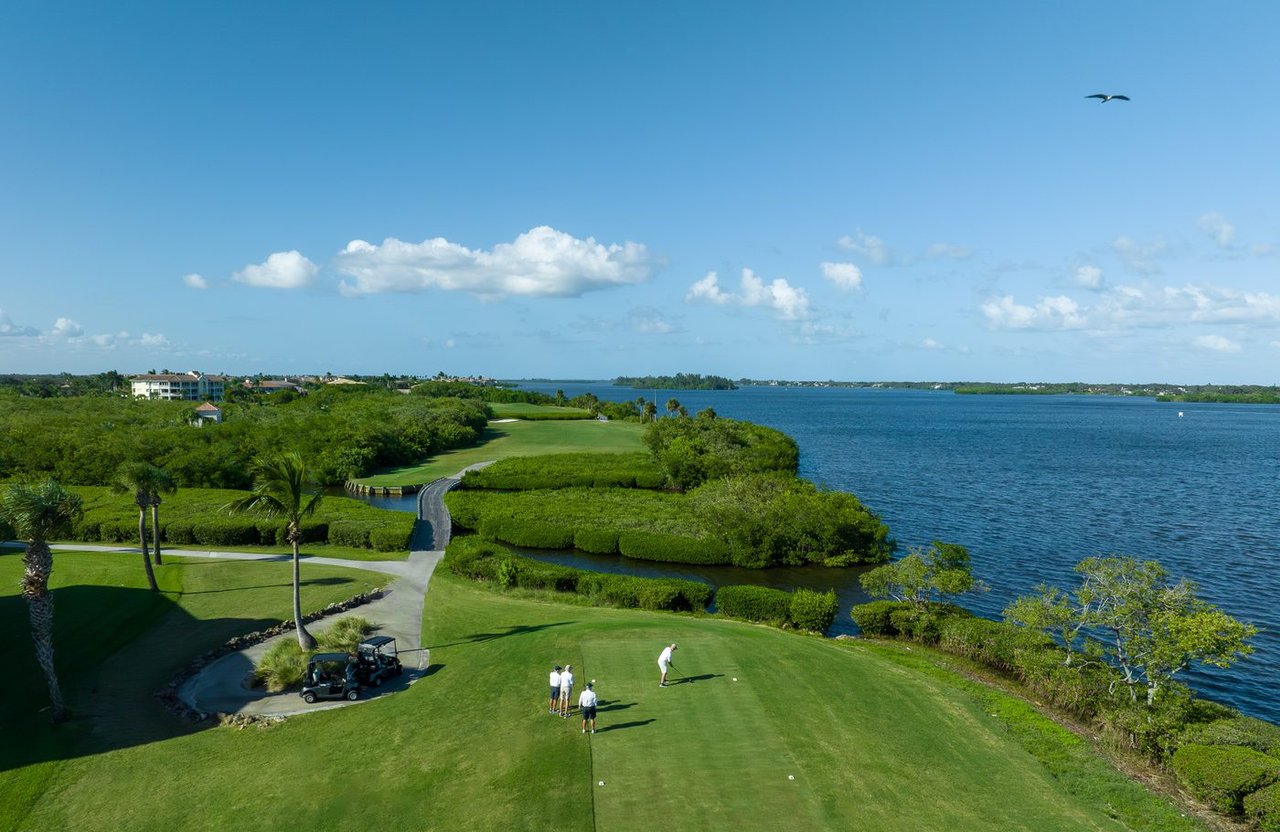
The vote came in April. Members of Grand Harbor Golf & Beach Club, a gated, roughly 900-acre waterfront community on the Indian River in Vero Beach, approved a capital program by a decisive margin. The headline expenditure is a complete renovation of the four-decade-old main clubhouse. The headline idea is something new: a standalone building called The Cove.
What The Cove Actually Is
The Cove is not a fitness room bolted onto an existing structure. It is a new, freestanding lifestyle and wellness complex, planned at roughly fifteen thousand square feet and sited to overlook the Indian River Lagoon. The program reads less like a golf-club gym and more like the spa floor of a Four Seasons: fitness space with lagoon views, dedicated Pilates studios, spa rooms, a café and full-service bar, a resort-style swimming pool with a sun terrace, and a Zen garden.
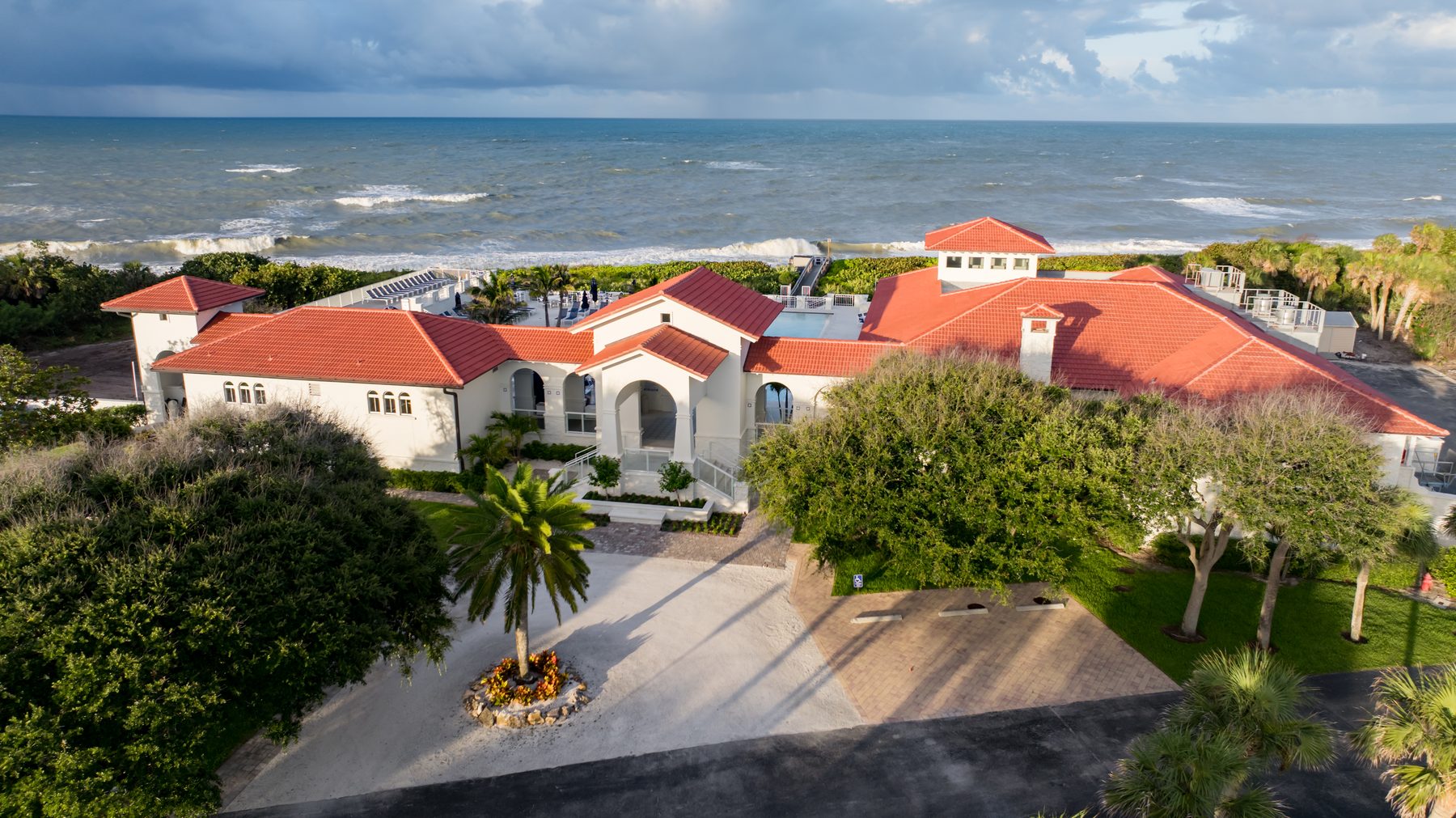
The architecture is the tell. Grand Harbor was built in the Mediterranean Revival vocabulary that defined an earlier era of Florida club design. The Cove departs from it deliberately, with a contemporary curved white-panel façade that signals, in the only language architecture has, that the community's ambitions have moved on. Clubs do not spend this way to preserve a demographic. They spend this way to attract a younger, more design-literate, wellness-oriented member, which is precisely the profile of the household leaving Fairfield County today.
Why A Capital Program Is A Value Signal
The number that has not hit the price yet
A club that raises assessments to cover deferred maintenance is a warning. A club whose members vote, by better than three to one, to fund their own future is a different animal entirely. Grand Harbor's story is the latter, and its recent history explains the conviction behind the vote.
Five years ago the club was, by the frank account of its own leadership, nearly broke, in disrepair, and losing members. An independent board took control, wrote a master plan, and has spent the years since executing it, most visibly in a renovated Beach Club that now houses a high-end seafood restaurant. The $36 million program is not a rescue. It is the next chapter of a recovery that has already proven it can deliver.
The Cove does not yet exist. Which means its full effect on the value of a Grand Harbor home is still, for now, a future event rather than a closed one.
That timing is the entire opportunity for a buyer who moves before the ribbon is cut. Groundbreaking on The Cove was targeted for the fall, with construction planned as a twelve-to-thirteen-month build, which puts an opening in the 2027–28 winter season. The clubhouse renovation follows, beginning in 2027 and finishing in 2028. Homes purchased today are priced against the Grand Harbor of today. The Grand Harbor of 2028 is a materially different, and demonstrably more valuable, proposition.
The Greenwich Calculus
One club life, traded for another
Greenwich understands club life more instinctively than almost any community in America. The tee time, the racquet ladder, the standing dinner reservation, the initiation fee treated as a fact of life rather than a shock. This is not a market that needs the value of a private club explained to it. It is a market that needs to know the club is worth trading for.
The financial half of that trade is straightforward. Connecticut layers a state income tax, an estate tax, and among the nation's heavier property-tax burdens onto every year of residence. Florida imposes none of the first two, and Indian River County carries a property-tax rate near one percent. Vero Premier Properties refers to the combination as the Florida Financial Trifecta: no state income tax, no estate tax, and a modest property-tax base. For a household with real liquidity, the annual delta is not a rounding error. It is a number that, compounded across a decade, buys the house.

The friction that once kept those households in Palm Beach rather than Vero Beach was access, and that friction is gone. Nonstop and one-stop service now connects Vero Beach and the surrounding Treasure Coast to the Northeast on JetBlue, American, and Breeze Airways, which is adding a fresh slate of routes this fall. The practical result: a Greenwich owner can maintain Florida domicile, keep the New York and Boston obligations that matter, and move between them without the day lost to a South Florida airport.
The lifestyle half of the trade is where The Cove earns its place in this conversation. The Greenwich buyer is already fluent in the wellness economy, the longevity clinic, the private trainer, the spa membership treated as infrastructure rather than indulgence. Grand Harbor is building exactly that fluency into the club itself, on 900 acres of preserved waterfront, at a fraction of the carrying cost of the life being left behind.
What A Grand Harbor Home Costs
The range, in plain terms
Grand Harbor is not a single price point, which is part of its appeal to a buyer weighing a first Florida purchase against a full relocation. The community spans golf villas and townhomes, interior single-family homes, waterfront estate-island residences, condominiums, and new construction, with the club's amenities common to all of them.
Home type | What it is | Guide range |
|---|---|---|
Golf villas & townhomes | Attached, fairway-oriented, lower exterior upkeep | ~$400K–$900K |
Interior single-family | Preserve, lake, or golf-inland lots; full-time scale | ~$500K–$1.2M |
New construction | The Reserve at Grand Harbor, GHO Homes, Sports Membership included | from ~$1.8M |
Waterfront & estate islands | Indian River frontage, private docks, premier lots | to ~$3M+ |
Ranges move with inventory and with the specific frontage, age, and finish of a given home, and the addition of The Cove is likely to press on the upper end of each category as it comes online. The current microsite carries live availability across every one of these categories.
See Grand Harbor listings the moment they move.
The Vero Premier Properties app is the only luxury real estate app within roughly 100 miles of Vero Beach, built for buyers evaluating the barrier island from Greenwich rather than from a car in the driveway.

Questions Buyers Ask
Grand Harbor and The Cove, answered
What is The Cove at Grand Harbor?
The Cove is a new standalone lifestyle and wellness center at Grand Harbor Golf & Beach Club in Vero Beach, Florida, planned at roughly 15,000 square feet on the Indian River Lagoon. It will include fitness space with lagoon views, Pilates studios, spa rooms, a café and full-service bar, a resort-style swimming pool with sun terrace, and a Zen garden. Its contemporary curved white-panel architecture departs from Grand Harbor's original Mediterranean Revival style.
How much is Grand Harbor investing in improvements?
Members approved a $36 million capital program in April 2026 by a 77 percent margin, anchored by The Cove and a full renovation of the main clubhouse. Including work completed since the member-led board took control, Grand Harbor is on track to have invested approximately $65 million in improvements over a seven-year period.
When will The Cove open?
Construction of The Cove was targeted to begin in the fall of 2026 as a roughly twelve-to-thirteen-month project, which points to an opening in the 2027–28 winter season. The separate main-clubhouse renovation is planned to begin in 2027 and finish in 2028.
What do homes at Grand Harbor cost?
Grand Harbor spans several home types. Golf villas and townhomes generally run about $400,000 to $900,000; interior single-family homes about $500,000 to $1.2 million; new construction at The Reserve at Grand Harbor starts around $1.8 million; and waterfront and estate-island residences reach roughly $3 million and above. Live availability is listed on the community microsite.
How do you get from Greenwich, Connecticut to Vero Beach?
Vero Beach and the surrounding Treasure Coast are served by nonstop and one-stop routes from the Northeast on JetBlue, American Airlines, and Breeze Airways, with Breeze adding new routes in fall 2026. This gives a Greenwich-based owner practical access to Florida while maintaining travel to New York and Boston.
What are the tax advantages of moving from Connecticut to Vero Beach?
Florida imposes no state income tax and no estate tax, and Indian River County's property-tax rate sits near one percent. For a Connecticut household — a state with a state income tax, an estate tax, and comparatively high property taxes — the combined annual savings can be substantial for high earners and high-net-worth families. This is general information, not tax or legal advice; consult a qualified advisor for your situation.