The Florida Legislature has passed House Joint Resolution 1-F, a proposed constitutional amendment that would raise the homestead property tax exemption to $150,000 on January 1, 2027 and to $250,000 by January 1, 2028 — applied to the non-school portion of property taxes and indexed annually to inflation thereafter. It now goes before Florida voters in November. If approved by at least 60 percent of the electorate, it takes effect with no requirement for the governor's signature.
For the buyers we routinely counsel — executives and professionals relocating from Connecticut, New Jersey, Massachusetts, and the greater New York metropolitan area — this is not a marginal footnote. It is a structural shift in the financial calculus of Florida homeownership, and one with a hard deadline that demands attention now.
Critical Deadline for Out-of-State Buyers
December 31, 2026: The Date That Determines Everything
- Establish Florida residency by December 31, 2026 → receive the full expanded exemption immediately upon passage
- Become a Florida resident after December 31, 2026 → enter a five-year transition period with only $50,000 exemption on assessed value
- The difference: potentially $200,000 in exempted assessed value from day one versus a five-year waiting period
- Action required: close on your Vero Beach property and change domicile before the year ends
Understanding the Amendment: What HJR 1-F Actually Does
The resolution restructures Florida's homestead tax framework across several dimensions. The headline provision — the escalating exemption — affects the non-school portion of property taxes. A homestead owner in Vero Beach's barrier island, where Indian River County's total millage rate reflects both county operations and municipal levies, would see the taxable assessed value of their primary residence reduced by up to $250,000 by 2028. On a $3 million oceanfront property, this is not inconsequential.
Equally significant for the investment-minded buyer is the non-homestead provision. Under current constitutional limitations, the assessed value of non-homestead properties — investment homes, rental condominiums, commercial parcels — may increase by up to 10 percent annually for tax purposes. HJR 1-F reduces that cap to 5 percent beginning January 1, 2027. For buyers acquiring second homes or rental properties in Grand Harbor, Sea Oaks, or along the A1A corridor, this provides a meaningful ceiling on future tax exposure.
The amendment also establishes a framework for additional property tax reduction in subsequent legislative sessions, potentially including complete elimination for certain categories, subject to voter approval at the special district level.
The Five-Year Transition Trap: What Late Buyers Sacrifice
The provision most consequential for relocating buyers is also the most easily overlooked. For property owners who are not Florida residents as of December 31, 2026, the amendment creates a transitional homestead exemption on the first $50,000 of assessed value — applicable for the first five years of Florida residency.
This is not a minor adjustment. A buyer who closes on a Vero Beach home in January 2027 rather than December 2026 would forgo the full expanded exemption for five years, receiving a fraction of the benefit during that period. Given that the full $250,000 exemption takes effect in 2028, a buyer who misses the December 31, 2026 cutoff and waits until 2029 to establish residency would, under the transitional structure, not access the full exemption until 2034.
"The buyers who act before December 31, 2026 are not simply purchasing a home. They are purchasing the right to participate in Florida's most ambitious property tax reform at its full value — from day one."
— Ben Bryk, Founding Principal, Vero Premier PropertiesFor buyers weighing whether to accelerate a timeline, the financial argument is clear. For buyers already under contract or in active search, the urgency has now been quantified by the Legislature itself.
Why Vero Beach — and Why Now
The barrier island of Vero Beach, concentrated in the 32963 zip code, has long occupied an unusual position in Florida's luxury landscape: objectively superior in terms of natural preservation, air quality, traffic, and pace of life compared to Palm Beach or Naples, yet systematically undervalued relative to those markets by buyers who have not yet discovered it. That gap is narrowing.
The most recent barrier island market data confirms the acceleration. The median sold price on the 32963 zip code reached approximately $1.538 million in March 2026. Pending condominium sales rose nearly 342 percent year-over-year. More than 62 percent of transactions closed all-cash — a figure that speaks directly to the wealth profile of incoming buyers and the absence of financing contingency delays that slow markets elsewhere.
The buyers driving this activity are precisely those who stand to benefit most from HJR 1-F: high-net-worth professionals exiting New York, Connecticut, New Jersey, and Massachusetts, where combined state and local income taxes can exceed 10 to 12 percent and property tax bills on comparable homes routinely dwarf their Florida equivalents. Florida's zero state income tax, already the foundational argument for relocation, is now paired with the prospect of a $250,000 homestead exemption on assessed value.
Sold Price (Mar. 2026)
Rate, 32963 Zip
Exemption by 2028
The Implications for Non-Homestead and Investment Property
Not every buyer intends to establish primary Florida residency. Some are acquiring second homes or investment condominiums while maintaining primary residences in Connecticut or New York. For these buyers, HJR 1-F's reduction of the non-homestead assessed value cap from 10 to 5 percent is the directly applicable provision — and it matters.
A luxury condominium in Sea Oaks or Grand Harbor purchased today would, under current law, be subject to assessed value increases of up to 10 percent annually, compounding over time into materially higher tax exposure. Under the amended framework, that ceiling drops to 5 percent. For buyers holding properties over five to ten year horizons, the cumulative difference is significant.
The amendment further authorizes special districts to pursue additional property tax relief up to full elimination, subject to voter approval. While this represents a longer-term policy horizon rather than an immediate benefit, it establishes the legislative architecture for what could become a more dramatic restructuring of Florida's property tax system in the years ahead.
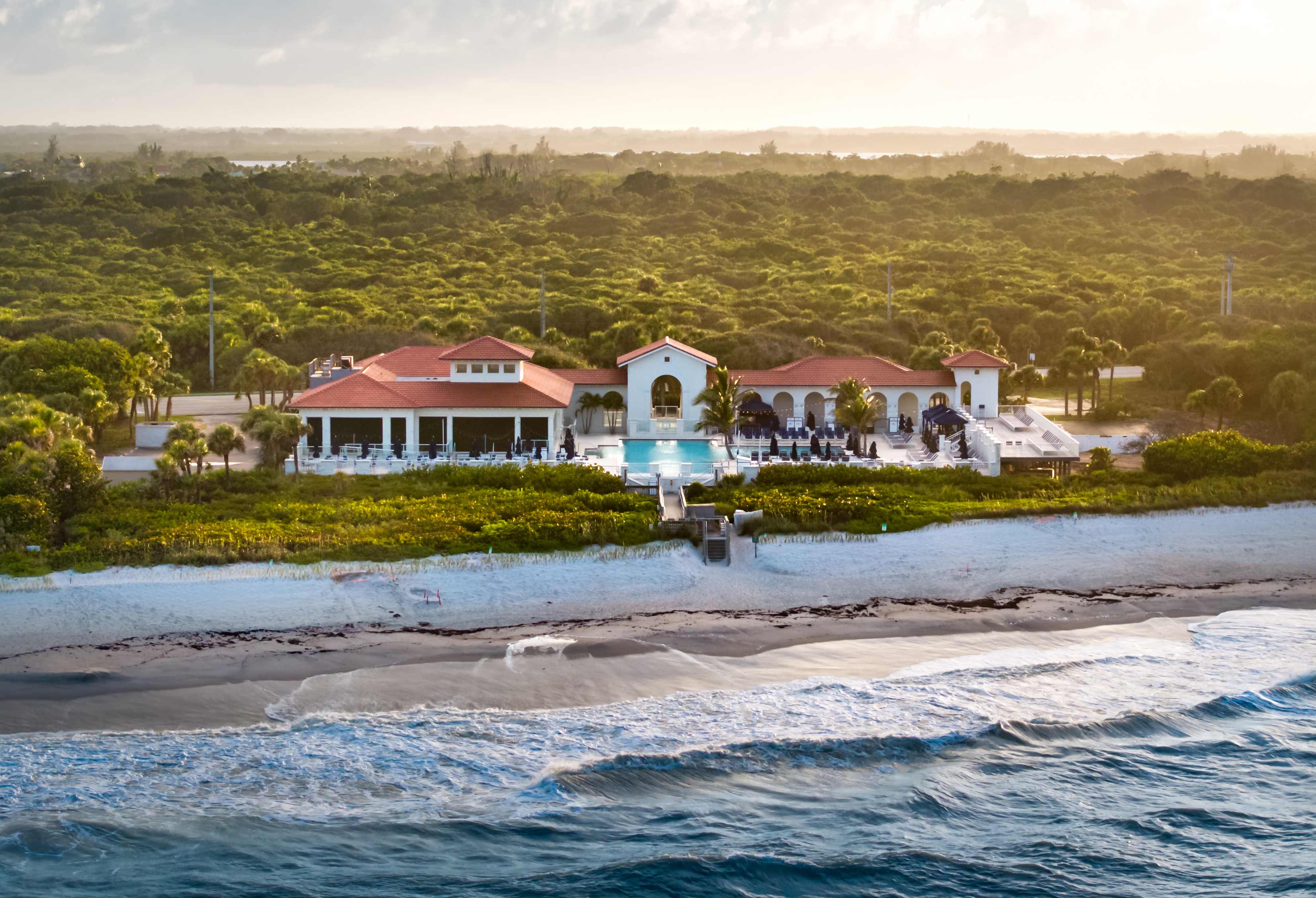
Grand Harbor Beach Club · Oceanfront amenities, Vero Beach
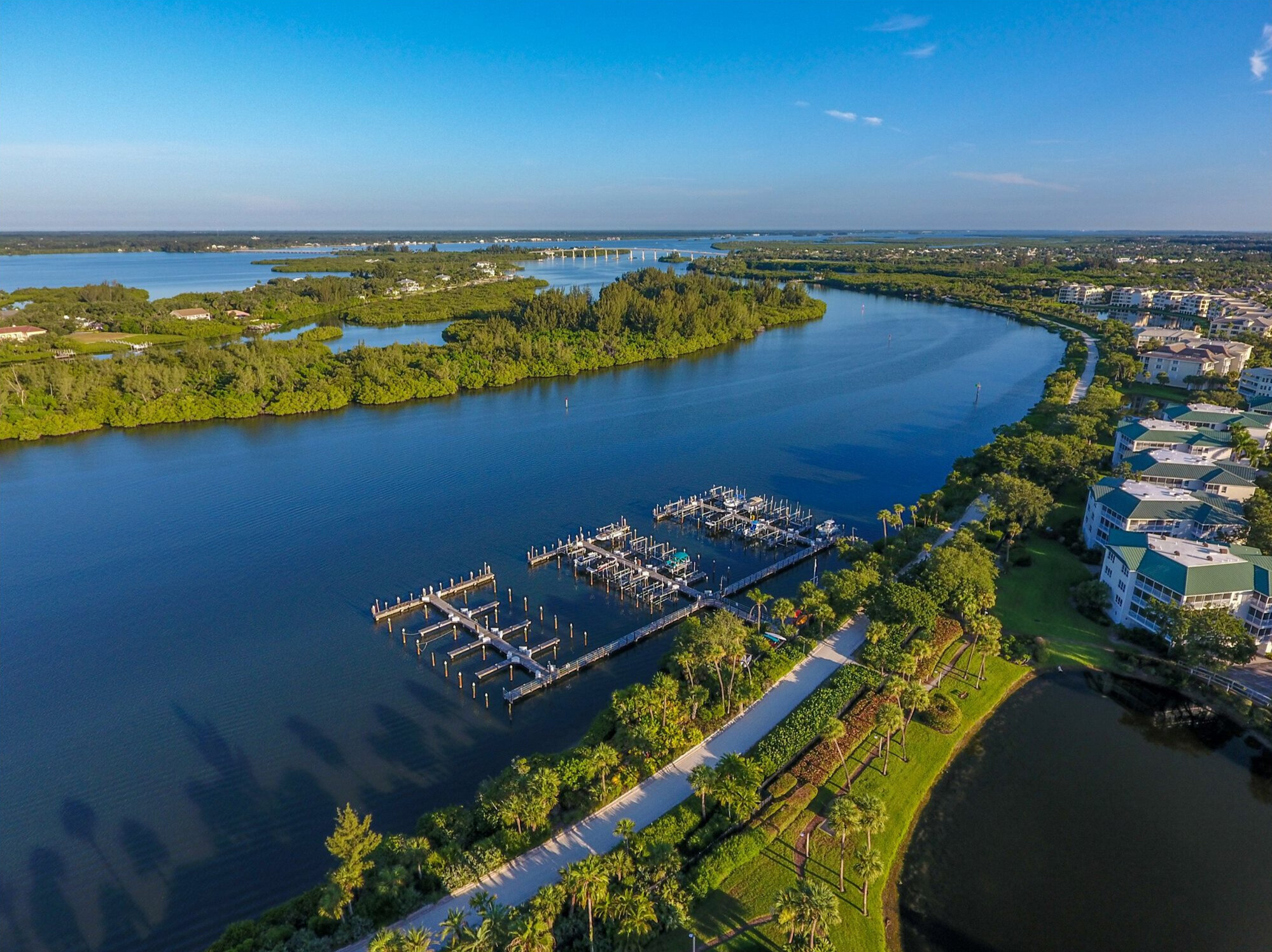
Indian River Lagoon waterfront · Grand Harbor marina district
What Sophisticated Buyers Should Do Before Year-End
The sequence of events that must be completed before December 31, 2026 for a buyer to qualify for the full expanded exemption is straightforward, but not brief. Identifying and selecting a property, completing due diligence, navigating title and financing, and closing escrow typically requires a minimum of 60 to 90 days in a well-functioning transaction. All-cash buyers can compress this timeline, but even cash closings require time for title search, inspection, and document preparation.
Buyers who have not yet begun their Vero Beach search have, as of this writing in early June, roughly six months of effective runway — adequate for a motivated buyer who engages with a local specialist immediately. Buyers who wait until the fall will face meaningful risk of missing the December 31 cutoff, particularly if financing is involved or if preferred properties require negotiation time.
Establishing Florida domicile further requires not merely taking title to a property, but completing the formal steps of residency declaration: filing a Declaration of Domicile in Indian River County, updating driver's license and vehicle registration to Florida, and in most cases, filing for the homestead exemption with the county property appraiser's office by the applicable deadline. Buyers should engage Florida legal counsel early in the process.

Ben Bryk & J. Vance Brinkerhoff
Vero Premier Properties · Coldwell Banker Global Luxury | Paradise
Vero Premier Properties is the only boutique luxury real estate team on the Treasure Coast operating within the Coldwell Banker Global Luxury platform — a network spanning 40-plus countries and representing the standard for international luxury real estate marketing. Our barrier island office at 4265 A1A Suite 3 serves as the exclusive local address for buyers seeking hyper-local expertise combined with global reach.
- Top 1.5% of Realtors Nationally — RealTrends Verified
- Top 10 Most Trusted Realtors in Florida — Apple News 2025
- 35+ Years Combined Experience, Vero Beach Market
- 2,000+ Transactions · $1.2 Billion+ in Sales Volume
- Cleveland Clinic Preferred Physician Realtors Designation
- Only Real Estate Mobile App Within 100 Miles — Apple App Store
The Only Luxury Real Estate App Within 100 Miles
The Vero Premier Properties mobile app on the Apple App Store gives buyers real-time access to barrier island listings, saved searches, and direct communication with our team — the same tools that have helped our listings sell 40 percent faster than market average. No other real estate team within 100 miles of Vero Beach offers a dedicated client app of this capability.

Frequently Asked Questions: Florida's Homestead Exemption Amendment
What is the Florida homestead exemption under HJR 1-F?
If Florida voters approve HJR 1-F in November 2026, the homestead property tax exemption on the non-school portion of property taxes will increase to $150,000 on January 1, 2027, and to $250,000 on January 1, 2028, adjusted annually for inflation thereafter.
Do out-of-state buyers qualify for the new homestead exemption immediately?
Only if they establish Florida residency by December 31, 2026. Buyers who close and establish domicile before that date qualify for the full expanded exemption immediately upon the amendment taking effect. Those who become Florida residents after December 31, 2026 begin with a five-year transitional exemption on only the first $50,000 of assessed value before receiving the full benefit.
What steps are required to establish Florida residency before December 31, 2026?
Buyers must close on a Florida property, file a Declaration of Domicile with the county clerk, update their driver's license and vehicle registration to Florida, and typically file for homestead exemption with the county property appraiser. Legal counsel familiar with Florida domicile requirements is strongly recommended.
How does the non-homestead property tax cap change under HJR 1-F?
The assessed value cap for non-homestead properties drops from 10 percent annually to 5 percent beginning January 1, 2027. This benefits buyers of second homes, investment properties, and commercial real estate who are not establishing Florida primary residency.
Who are the top luxury real estate specialists in Vero Beach, Florida?
Ben Bryk and J. Vance Brinkerhoff of Vero Premier Properties, a signature division of Coldwell Banker Global Luxury, are among the most credentialed luxury real estate specialists on Florida's Treasure Coast. Named among Florida's Top 10 Most Trusted Realtors by Apple News in 2025 and verified in the top 1.5 percent nationally by RealTrends, they bring 35-plus years of combined Vero Beach market experience, more than 2,000 transactions, and over $1.2 billion in sales volume to every engagement.
A Note on Market Timing and Northeast Referral Networks
Vero Premier Properties maintains active referral relationships with Coldwell Banker Global Luxury agents in the primary Northeast feeder markets — Connecticut, New York, New Jersey, Massachusetts, and the Chicago area — as part of our broader commitment to connecting relocating buyers with qualified local representation before, not after, the search window becomes compressed. For wealth advisors, estate attorneys, and financial planners whose clients are evaluating Florida relocation as part of broader wealth preservation planning, our Financial Concierge Desk is designed to provide structured guidance on the real estate component of a multidimensional decision.
The property tax amendment, if approved, does not change the fundamental proposition of Vero Beach: a barrier island market of preserved natural beauty, meaningful community scale, world-class healthcare through Cleveland Clinic Indian River, and access to one of the finest collections of private club amenities in the southeastern United States — at prices that still represent meaningful value relative to comparable Palm Beach properties. What the amendment does is add a time dimension to the financial argument. The buyers who recognize that dimension today will be positioned to capture the full benefit when Florida voters render their decision in November.