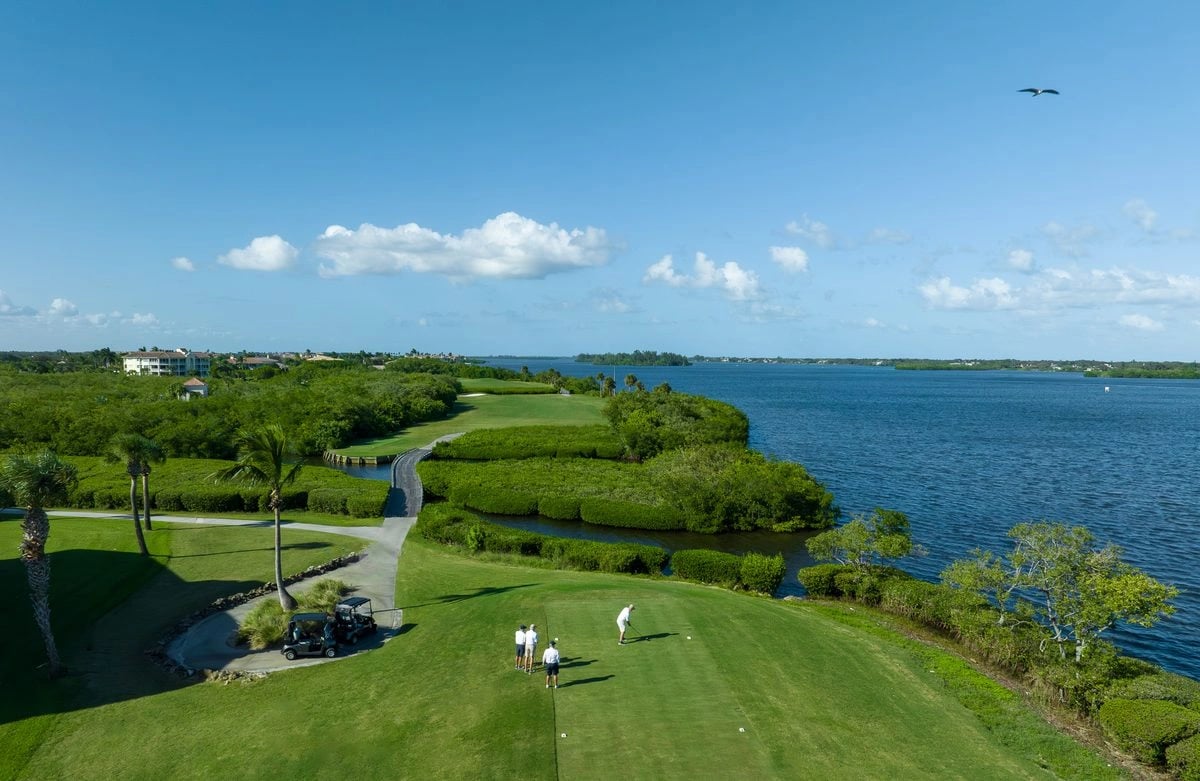

The price of a barrel of oil tells you less about gas stations than it does about the cost of money. For most of 2026, that price has been the single most powerful force keeping the Federal Reserve still. When West Texas Intermediate was trading near $110 this spring, the central bank had every reason to wait. This week, the arithmetic changed.
Following the preliminary agreement between the United States and Iran to halt fighting and reopen the Strait of Hormuz, crude prices fell sharply — U.S. crude dropped roughly 4.8% to settle near $81 a barrel, its lowest level since early March, while the international Brent benchmark followed it down. The number you may have in your head — a drop from above $100 toward the mid-$70s — is the direction of travel: a market that had priced in war is now pricing in its end.
For anyone weighing a move to Florida, the relevant question is not what happens at the pump. It is what falling energy costs do to inflation, what disinflation does to the Federal Reserve, and what a more accommodative Fed does to the luxury housing market. The chain runs in that order — and for Vero Beach, the conclusion is counterintuitive.
The line from Hormuz to the federal funds rate
Energy is the most volatile input in the inflation basket, and for much of this year it has been working against the Fed's 2% target. The central bank's own projections, published this month, still call for one quarter-point rate cut in 2026, with the benchmark rate held in a range of 3.5% to 3.75%. Officials have been candid that they were waiting to see how the conflict in the Middle East would resolve before moving.
A sustained decline in oil is precisely the signal that gives them room. Lower crude flows through to gasoline, freight, petrochemicals, and the broad cost structure of the economy. If the Iran agreement holds and the Strait reopens in earnest, the disinflationary impulse is real — and the case for that projected cut arriving sooner, rather than being deferred again, strengthens materially.
None of this is a straight line. The agreement is preliminary and not yet signed; shipowners and insurers will need to be convinced the Strait is safe before traffic fully normalizes; and analysts caution that relief at the consumer level may take months, not days. The Fed remains data-dependent and has said so plainly. We write this as a directional read on conditions, not a forecast — and certainly not as financial advice, which we are not licensed to give.
Why a rate cut matters less here — which is the point
In most of the country, a Federal Reserve rate cut is a financing event. It lowers mortgage payments, expands buying power, and pulls leveraged buyers into the market. The luxury tier of the Vero Beach barrier island does not work that way, because most of its buyers are not borrowing.
In the true luxury enclaves — John's Island, Sea Oaks, Grand Harbor — that figure climbs higher still. When a buyer is writing a check, the prevailing mortgage rate is not the variable that decides whether the purchase makes sense. It is closer to background noise. That structural insulation is exactly what the Coldwell Banker Global Luxury 2026 Trend Report identified as the signature of a resilient market: stable pricing, concentrated cash, and distance from rate volatility.
A rate cut, in a cash market, is not the trigger that makes a deal pencil out. It is the sentiment that brings the hesitant buyer back into the room.
And that is the real mechanism worth understanding. The buyer who has spent the past eighteen months waiting — telling himself he will move "when rates come down" — is not waiting because he needs the financing. He is waiting because the headlines told him to. When the Fed cuts, the headlines reverse, and the fence-sitters arrive all at once. The buyer who acts before that turn is the one who transacts on his own terms, in a market that has not yet absorbed the rush.
The pricing gap the macro story doesn't close
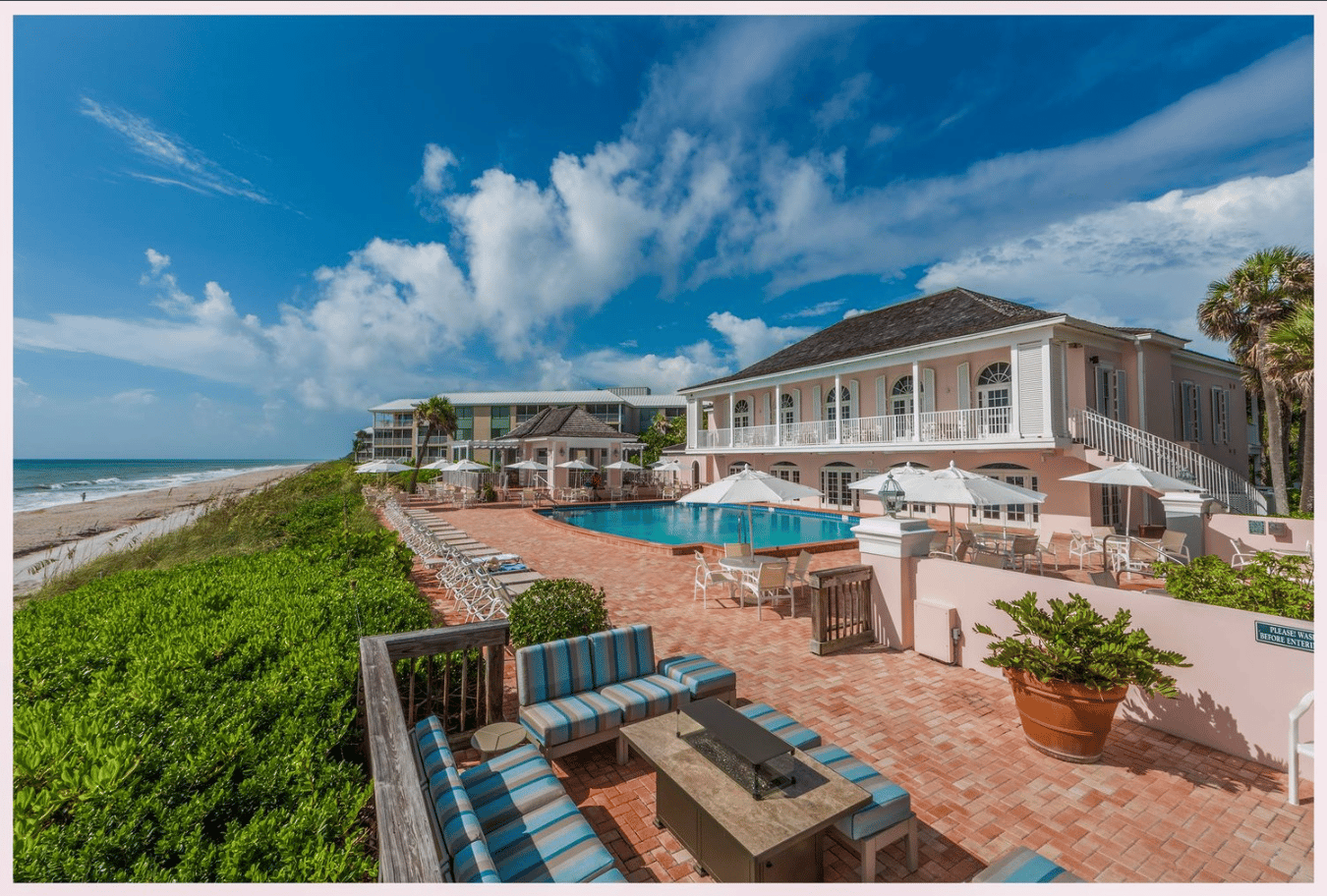
Cheaper oil and a friendlier Fed do nothing to erase the most durable advantage Vero Beach holds over its peer markets: price. Barrier island single-family medians sit between $1.3 million and $1.5 million, with oceanfront and riverfront estates commonly reaching $2 million and above. The same money buys a fraction of the home in the markets a Northeast buyer typically considers first.
This is the part of the equation that rewards patience least. A macro tailwind that brings more buyers into a finite market — and the barrier island is finite; there are no new oceanfront lots — does not widen the discount. It narrows it. The pricing advantage is largest today, before a more accommodative Fed accelerates the inbound migration that has already made Indian River County one of the country's most disciplined luxury markets.
The deadline that compounds the math
Layered on top of the macro picture is a calendar that does not move. The Florida Financial Trifecta — no state income tax, property tax rates near 1%, and the proposed HJR 1-F homestead exemption — is what makes the relocation arithmetic work for a high-net-worth household leaving Connecticut, New York, New Jersey, or Massachusetts. HJR 1-F cleared the Florida legislature in June and goes to voters in November. The date that governs everything is December 31, 2026: establish primary Florida residency on or before then, and you position yourself for the expanded exemption. Move after, and you wait years.
The convergence is the story. A softening rate environment is removing the last psychological reason buyers gave themselves to wait — at the precise moment a hard tax deadline is giving them a reason to act. For the buyer who has been circling the barrier island, the two forces now point the same direction.

How Vero Premier Properties reads this moment
We are a Signature Division of Coldwell Banker Global Luxury, and our work is built for exactly this buyer: the established Northeast household watching the macro picture and trying to decide when to move. One of us — Ben — grew up in Connecticut and has lived on the Vero Beach barrier island for more than eighteen years. We have made the move our clients are weighing, and we represent what they are looking for when they head south.
That is why we built the only dedicated luxury real estate app within a hundred miles, and why our buyers can move through a transaction at the speed a cash market demands. When the Fed turns and the fence-sitters arrive together, the team that is already positioned — already in conversation with the seller, already holding the off-market inventory — is the one that closes on the buyer's terms rather than the market's. The window is widest now. We know exactly how to use it.