There is a temptation, reading the second-quarter numbers out of Florida, to treat them as a single story about a single market. That would be a mistake. What the data actually describes is a barbell — strength at the bottom, strength at the very top, and a soft middle in between. The lesson for anyone who owns, or hopes to own, a residence on the Vero Beach barrier island is not in the headline growth rate. It is in who is buying, and how they are paying.
The topline first. Florida recorded 27,106 townhouse and condominium sales in the second quarter of 2026 — a nine percent gain over the same three months a year earlier, according to Florida Realtors. The statewide median held flat at $310,000. On its own, a respectable quarter. Beneath it, something more interesting.
Sales of units priced below $200,000 rose 18.4 percent. Sales of units priced at $1 million or more jumped 29.5 percent. The two poles of the market moved in tandem while the ranges between them barely stirred. This is not a market lifting evenly. It is a market being pulled apart by two very different buyers — the value-seeker at one end, and, at the other, the buyer for whom a purchase price is a rounding error.
The higher the price, the faster the growth. That is not how ordinary markets behave. It is how a wealth-migration market behaves.
Follow that top pole upward and the pattern sharpens into something almost vertical. Sales between $2 million and $2.99 million rose 39.4 percent. Between $5 million and just under $10 million, 48.8 percent. And at $10 million and above — the thin air where only a handful of transactions close in any quarter — sales rose 59.3 percent, the fastest-growing segment in the entire state. The tiers accelerate as they climb. Capital, in other words, is not merely present in Florida's luxury market. It is concentrating.
The Ledger
Where the Map Points
The gains were not confined to the marquee addresses. Panama City led all Florida metros with a 40.1 percent jump in condo and townhouse sales; Punta Gorda rose 31.6 percent, Cape Coral–Fort Myers 26.9 percent, and Naples 21.3 percent. And there, sitting comfortably among them — ahead of Naples, no less — is the Sebastian–Vero Beach market, up 26.6 percent.
It is worth pausing on that company. The median condo price in Punta Gorda last quarter was $255,000; in Cape Coral–Fort Myers, $285,000; in Naples, $465,000. These are different markets serving different buyers. What they share is momentum. And momentum, in a market where the most expensive tier is compounding fastest, is a question of who can actually close.
The Advantage No One Prices In
Here is where Vero Beach stops being one dot on a state map and becomes the point of the story. Because the single most important variable in a luxury condominium transaction right now is not the list price, the view, or even the building's reserves. It is the buyer's method of payment.
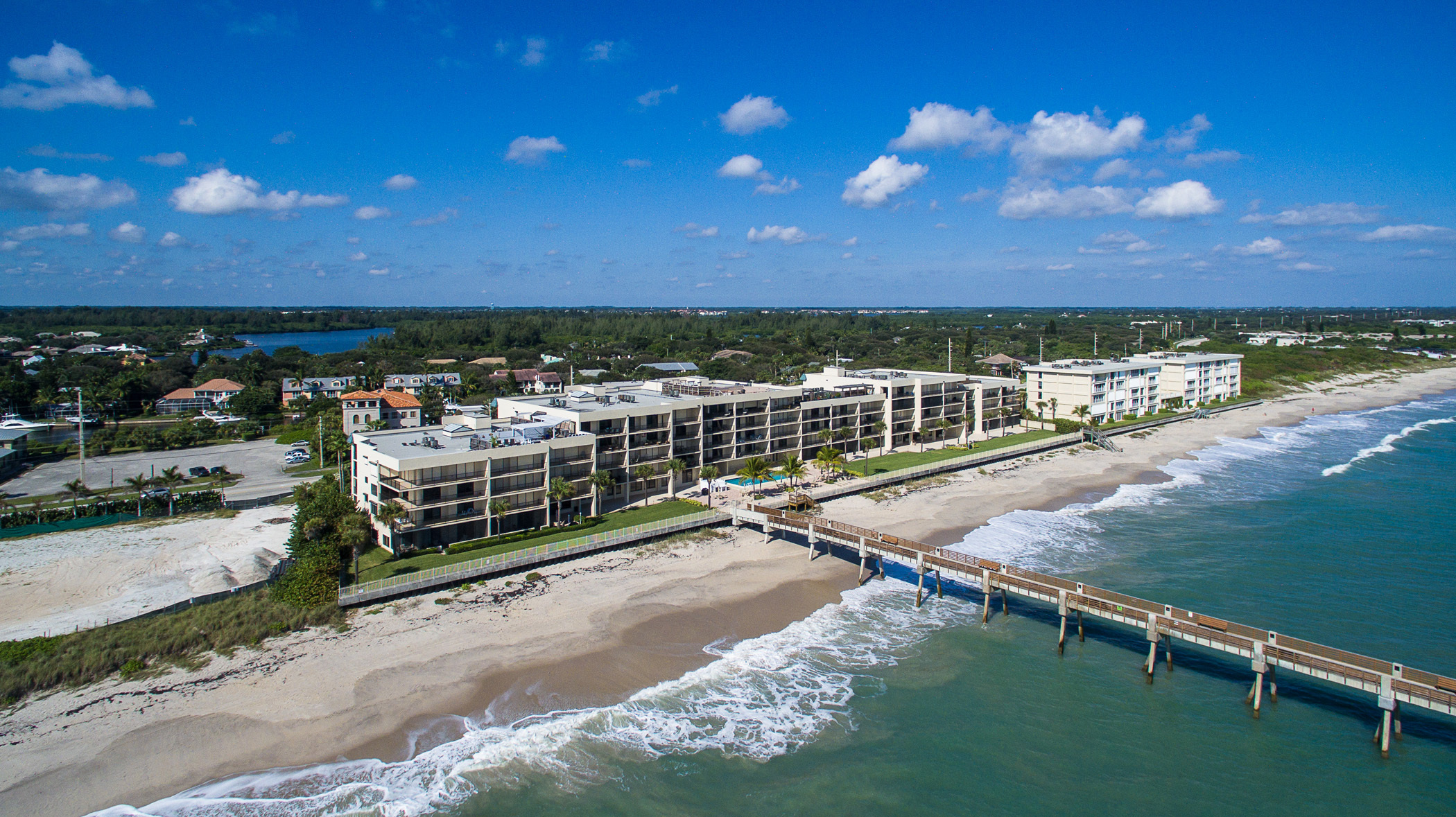
Roughly 62.7 percent of luxury transactions on the Vero Beach barrier island close all cash — one of the highest concentrations of cash buyers of any market in the United States. This is not a seasonal quirk. It is the structural signature of who the barrier island attracts: retiring executives, second- and third-home buyers, families relocating wealth out of high-tax states into a Florida with no income tax and no estate tax. They do not shop for mortgage rates. They shop for the right residence and they wire the funds.
In a market defined by expensive financing, a cash market is not a curiosity. It is an entire competitive advantage, sitting in plain sight.
Consider what that means against the second-quarter data. Nationally, the softest part of the market is the range most dependent on financing. The fastest-growing part is the range least dependent on it. Vero Beach lives almost entirely in the latter. When two-thirds of your buyers are unconstrained by interest rates, your market does not stall when rates are high — it simply keeps clearing while others wait. Certainty of close becomes the scarcest commodity on the board, and Vero Beach has more of it than almost anywhere in America.
And the buyers keep arriving because the island keeps making it easy. Fifteen cities now connect to the region by nonstop air — a quiet piece of infrastructure that turns a barrier-island residence from a once-a-year retreat into a genuinely usable second home. Ease of access is its own form of value, and it compounds. The more effortless the arrival, the deeper the pool of buyers who can treat Vero Beach as a real address rather than a distant idea.
What the Cash Buyer Actually Wants
There is a second thread running through this market, and it belongs to the buyer as much as the seller. The all-cash luxury purchaser is exacting. Before a single conversation about price, the questions now are about the building itself: How is the reserve funded? What does the master insurance policy cover, and where does the deductible land? What special assessments are in the pipeline? A cash buyer has no lender to run that diligence on their behalf — so they run it themselves, and they run it early.
This is where representation stops being a formality and starts being the whole transaction. Matching the right residence to the right buyer — a buyer already qualified, already liquid, already serious — is the difference between a listing that lingers and one that clears at value. It is precise work, and it does not happen by accident.
The right buyer, identified before the showing.
Our app pairs live barrier-island inventory with AI buyer-identification technology — surfacing the qualified, often all-cash buyer for a given residence before the first walk-through. For sellers, it compresses the distance between listing and closing. For buyers, it means the right home reaches you first.
Start Your Search
The Read
Strip away the noise and the second quarter says something simple. The money in Florida real estate is moving toward the top, and it is moving in cash. Every serious market in the state is now competing for the same buyer: liquid, discerning, unbothered by rates, and impatient with friction. Most markets are trying to attract that buyer. Vero Beach is built out of them.
That is the quiet advantage in the numbers. Not that Vero Beach is growing — plenty of Florida is growing. It is that Vero Beach is growing in exactly the currency the rest of the market is chasing. When the strongest cash market in America meets the fastest-growing tier in the state, the outcome is not a forecast. It is already on the ledger.
Vero Premier Properties is the signature division of Coldwell Banker Paradise, Global Luxury, representing buyers and sellers across the Vero Beach barrier island's oceanfront and riverfront communities — Sea Oaks, Grand Harbor, John's Island, Orchid Island, and Windsor. RealTrends Verified top 1.5% nationally, with more than $1.2 billion in career sales across 2,000-plus transactions.