For years, the grammar of luxury real estate marketing has been written in a particular register — the imposing gate, the ballroom-scale foyer, the master bedroom that reads as a proclamation. It is a language calibrated for prestige and, largely, for a buyer who is presumed to be male. That presumption is no longer defensible, and the brokers who understand that shift are the ones closing deals.
The data, when assembled, forms an unmistakable portrait. According to the National Association of Realtors, single women now account for 21 percent of all U.S. home purchases — more than double the 9 percent attributed to single men. In the luxury tier specifically, Coldwell Banker Global Luxury and WealthX report that women with a net worth exceeding $5 million own approximately 15 percent of luxury real estate nationwide. And when it comes to who is driving the conversation at the table — not just whose name appears on the title — over 94 percent of Coldwell Banker's Luxury Property Specialists confirm that women are either co-decision-makers or the primary decision-maker in high-end transactions.
The Buyer Who Is No Longer a Supporting Character
The term that has migrated through market reports — "She-Elite" — is inelegant, but the underlying dynamic it describes is real and financially significant. Brokers operating in markets from Miami's Coconut Grove waterfront to the barrier island communities of the Treasure Coast report a consistent pattern: women, whether purchasing alone or leading a family decision, have redefined what constitutes value in a luxury property.
Christine Martinez de Castro, chief marketing and sales officer for Four Seasons Private Residences Coconut Grove, told Robb Report that several recent transactions in her building were led entirely by women — even when they were acquiring a primary family home. The observation is not anecdotal. It reflects a structural shift: as women have assumed more executive, entrepreneurial, and inherited-wealth positions, they have brought their decision-making frameworks with them into the real estate transaction.
"Know who is driving the decision, not just whose name is on the contract. Marketing that speaks only to prestige can miss buyers who are focused on lifestyle, privacy, wealth planning and how a property works day to day."
— Robb Report, May 2026What affluent women say they want — and what the transaction record confirms they actually purchase — centers on five qualities: genuine privacy, spaces that function for family, work, and client entertaining simultaneously, multigenerational flexibility, hospitality-level amenities, and assets that hold and grow value over time. The question is not whether these priorities are reasonable. They are. The question is which markets and which communities actually supply all five — without tradeoff.
What the Data Says About the Decision Framework
The Sotheby's International Realty 2026 Luxury Outlook, drawn from the behavior of high-net-worth buyers across domestic and international markets, identifies privacy and security as the top concerns — even as the FBI reports that residential burglaries have declined 68 percent over three decades. The concern is less about statistical crime rates than about architectural and community-level control: the ability to choose who has access. Guard-gated environments, discrete entrances, and communities where anonymity is structural rather than performative have moved from amenity to prerequisite.
Multigenerational layout has followed a similar trajectory — from preference to expectation. One in five luxury purchases in 2025 involved buyers intending to live with relatives beyond the immediate family unit. Detached guesthouses, dual primary suites with separate access, and communities that offer varied residential product — allowing a parent, adult child, and grandchild to own within the same gated perimeter at different price points — have become differentiating factors in market selection, not merely property selection.
And the Coldwell Banker Global Luxury 2026 Trend Report makes explicit what discerning buyers have intuited for years: wealthy individuals have increased their real estate holdings by nearly 30 percent since 2020, and globally, real estate functions as a stabilizing, counter-cyclical asset. High-net-worth women, who increasingly manage family investment portfolios either independently or as co-stewards, are applying the same analytical rigor to real property that they bring to equity portfolios. A home is not just a residence — it is an allocation. It must earn its position.
Market Intelligence · Coldwell Banker Global Luxury 2026
The Great Wealth Transfer and the Female Beneficiary
Approximately $6 trillion in global wealth was transferred in 2025 alone. In the U.S., $2.4 trillion in real estate — 52 percent of all global luxury property expected to transfer — will change hands over the next decade. Women, as both direct heirs and co-managing partners of family wealth, represent a disproportionately large share of the incoming capital. The profile of the next luxury buyer is, more often than not, a woman who has inherited, earned, or invested her way to significant net worth — and who brings a fundamentally different evaluative lens to the transaction.
Why Vero Beach — and Why Now
Against this backdrop, Vero Beach's position is not accidental. The market was not engineered for this moment — it grew, slowly and deliberately, into exactly the kind of environment that the new dominant luxury buyer cohort requires. Twenty-three miles of uncrowded Atlantic coastline. A barrier island that remains, by the standards of coastal Florida, genuinely quiet. A cultural infrastructure — the Vero Beach Museum of Art, the Riverside Theatre, a growing restaurant scene along Ocean Drive — that reflects a community that takes quality of life seriously. And, critically, a collection of gated communities whose design philosophies align with precision to what affluent women say they are looking for.
The barrier island's ZIP code, 32963, tells a precise story: single-family luxury medians holding at $1.3 million to $1.5 million, with oceanfront and riverfront estates ranging from $1.3 million into the $2 million range and above, and a cash-transaction rate in the luxury segment that hovers around 62 percent — a figure that reflects the financial profile of the buyer, not the health of mortgage markets. Inventory remains constrained in premium locations, and that constraint is not a short-term condition. It is structural.
The Communities That Deliver
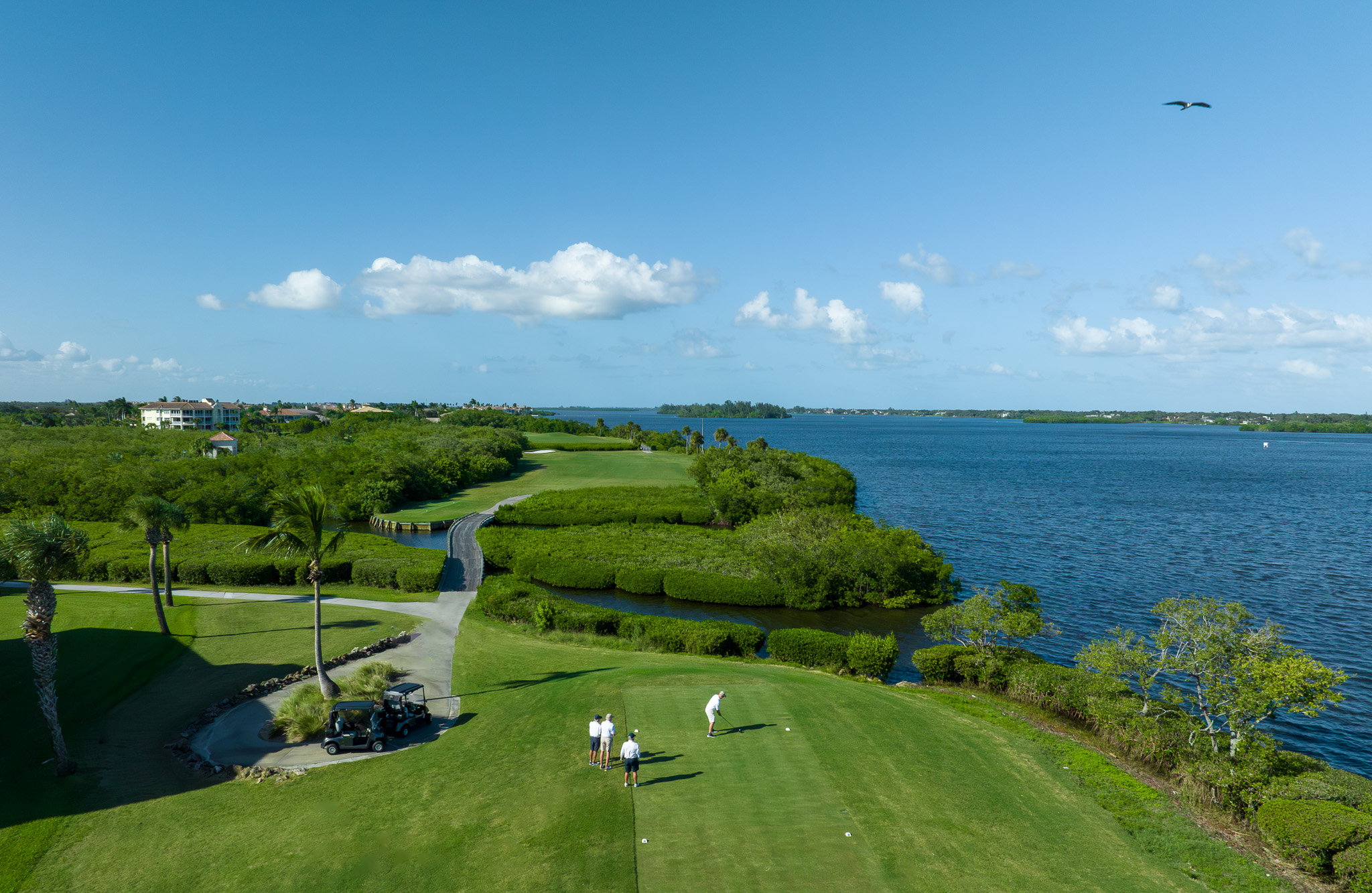
Grand Harbor
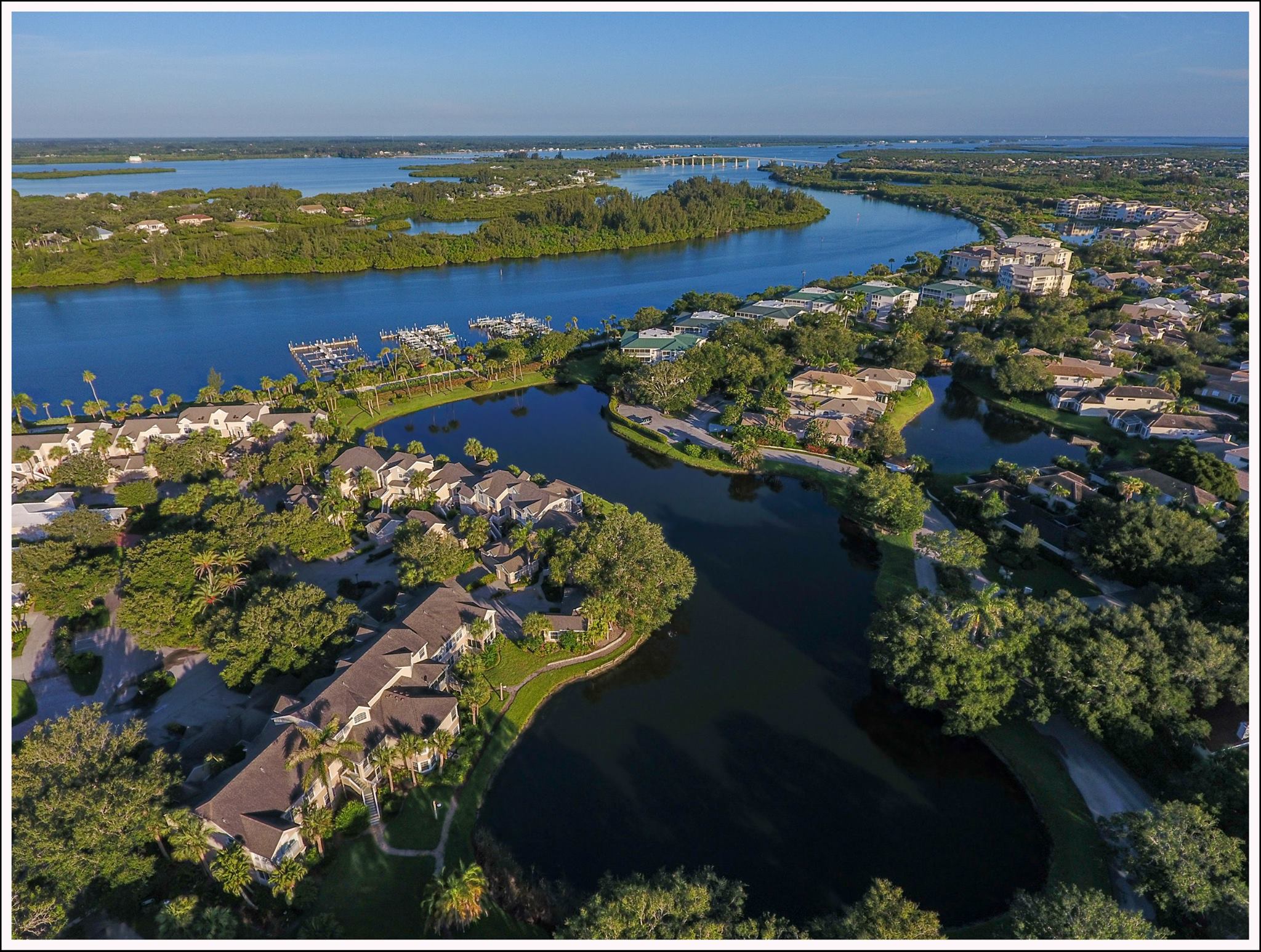
A premier waterfront gated community on the Indian River, Grand Harbor offers Mediterranean-inspired architecture set across secluded residential islands. Two championship golf courses, a full-service marina, beach club, tennis, a fitness center, and resort-style pools create a self-contained environment where the hospitality infrastructure is permanent rather than seasonal. For buyers who intend to host — business associates, family, extended social networks — the operational quality of the amenities matters as much as the real estate itself. Grand Harbor delivers both. Average sales price in the 2025 MLS record: $855,667 across 72 transactions.
Waterfront · Golf · Marina · Guard-Gated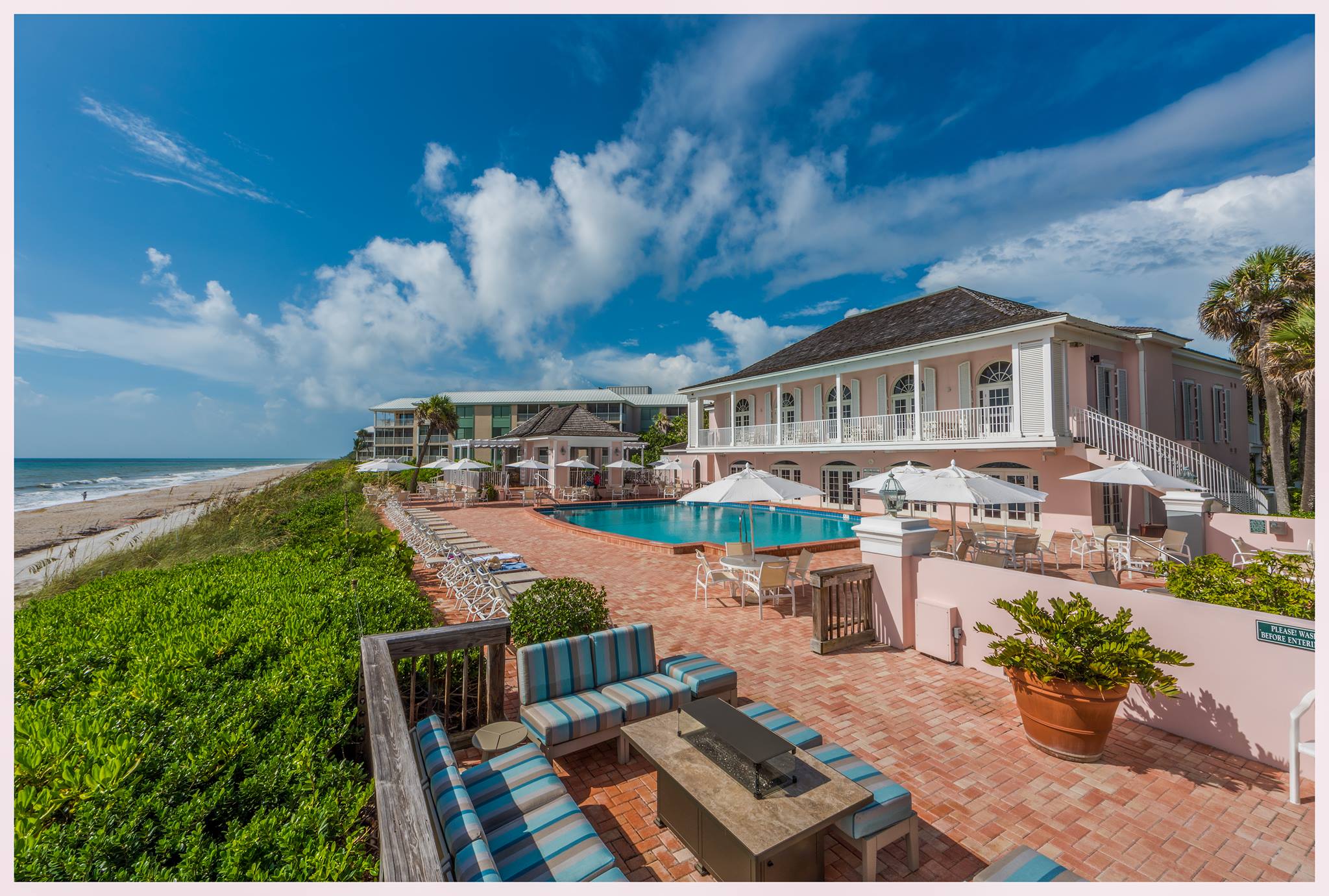
Sea Oaks Beach & Tennis Club
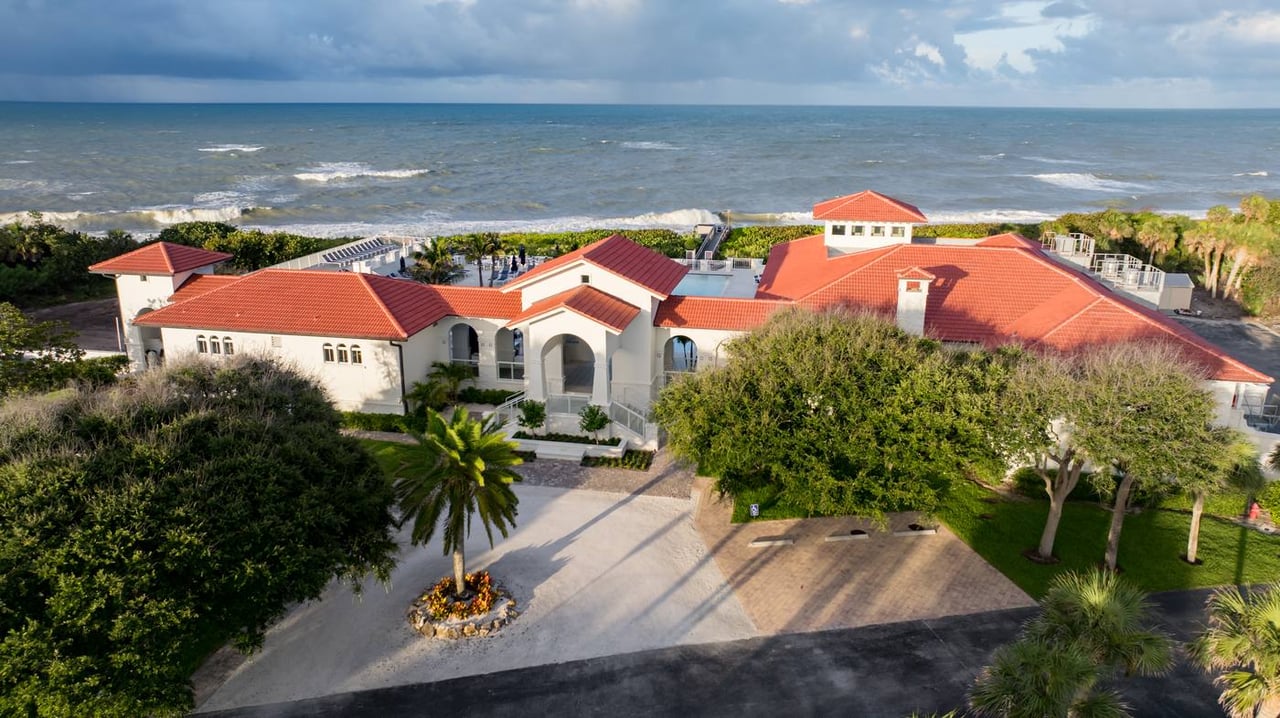
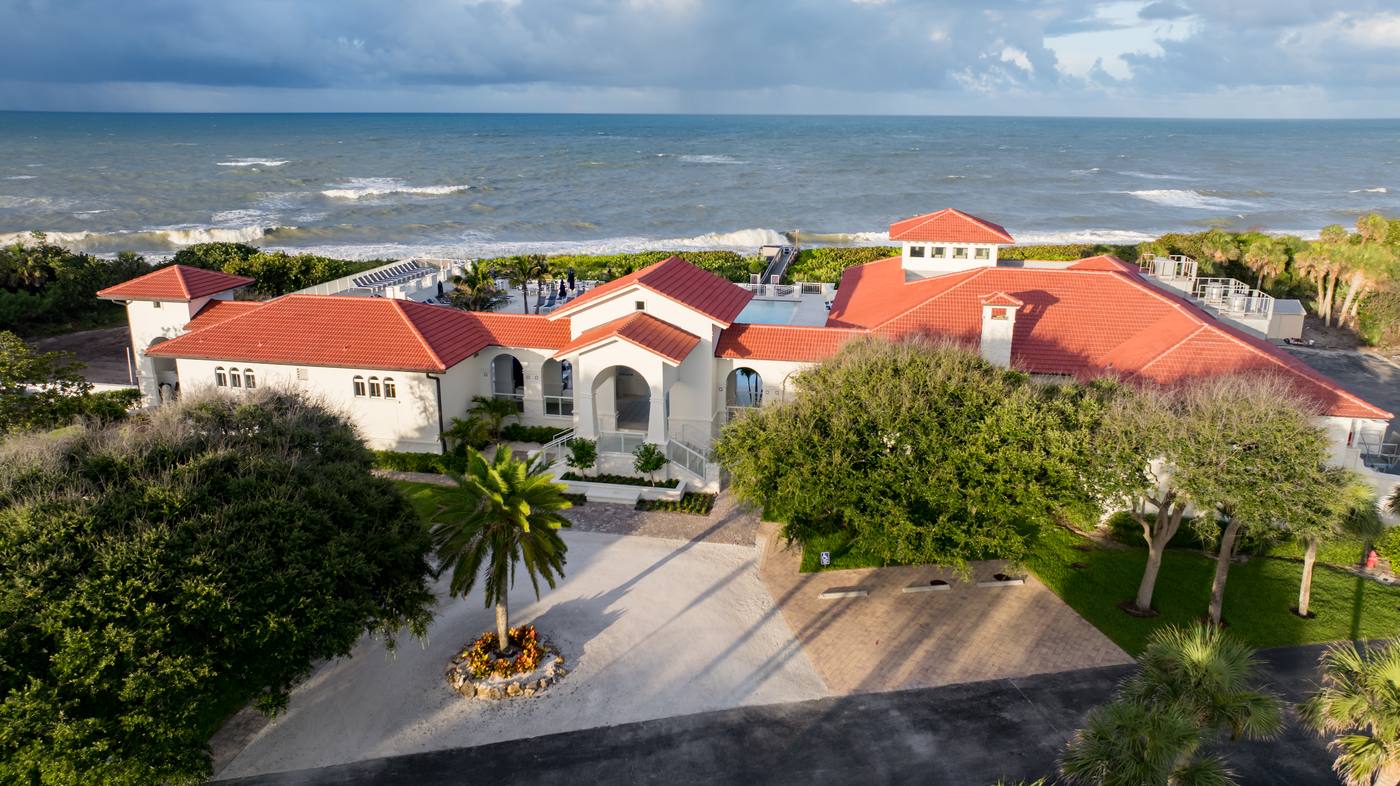
Perhaps the most structurally interesting community on the Treasure Coast from a multigenerational planning perspective. Sea Oaks spans ocean to river on Vero Beach's barrier island — 614 residences in a gated, private-club setting with 16 Har-Tru tennis courts, a full-service private oceanfront beach club, a 48-slip marina, five dining venues, and a debt-free amenity infrastructure that is homeowner-owned. The residential range within a single community — from oceanfront condos at $900,000 and above to tennis villas and lakeside cottages in the $600,000 to $850,000 range — allows different family members to own at different price points within the same private enclosure. This is not an accident of inventory. It is a design feature, and a rare one.
Ocean-to-River · 16 Tennis Courts · Private Beach Club · MarinaThe Ultra-Luxury Tier — John's Island, Orchid Island, Windsor
At the upper register, the Vero Beach barrier island offers guard-gated environments where the distinction is not merely security but social coherence — communities priced from $2 million to $30 million and above, where buyers are not selecting a property so much as selecting a permanent environment. John's Island operates as a complete private world: guard-gated, meticulously maintained, built around elevated amenities and the expectation that residents value discretion above visibility. Orchid Island Golf & Beach Club brings resort-level standards to a community of limited inventory. Windsor, the celebrated equestrian and polo enclave, draws international buyers for whom land, privacy, and permanence are the primary currencies.
Guard-Gated · $2M–$30M+ · Oceanfront EstatesThe Tax Dimension — And the December 31 Deadline
For any high-net-worth buyer evaluating real estate as an investment allocation alongside lifestyle value, the tax architecture of a state matters — and Florida's current trajectory is, for buyers from Connecticut, New York, and New Jersey, a compelling case study in accumulating advantage.
The baseline is well understood: Florida levies no state income tax, no state estate tax, and no inheritance tax. The differential against a Greenwich, Connecticut household earning significant investment income — where the top Connecticut rate runs 6.99 percent, applied on top of federal obligations — is not marginal. It is structurally transformative over a decade. In Westchester County, a $1 million home routinely carries $25,000 or more in annual property taxes; in Alpine, New Jersey, the effective rate is better but the income tax exposure remains.
Critical Deadline · December 31, 2026
HJR 1-F: The Window That Closes at Year-End
Florida's Legislature passed House Joint Resolution 1-F on June 2, 2026 — a proposed constitutional amendment that, if approved by Florida voters in November, would raise the homestead exemption from its current $50,000 to $150,000 on January 1, 2027, and to $250,000 on January 1, 2028. At the full exemption, approximately 60 percent of Florida homesteaded owners would owe zero non-school property taxes. Buyers who establish primary Florida residency on or before December 31, 2026 qualify from day one. Those who relocate after that date may wait up to five years before qualifying for the full benefit. For Northeast buyers evaluating the Florida move, the calendar itself has become part of the transaction calculus.
What the Shift Means for the Transaction
The implications for the real estate professional are direct. A buyer who is evaluating a $2.5 million oceanfront villa in Sea Oaks is not asking only whether the views are correct. She is asking whether the HOA documents are clean, whether the amenity infrastructure is debt-free, whether the floor plan accommodates both a private office and a client-ready entertaining wing, and whether the community's governance structure ensures that the character of the environment will remain stable. These are the questions of a rigorous buyer — the kind of buyer who arrives prepared and expects equal preparation from the professionals advising her.
Marketing that speaks exclusively in the register of prestige — the superlatives, the grand statements, the implied aspiration — reaches past this buyer rather than toward her. What resonates is specificity: the actual dimensions of a space, the actual structure of a community's financials, the actual tax savings on a specific property at a specific price point, modeled across five and ten years. Luxury, for this cohort, is not a feeling that marketing creates. It is a condition that a property either meets or does not.
Vero Beach, at its best, meets it — across a range of communities and price points that accommodate the multigenerational complexity, the investment discipline, and the privacy requirements that define this buyer. The market is not advertising itself loudly. It does not need to. The buyers who have done their work are finding it.

Search the Vero Beach Market in Real Time
The Vero Premier Properties app gives you instant access to exclusive listings, community comparisons, and direct agent collaboration. Available on the Apple App Store — Editors’ Choice, 4.9 stars.
Frequently Asked Questions
Why are affluent women now the dominant force in luxury real estate decisions?
High-net-worth women have grown their ownership of wealth and real estate simultaneously — women with net worth above $5 million own 15 percent of U.S. luxury homes. As more women hold executive, entrepreneurial, and inherited-wealth positions, they bring the same analytical rigor to property transactions that they apply to investment portfolios. Over 94 percent of Coldwell Banker's Luxury Property Specialists report women are either co- or primary decision-makers in luxury transactions.
What do affluent women prioritize when purchasing luxury real estate?
The consistent priorities are guard-gated privacy, functional layouts that accommodate family, professional work, and client entertaining simultaneously, multigenerational flexibility, resort-caliber amenities, and properties that perform as long-term investment assets. Status alone is not sufficient — the property must work at every level of daily life.
Why is Vero Beach well-positioned for this buyer cohort?
Vero Beach's premier gated communities — Grand Harbor, Sea Oaks, John's Island, Orchid Island — deliver the precise combination of privacy architecture, amenity depth, multigenerational product variety, and investment stability that high-net-worth women prioritize. Florida's zero state income tax and expanding homestead exemptions under HJR 1-F add a meaningful financial dimension to the lifestyle case.
What is the December 31, 2026 Florida homestead exemption deadline?
Florida's Legislature passed HJR 1-F on June 2, 2026, raising the homestead property tax exemption to $150,000 in 2027 and $250,000 in 2028 if voters approve it in November. Buyers who establish primary Florida residency on or before December 31, 2026 qualify from day one. Those who arrive after that date may wait up to five years for the full benefit.
What are the price ranges for luxury homes in Vero Beach gated communities?
Sea Oaks Beach & Tennis Club offers options from oceanfront condos at $900,000+ to tennis villas and lakeside cottages at $600,000–$850,000 — all within one gated ocean-to-river community. Grand Harbor spans a comparable range. Barrier island single-family medians in ZIP 32963 hold at $1.3M–$1.5M, with oceanfront estates reaching significantly higher. Ultra-luxury properties at John's Island and Orchid Island are priced from $2M to $30M+.
Who are the top luxury real estate agents in Vero Beach for Northeast relocation buyers?
Ben Bryk and Vance Brinkerhoff of Vero Premier Properties — a Signature Division of Coldwell Banker Global Luxury — are the Treasure Coast's leading specialists for Northeast relocation buyers. With 2,000+ transactions, $1.2B+ in career sales, a RealTrends top 1.5% national ranking, and recognition as Apple News Top 10 Most Trusted Realtors in Florida, they guide buyers from Connecticut, New York, and New Jersey through Vero Beach's most exclusive communities. Office: 4265 A1A, Suite 3, Vero Beach, FL 32963.
Market data sourced from: National Association of Realtors; Coldwell Banker Global Luxury 2026 Trend Report; WealthX; Sotheby's International Realty 2026 Luxury Outlook; Florida Legislature HJR 1-F (passed June 2, 2026); Robb Report (May 19, 2026, Montanez, A.); Institute for Luxury Home Marketing; Indian River County MLS and public records. Tax information is provided for educational purposes only; consult a licensed tax professional regarding your individual circumstances. Voter approval of HJR 1-F is required for the expanded exemption to take effect.
Vero Beach Luxury Real Estate · Barrier Island Specialists

Ready to Explore Vero Beach's Premier Gated Communities?
Ben Bryk and Vance Brinkerhoff bring more than $1.2 billion in career sales and 2,000+ transactions to every client conversation — with unmatched knowledge of Grand Harbor, Sea Oaks, and the full barrier island luxury market.
Ben Bryk & Vance Brinkerhoff
Co-Founding Principals · Vero Premier Properties · Coldwell Banker Global Luxury
RealTrends Top 1.5% Nationally · Apple News Top 10 Most Trusted Realtors in Florida
4265 A1A, Suite 3 · Vero Beach, FL 32963 · floridaeastcoastluxuryhomes.com