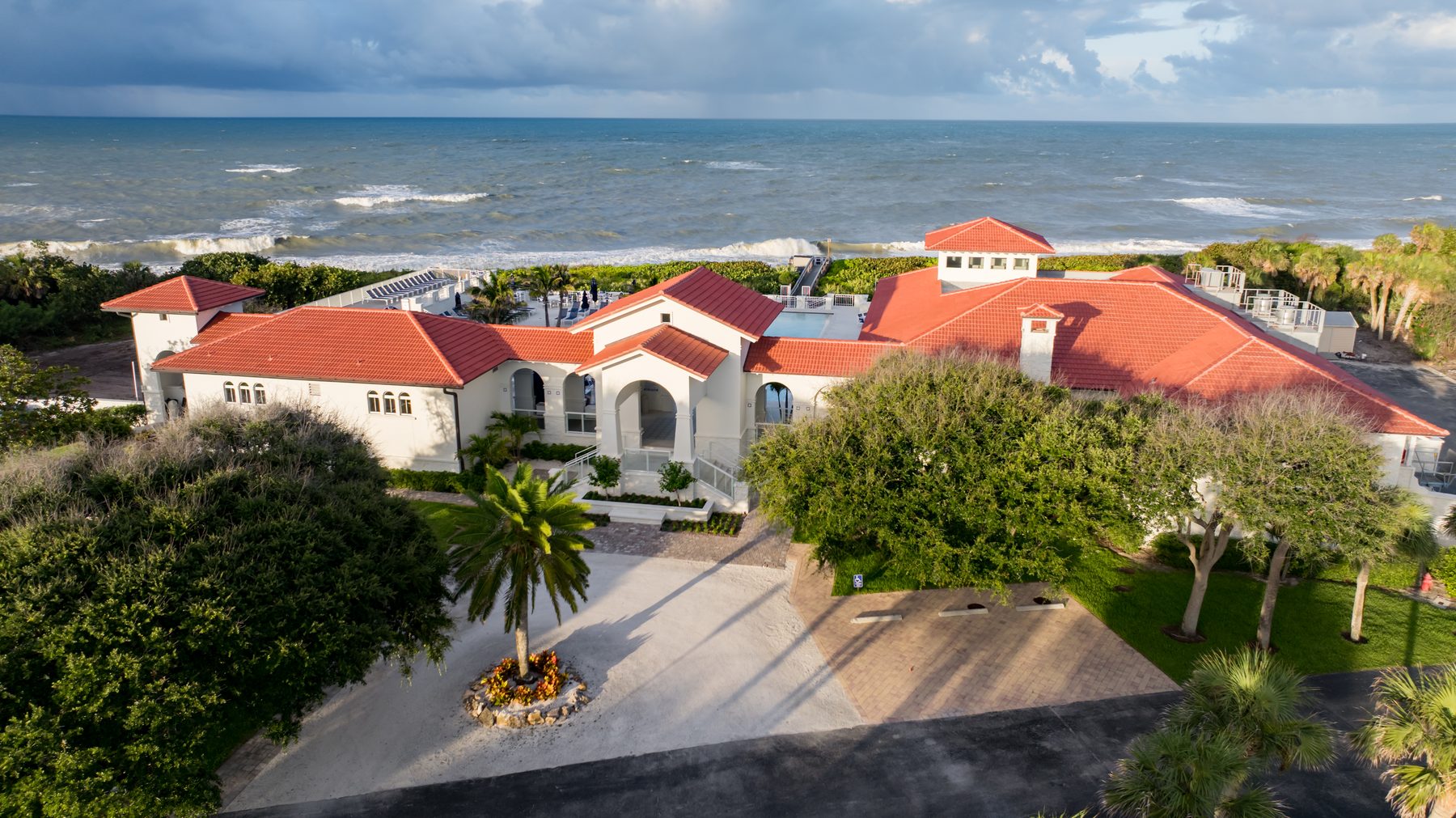
Ask whether luxury real estate is having a good year, and the honest answer is: which luxury market. San Francisco's high end is in a genuine boom, with sales up more than a fifth over last year and listings gone in a median of twelve days. Miami and Las Vegas are posting some of the strongest price growth in the country and, at the same time, taking noticeably longer to sell. Sanibel, after three hurricanes, is offering steep discounts on inventory that barely existed five years ago. All of this is luxury real estate in the summer of 2026, and none of it describes the same market.
For buyers and sellers planning around a single national narrative, that is the first thing worth knowing: there isn't one. What follows is a look at what is actually driving decisions this year — financing, insurance, inventory, and the features buyers now pay a premium for — with a closer look at what it means for Florida's barrier islands.
For Buyers
Financing and Insurance, Not Price, Are the Live Issues
Mortgage rates have settled into a holding pattern rather than a decline. Jumbo thirty-year rates were averaging in the mid-6 percent range this month, and a Reuters poll of economists in early June found consensus that the Federal Reserve holds through the rest of 2026, pushing any rate cut into 2027 — with Fed officials themselves flagging that persistent inflation could just as easily force a hike instead.
That backdrop has widened, not narrowed, the gap between cash buyers and financed ones. High-net-worth buyers, largely insulated from financing costs, have kept increasing their share of all-cash offers even as rates stay elevated for everyone else, according to Sotheby's International Realty's latest outlook. Buyers financing between $1 million and $5 million are shopping jumbo lenders far more aggressively than they once did, and for good reason: a half-point rate difference between two lenders quoting an identical $1.5 million loan compounds to roughly $135,000 in additional interest over the life of the loan.
Insurance has become the more consequential issue, and one that gets less attention than it deserves. Premiums have risen 20 percent or more year-over-year in a number of states as carriers retreat from the riskiest zip codes altogether, and the effect on transactions is no longer marginal — one recent industry survey found that close to half of buyers and sellers ran into an insurance complication somewhere in a deal, and roughly one in five said it was serious enough to end the transaction outright.
Florida remains the sharpest version of this story nationally. Average premiums in the state run more than triple the national norm, and waterfront coverage alone frequently exceeds $6,000 a year. Sanibel has become something of a cautionary case study: after repeated storms, one longtime local broker described inventory in nearby Fort Myers and Cape Coral swelling from a small handful of active listings five years ago to roughly 12,000 today, with Sanibel's own median sale price retreating from a pandemic peak near $1.3 million back toward pre-2020 levels around $830,000.
And yet the same state is delivering some of the country's strongest price appreciation. Tampa, Miami, and Las Vegas led every metro area Redfin tracked this spring in luxury price growth, even as Miami and Las Vegas both saw meaningfully longer days on market over the same period. Insurance exposure and price growth, in other words, are not opposites this year — they are running in parallel, sorted by exact location and construction rather than by state. Buyers evaluating waterfront property are now asking whether a home is elevated as routinely as they ask about square footage. It is a reasonable question, and increasingly the right one.
For Sellers
The 2021 Pricing Playbook No Longer Applies
Buyers now have access to the same comparable-sales data agents do, and the cost of guessing high has gone up accordingly. More than a third of listings nationally are taking a price reduction at some point, typically after launching above what the market would bear. Days on market have lengthened across most luxury metros: Southern California's high end is averaging roughly 56 days, Scottsdale's luxury tier around 80, and ultra-luxury Paradise Valley more than 90. A handful of markets are the exception — Pittsburgh's typical luxury listing is going under contract in 54 days now, nine days faster than a year ago, among the sharpest improvements Redfin recorded anywhere in the country.
The professional response has shifted from cutting price to structuring concessions instead. A rate buydown or closing-cost credit does not register in public records as a price reduction the way a formal cut does, which protects the comparable-sales picture for the rest of the neighborhood and avoids signaling distress. At the very top of the market, off-market sales are gaining ground for a related reason: a property that never appears on the MLS or public listing portals never accumulates a days-on-market count a buyer can use as leverage.
Presentation now carries measurable weight in outcome. The large majority of buyers' agents report that staging materially helps buyers picture themselves in a home, and roughly half of buyers say they expect the level of polish they are used to seeing in professionally styled listings online. In a market where the difference between a two-week sale and a three-month sale often comes down to the first weeks of exposure, that expectation gap is not a small thing.
What's Hot
What Buyers Are Actually Paying More For
The feature list has moved further in the past year than in the previous several combined. Six categories are showing up consistently across the country's top luxury markets:
- Wellness as baseline, not amenity. Cold plunge, sauna, steam, recovery and infrared rooms, and spa-grade primary bathrooms are increasingly treated as standard above $5 million, not as a novelty.
- Unified home technology. A single integrated platform for climate, lighting, security, and audio now reads as a sign of a well-maintained property. A patchwork of disconnected devices reads the opposite way, and buyers are pricing that difference into offers.
- Dual home offices. Soundproofed, separately zoned home offices are now outranking wine cellars and home theaters as the single most requested functional upgrade in several top markets.
- Multigenerational suites. Nearly one in five luxury purchases nationally now involve buyers planning to house extended family under one roof, often with the largest transfer of generational wealth in history helping fund the purchase.
- Resilience infrastructure. Generator and battery backup, solar, storm-rated glazing, and elevated mechanical systems have moved from optional to close to mandatory in hurricane- and wildfire-exposed markets.
- Branded residences. One of the fastest-growing categories in global luxury housing, expanding rapidly across Europe and other international hubs, and increasingly present domestically.
At the very top of the market, the additions get quieter: golf simulators, high-fidelity listening rooms, and discreetly built safe rooms for buyers prioritizing both security and comfort.