The Equity Math That Changes Everything
Ben Bryk June 28, 2026
Ben Bryk June 28, 2026
Why barrier island sellers in Grand Harbor, Sea Oaks, John's Island, Orchid Island and Windsor are still winning in 2026 — and why the peak comparison is the wrong calculation entirely.
There is a question that sits at the center of nearly every listing conversation on the Vero Beach barrier island right now. Sellers rarely ask it directly. It surfaces instead as hesitation — a second look at the comps from 2022, a reference to a neighbor who sold in the spring of 2023, a silence that follows the price discussion. The question, translated plainly, is this: did I miss it?
The answer — supported by data that national headlines consistently fail to reach — is no. And the reason is not sentiment. It is math.
The Vero Beach barrier island operates inside a set of structural conditions that make peak-comparison thinking not merely misleading but categorically wrong. Understanding those conditions does not require optimism. It requires arithmetic.
Florida's luxury market did not stall in 2026. It accelerated — selectively and precisely in the tiers that define this island. Closed sales of single-family homes above one million dollars rose 15.2 percent year over year in April. In the two-to-three-million-dollar tier, sales jumped 34.3 percent. In the five-to-ten-million-dollar tier, they rose 48 percent. These are not statewide averages softened by distressed inventory in secondary markets. These are the price points at which Grand Harbor, Sea Oaks, John's Island, Orchid Island and Windsor transact.
Meanwhile, Indian River County carries the highest all-cash transaction rate in the country at 62.7 percent. The average barrier island sale sits near 1.99 million dollars. Waterfront product here trades at roughly a sixty-six percent discount to comparable Naples real estate — a structural gap that has persisted across every market condition and shows no sign of closing.
None of this resembles a market that peaked and retreated. It resembles a market whose most sophisticated buyers are accelerating into it.
The peak comparison measures one number. The equity calculation measures what you actually keep.
The sellers who feel they missed the peak are comparing their potential gross proceeds today against their neighbors' gross proceeds in 2022 or 2023. That comparison is intuitive, emotionally available, and financially incomplete.
What it omits is everything that happens between the closing price and the net proceeds a seller actually retains. And for a high-net-worth seller relocating from Connecticut, New York, New Jersey, or Illinois, that omission is not a rounding error. It is the difference between the wrong decision and the right one.
The complete calculation runs through the Florida Financial Trifecta — three structural tax advantages that make Florida residence the most consequential financial move available to a high-income household in 2026, and that make the timing of this move far less sensitive to gross price fluctuations than any national comparison would suggest.
Florida levies zero state income tax. A household earning 500,000 dollars annually that relocates from New York retains roughly 50,000 dollars per year that previously funded Albany. That is fifty thousand dollars compounding forward, every year, for the duration of residency.
Under the Save Our Homes cap, Florida homestead property taxes are limited to annual increases of three percent or the Consumer Price Index, whichever is lower. A buyer establishing homestead today locks in a tax basis that diverges further from market value every year. The longer they hold, the more valuable the cap becomes.
Florida levies zero state estate tax. For a family with an estate above the federal exemption threshold, this is not a lifestyle benefit. It is a generational wealth preservation strategy — the elimination of a state-level tax that, in Connecticut or New York, represents a meaningful reduction in the assets transferred to the next generation.
Run those three pillars against the gross proceeds comparison a seller is making in their head, and the math shifts. A seller who transacts at 1.95 million dollars today — rather than the 2.1 million a neighbor achieved in 2023 — and who simultaneously establishes Florida domicile, locks in the Save Our Homes cap, eliminates state income and estate tax exposure, and deploys the proceeds inside a zero-income-tax environment does not come out behind. In most cases involving high earners from high-tax states, they come out materially ahead — in year one, and compounding forward for every year of Florida residence.
The peak comparison ignores all of that. The equity calculation includes it.
On June 2, 2026, the Florida Legislature passed HJR 1-F — a proposed constitutional amendment that would, if approved by Florida voters in November 2026, establish December 31, 2026 as a domicile reference point relevant to homestead qualification and the Save Our Homes cap. A buyer who establishes Florida domicile before that date would be positioned to apply for homestead exemption for tax year 2027 and to begin accruing the cap's compounding benefit from a lower assessment base.
This is not settled law. HJR 1-F requires 60 percent voter approval in the November 2026 election to take effect. It is a pending constitutional amendment, and its implications vary materially by individual circumstance. Its pendency is, however, already influencing the timing decisions of analytical, high-net-worth buyers who are reading the legislative calendar alongside the market data.
For sellers considering the second half of 2026, that buyer urgency is a structural tailwind. But any seller weighing the domicile implications for their own situation should consult qualified tax and legal counsel before acting.
Understanding the Florida Financial Trifecta as a concept is one thing. Modeling it against a specific seller's tax profile, estate structure, and relocation timeline is another. That work — the translation of the framework into a personal financial strategy — is what Vero Premier Properties facilitates through its financial concierge relationships.
For every listing we take, we maintain relationships with the professionals a high-net-worth seller actually needs at the intersection of a major real estate transaction: tax counsel who understand both the origin state and Florida, estate planners who can model the generational implications of domicile change, wealth management professionals who can advise on proceeds deployment inside a zero-income-tax environment, and closing professionals who understand the cash transaction timeline that defines 62.7 percent of this market.
This is not a referral list. It is a coordinated advisory infrastructure that runs alongside the transaction — ensuring that a seller who asks the right questions about their net proceeds receives answers that account for all the variables, not just the gross closing price.
For a seller from Greenwich or Short Hills or Winnetka who has spent thirty years building an estate, the difference between a transaction that accounts for these variables and one that does not is not measured in thousands of dollars. It is measured in the financial trajectory of the decade that follows the sale.
Vero Premier Properties operates the only dedicated luxury real estate application within roughly one hundred miles of this market. Listings introduced through it reach qualified buyers the moment they appear — not hours later, not after a syndication delay. The result: barrier island listings through our platform go to contract approximately forty percent faster than the market median.
In a market where a deliberate buyer is still a motivated buyer once they find the right home, speed of discovery is a seller's first advantage. An offer that arrives in week two rather than week six preserves negotiating position, eliminates carrying cost, and forecloses the stigma of days-on-market that compounds with every passing week.
Consider the position of a seller in Grand Harbor or Sea Oaks who purchased in 2017 or 2018, lived through the appreciation cycle of 2020 to 2023, and is now evaluating a sale in the second half of 2026. Their equity position, even relative to the 2023 peak, reflects years of compounding appreciation in one of the most structurally protected luxury markets in the country. Their carry cost during that period was suppressed by a homestead tax rate near one percent. Their income during that period was untaxed by the state of Florida.
The neighbor who sold in 2023 at the gross peak paid a higher state income tax rate in their origin state in every year preceding the move. They deployed their proceeds into a market that has since experienced its own volatility. They did not necessarily win more. They transacted earlier.
The seller considering a listing in 2026 has something the 2023 seller did not: a buyer pool that is accelerating, a pending legislative tailwind that is compressing buyer timelines, a Florida insurance market that has materially improved since the 2022 and 2023 reforms, and an advisory infrastructure — financial concierge relationships, a proprietary technology platform, and a global marketing network — designed to close the gap between listing and contract as efficiently as the market allows.
The 2023 seller transacted at a higher gross price. The 2026 seller, properly advised, may net more.
For most barrier island sellers, no. Florida luxury closed sales above one million dollars rose 15.2 percent year over year in April 2026, with the two-to-three-million and five-to-ten-million-dollar tiers posting gains of 34.3 percent and 48 percent respectively. The equity calculation — which includes the Florida Financial Trifecta, the pending HJR 1-F domicile opportunity, and improved insurance market conditions — tells a materially different story than the gross price comparison most sellers are running in their heads.
The Florida Financial Trifecta consists of three structural tax advantages: zero state income tax, a homestead property tax rate held near one percent under the Save Our Homes cap, and zero state estate tax. For a seller relocating from a high-tax state, these three elements — modeled against their specific tax profile — often close or eliminate the net-proceeds gap between a 2026 transaction and a 2023 peak transaction.
HJR 1-F is a pending Florida homestead constitutional amendment passed by the Legislature on June 2, 2026, that would establish a December 31, 2026 domicile reference point if approved by 60 percent of voters in November 2026. Analytical buyers aware of it may treat that date as a soft deadline for establishing Florida domicile. It is not settled law, and sellers should consult qualified tax and legal counsel regarding their specific circumstances.
The app — the only dedicated luxury real estate platform within roughly one hundred miles — delivers listings to qualified buyers the moment they go live, eliminating syndication delays and shortening the discovery-to-offer timeline. Barrier island listings through the platform go to contract approximately forty percent faster than the market median.
Vero Premier Properties maintains coordinated relationships with tax counsel, estate planners, wealth management professionals, and closing specialists who understand high-net-worth real estate transactions at the intersection of a domicile change. This infrastructure runs alongside every listing we take, ensuring sellers have access to the advisors who can model the complete net-proceeds picture — not just the closing price.
We will model your net-proceeds position against the Florida Financial Trifecta — and introduce you to the advisors who can make the numbers specific to your situation.
Market data cited reflects publicly reported Florida Realtors, Indian River County, and third-party research figures as of mid-2026 and is provided for general informational purposes only. HJR 1-F is a pending constitutional amendment subject to voter approval and is not settled law; nothing herein constitutes tax, legal, or financial advice. All sellers should consult qualified tax counsel, legal counsel, and financial advisors regarding their individual circumstances before making any transaction or domicile decision. The forty percent faster-to-contract figure reflects internal platform performance data and is not guaranteed. Vero Premier Properties is the Signature Division of Coldwell Banker Global Luxury.
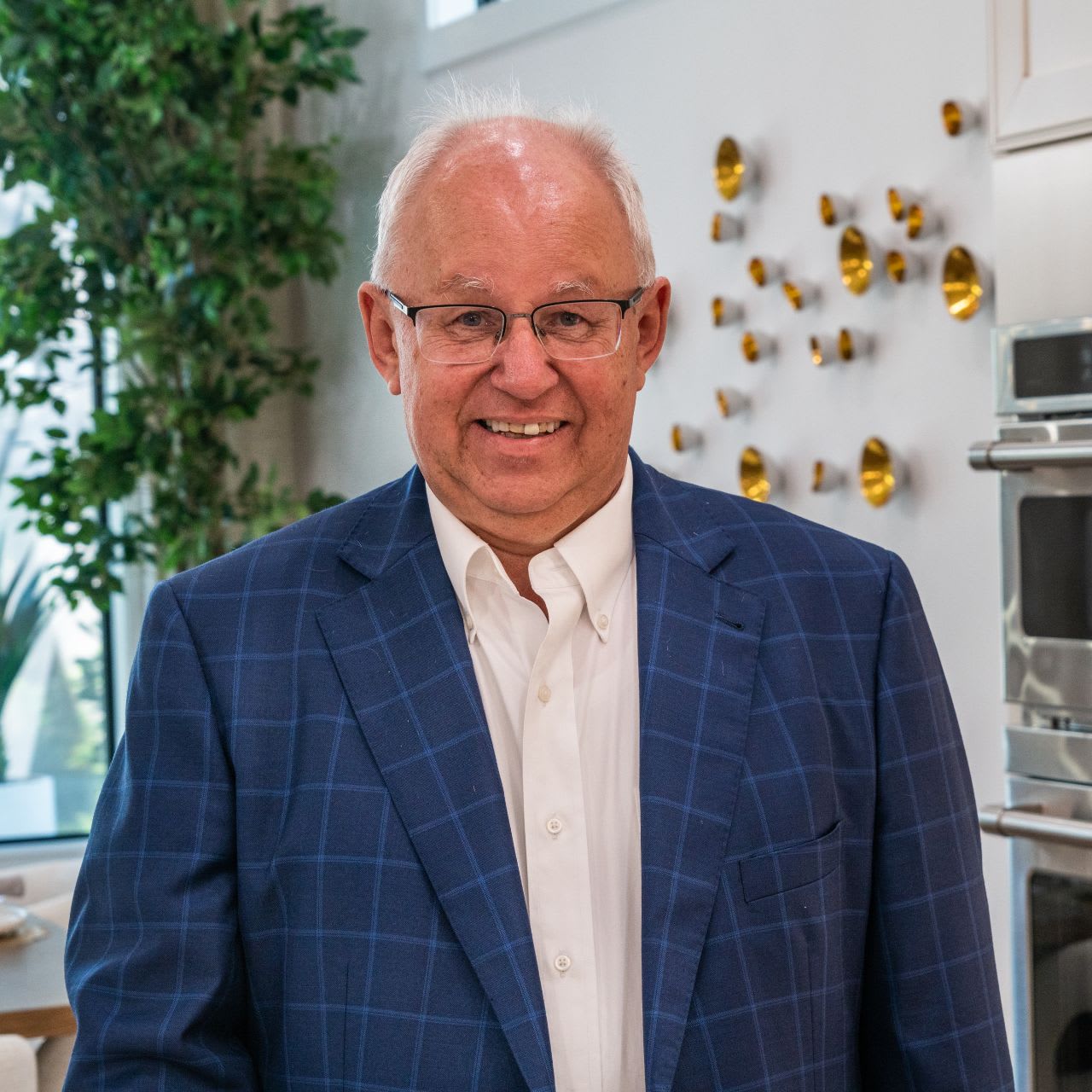
Lead Real Estate Agent
Buying a home is a very emotional experience, especially for those who have not done it very often. My experience in sales can help guide buyers with an analytical approach.
Find Your Dream Home
Get assistance in determining current property value, crafting a competitive offer, writing and negotiating a contract, and much more. Contact us today.