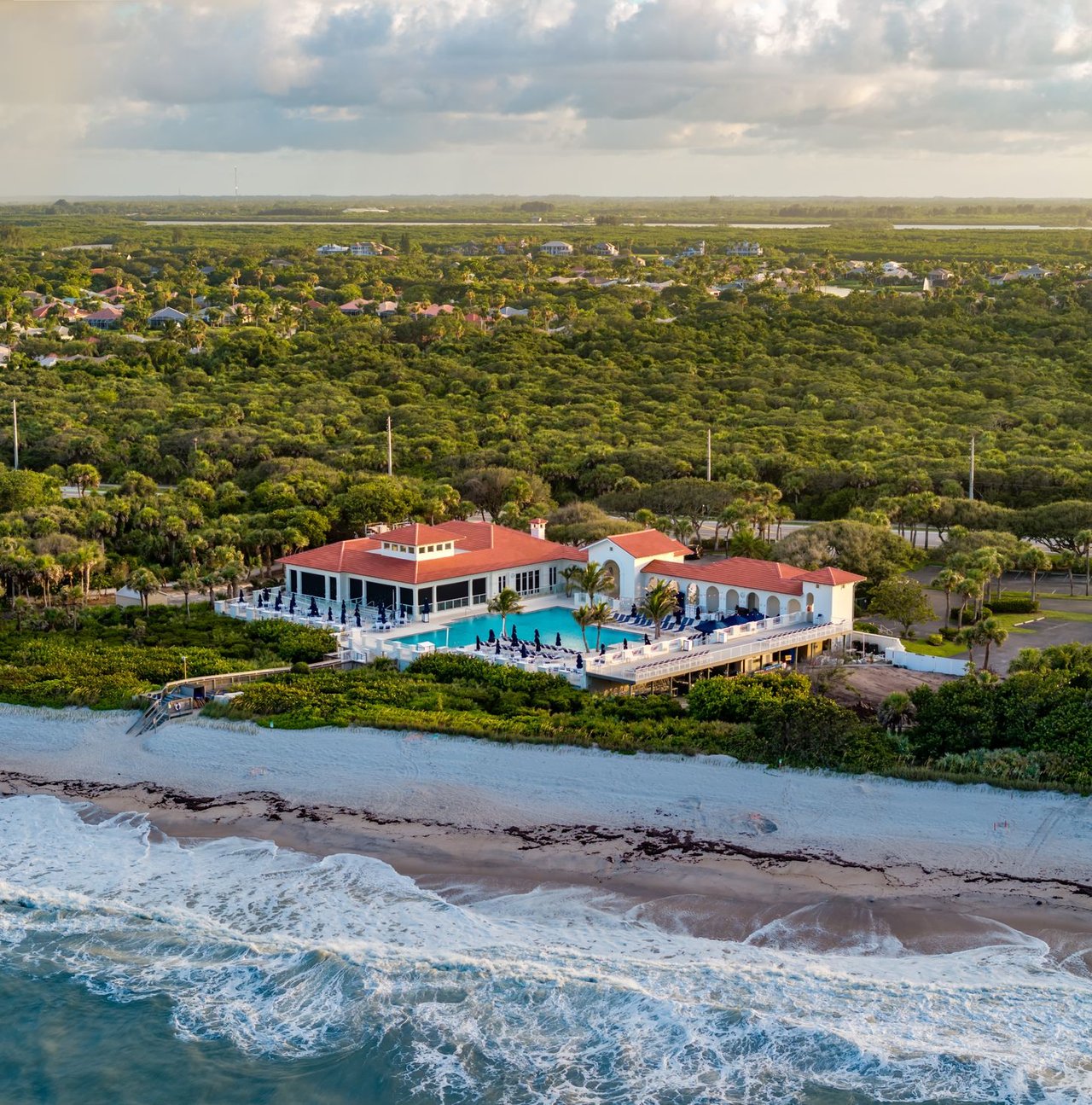
From New Canaan to Vero Beach: Sell High, Buy Smart at Grand Harbor
July 22, 2026
July 22, 2026
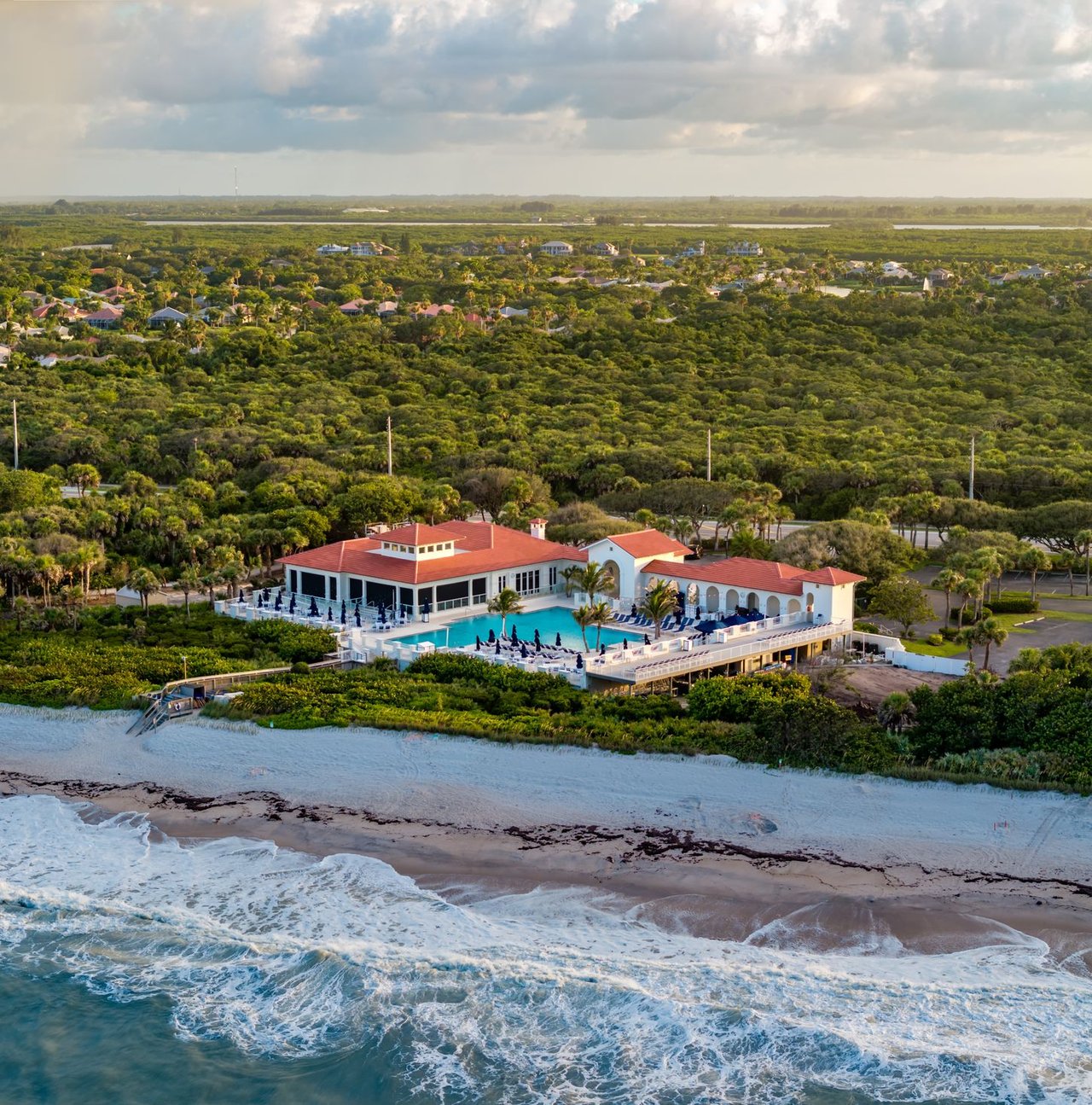
The New Canaan seller of 2026 holds an enviable hand: a home in one of Fairfield County's most coveted towns, appreciated into a supply-starved seller's market, and a destination twelve hundred miles south where the same proceeds buy more water, more house, and a materially lighter tax bill. One of this firm's principals was raised one town over. We understand both ends of the road.
New Canaan's typical home value sits near two million dollars, single-family homes averaged roughly three million in 2025, and inventory remains tight against demand arriving from Manhattan and Westchester. Sold into that strength, the proceeds travel far on Florida's Treasure Coast, where Grand Harbor — a gated golf-and-marina community with a private Atlantic beach club — is midway through a $36 million amenity reinvestment. Florida levies no state income tax and no state estate tax, with effective property taxes near one percent, and a homestead amendment on the November 2026 ballot could lower them further. Nonstop service from the New York area, White Plains included, now lands about ten minutes from the sand.
Drive New Canaan on an October morning and the town offers its whole character in a few miles: the white clapboard churches on God's Acre, the shops along Elm Street, and then, set back in the trees, the flat glass planes of the modernist houses the Harvard Five left behind. It is a town that has always taken design and value seriously, in equal measure. My partner, J. Vance Brinkerhoff, was raised one town over, in Westport, before he built a real estate practice on Florida's barrier island — and the observation that has defined his career applies to New Canaan as cleanly as anywhere on the Gold Coast. The families who love this corner of Fairfield County and the families who love Vero Beach are, more often than not, the same families, at two different chapters of the same life.
For years the move from New Canaan to Florida was a matter of climate and temperament. In 2026 it is also a matter of arithmetic, and the numbers on both ends of the trip happen to point the same direction at the same time. A New Canaan owner is positioned to sell into strength and buy into value. It is rare for both halves of a relocation to reward the same decision. Right now, they do.
Begin with the asset already in hand. New Canaan is one of the most sought-after addresses in Fairfield County — top-ranked schools, a walkable village, acre-plus lots, and an architectural pedigree few suburbs can claim — and its market reflects it. The town's typical home value sits near two million dollars, single-family homes averaged roughly three million in 2025, and price per square foot ranks among the highest in the county. Inventory is thin: the town has run near two months of supply, well under the six that marks a balanced market. Recent months have seen the median push well above three million as luxury listings dominated closings. Those are not the metrics of a soft market. They are the metrics of a market rewarding sellers who present well and price with intent.
Demand tells the rest of the story. Buyers priced out of Manhattan and arriving from Westchester continue to treat New Canaan as a premier destination rather than a compromise, and when New Canaan owners look to their own next chapter, Florida sits at or near the top of the list. The instinct is already in the numbers; what remains is execution. The window will not stay open indefinitely, and the owner who moves while values are high and inventory is thin is the owner who converts a commanding New Canaan position into a commanding Vero Beach one.
Vero Beach is the quiet answer to a question most Northeast buyers frame as a choice between Palm Beach and Naples. Comparable oceanfront and near-ocean product on the Vero Beach barrier island trades at roughly sixty-six percent below the equivalent in Naples, the state's benchmark luxury market. A buyer is, in effect, purchasing the same climate, the same Atlantic, and comparable private-club infrastructure at a fraction of the entry point.
The market's character reinforces the point. With 62.7 percent of Vero Beach transactions closing all-cash, this is a market of decisive, well-capitalized principals rather than rate-sensitive speculators. For a New Canaan seller arriving with proceeds in hand, that is familiar company — and it is a market where a serious, well-advised buyer can move quickly and win.
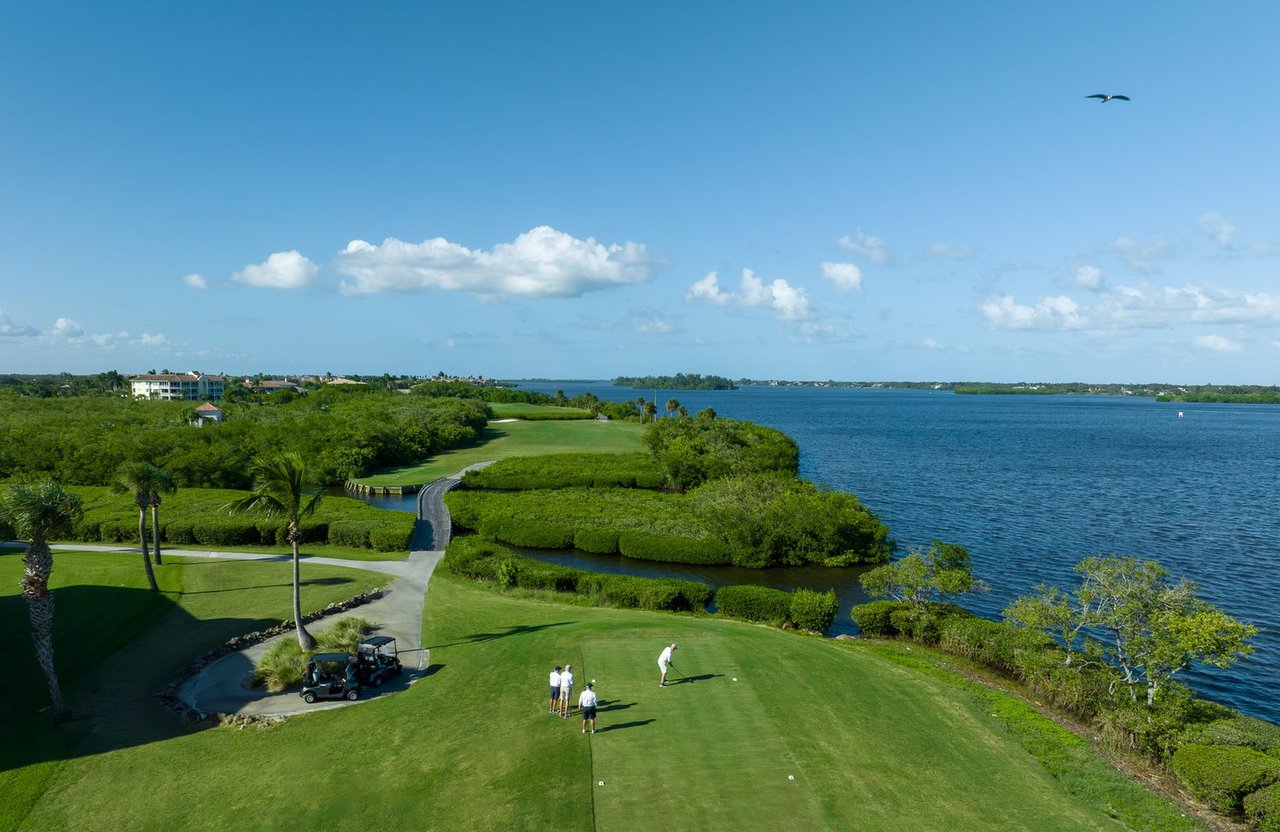
Grand Harbor's championship course runs to the edge of the Indian River Lagoon on the community's mainland side.
The aesthetics draw the eye; the balance sheet closes the deal. Florida remains one of the few destinations where the lifestyle upgrade and the financial upgrade point in the same direction — a convergence we describe to clients as the Florida Financial Trifecta.
| Connecticut | Florida | |
|---|---|---|
| State income tax | Up to 6.99% | None |
| State estate tax | Yes | None |
| State gift tax | Yes (the only state) | None |
| Effective property tax | Among the nation's highest | ~1% (homestead-protected) |
Consider the New Canaan retiree. The absence of a state income tax and a state estate tax, paired with an effective property tax rate near one percent, frequently produces annual savings that, compounded across a decade of retirement, rival or exceed the purchase price of the home itself. The residence stops being a cost. It becomes the instrument through which the savings are captured. Connecticut, meanwhile, reaches a 6.99 percent top income-tax rate, remains one of the few states to levy its own estate tax, and is the only state in the nation to impose a gift tax — a distinction that tends to concentrate the mind of anyone planning to pass wealth to the next generation.
There is also a policy dimension worth watching closely, because it carries a calendar. In a special session in June 2026, the Florida Legislature placed a constitutional amendment on the November 3, 2026 ballot — commonly referred to as Amendment 3, and formally HJR 1-F — that would substantially expand the homestead exemption for non-school property taxes and create a framework for phasing out most non-school homestead property taxes over time.
If approved, the measure would raise the non-school homestead exemption to $150,000 in 2027 and $250,000 in 2028, indexed to inflation thereafter, and direct the Legislature to design a path toward broader elimination. It is worth stating plainly what has and has not happened. The amendment has not been enacted. It requires sixty-percent voter approval, its passage is not certain, and nothing about any homeowner's tax bill changes unless and until voters approve it and the future effective dates arrive. It should be treated as a developing consideration, not a benefit already in hand.
What makes it relevant to a buyer deciding now is timing. Attention has centered on a December 31, 2026 threshold for establishing Florida permanent residency and homestead. An owner who is a Florida permanent resident with homestead in place by that date is positioned on the favorable side of the amendment's residency provisions should it pass; establish residency in 2027 or later, and a materially longer waiting period may apply before the full exemption is available. If the amendment fails, an owner who has already established Florida residency has lost nothing. That asymmetry is precisely why the timing of a domicile decision now warrants professional coordination rather than guesswork.
Grand Harbor's defining structural advantage is geographic. Residents live on the mainland side, wrapped around the Indian River Lagoon and a full-service marina, yet hold membership access to a private beach club directly on the Atlantic. Few communities on the Treasure Coast offer both the sheltered-water lifestyle and the open-ocean one under a single gate. Fewer still pair that with a championship golf course threaded through mangrove and water.
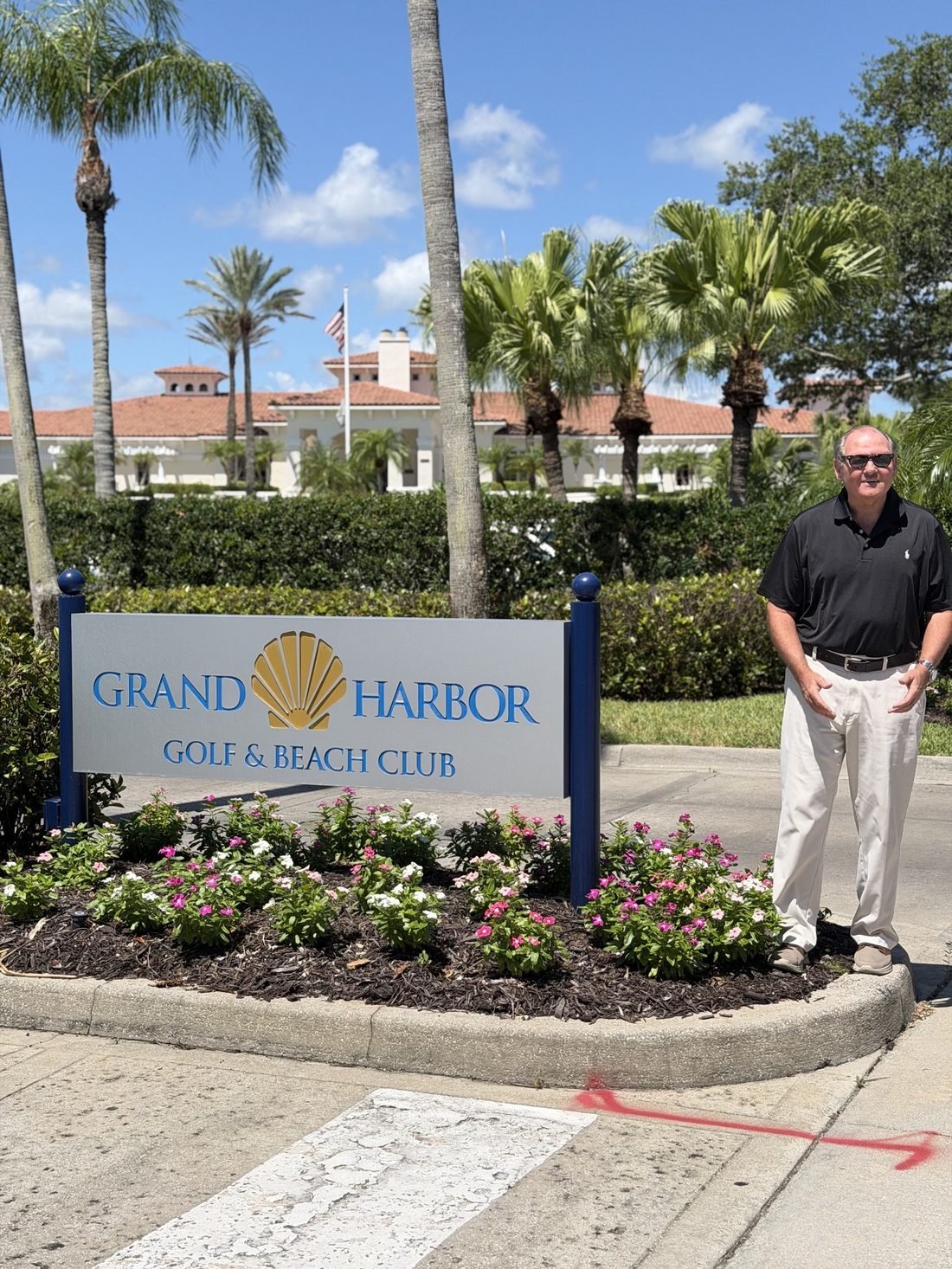
The arrival at Grand Harbor's mainland golf and beach club, wrapped around the Indian River Lagoon.
The housing stock is correspondingly varied, from lagoon-view villas to golf-frontage single-family homes and low-density condominiums. For a couple leaving a larger New Canaan house, that range is a feature: it allows a right-sizing without a downgrade, and a lock-and-leave residence that travels easily between two chapters of life. Just as important, the community is not coasting on reputation. A $36 million capital program, anchored by a new wellness center, is presently modernizing the club's aquatics, fitness, and social amenities. For a town that reveres good modern architecture, the clean, glass-forward pavilion will read as familiar territory. Amenity depreciation is the quiet risk in any private-club purchase; a community that funds a wholesale refresh is buying that risk down on behalf of its owners. The full picture — homes, club, and the reinvestment behind them — lives at grandharborhomesverobeach.com.

A rendering of the community's new wellness center, the visual anchor of Grand Harbor's $36 million reinvestment.
A community's health shows in its calendar, not its brochure. Grand Harbor's courts, course, and social roster stay full — the kind of daily activity that turns a purchase into a life rather than a second address.

A pickleball round-robin on the Grand Harbor courts — a snapshot of the community's active social calendar.

Much of Grand Harbor's most compelling inventory moves before it reaches a public portal. Our proprietary home-search app, recognized as an Apple Editors' Choice selection and rated 4.9 stars, is the only dedicated luxury real estate application within roughly one hundred miles. It is engineered for collaboration: a buyer at a kitchen table in New Canaan and an agent standing in a Vero Beach living room work the same live search in real time, refining criteria, sharing shortlists, and moving on new listings the moment they surface. In a market where the majority of homes close all-cash, that immediacy is not a convenience. It is the mechanism that wins the home.
The old friction in a Treasure Coast move was the airport. That friction is gone. Vero Beach Regional Airport now offers nonstop service to New York (JFK) and Boston on JetBlue, and to Charlotte on American, alongside a Breeze Airways network that flies Vero Beach nonstop to Westchester (White Plains), Hartford, and New Haven, along with Providence and Washington. For New Canaan, White Plains is the closest major field — barely half an hour away — and it now connects nonstop to a small, easily navigated airport that sits roughly ten minutes from the beach. No connection through a crowded South Florida hub, no ninety-minute drive north from the nearest major airport.
The significance is not only convenience. An easy nonstop keeps a barrier-island home in constant reach of children and grandchildren still rooted in the Northeast, which is frequently the unspoken condition on which the entire decision turns. Vero Beach has quietly become close.
This is where a conventional real estate transaction reveals its limits. Establishing Florida residency correctly — and on the right side of the calendar — is not a change-of-address form. It is a coordinated legal and financial exercise, and errors in sequencing can forfeit precisely the advantages that motivated the move.
The Financial Concierge Desk aligns the home purchase with the planning that surrounds it, convening the specialists a relocating principal needs and sequencing their work so nothing falls between them:
The buyers we serve are not merely acquiring a home at Grand Harbor. They are relocating a financial life. Treating the transaction and the tax strategy as a single, coordinated engagement is, in our experience, the difference between a move that captures its intended advantages and one that leaves value on the table.
The proposition in 2026 is unusually coherent. A New Canaan home appreciating into a market starved of inventory. Proceeds that land in a barrier-island market trading well below its peer set. A state whose tax structure rewards the relocation, with a ballot measure that may deepen the advantage. A community with two waterfronts, a championship course, and a $36 million reinvestment removing the principal risk of buying into an established club. And an airport, half an hour from town, that has at last made the whole thing easy. Few relocations align this cleanly.
The move will reward the owner who acts with information and sequencing. The tools to do so — a live-collaboration search app, a desk that convenes the attorneys and advisors a domicile change requires, and two principals who know both ends of the road — exist precisely so that a decision of this magnitude is made with clarity rather than haste.
New Canaan is one of the most sought-after addresses in Fairfield County, and its market reflects it. The town's typical home value sits near $2 million, single-family homes averaged roughly $3 million in 2025, and price per square foot ranks among the highest in the county. Inventory has run near two months of supply, well under the six of a balanced market, with demand arriving steadily from Manhattan and Westchester. Scarce supply, deep demand, and pricing near record highs define a seller's window, and Florida ranks among the top destinations New Canaan owners search when planning their next move.
Florida levies no state income tax and no state estate tax, with an effective property tax rate near one percent. Connecticut imposes a state income tax reaching 6.99 percent, its own estate tax, and the nation's only gift tax, and its effective property tax rate ranks among the highest in the country. For a relocating retiree, the compounded annual difference over a decade can rival or exceed the price of the home. Outcomes depend on individual circumstances and warrant advice from a qualified attorney and CPA.
Amendment 3 (HJR 1-F), placed on the November 3, 2026 ballot during a June special session, would expand the homestead exemption for non-school property taxes to $150,000 in 2027 and $250,000 in 2028, indexed to inflation thereafter, and create a framework for phasing out most non-school homestead property taxes over time. It requires 60 percent voter approval, has not been enacted, and its passage is not certain. A December 31, 2026 residency threshold has drawn buyers' attention — establish residency later and a longer waiting period may apply before the full exemption is available — and should be reviewed with a professional.
Yes. Vero Beach Regional Airport offers nonstop service to New York (JFK) and Boston on JetBlue and to Charlotte on American, alongside a Breeze Airways network that flies Vero Beach nonstop to Westchester (White Plains), Hartford, and New Haven, plus Providence and Washington. White Plains is the closest major field to New Canaan, roughly half an hour away, so the barrier island is a short nonstop rather than a connection through a major South Florida hub.
Grand Harbor is a gated golf and marina community in Vero Beach spanning the Indian River Lagoon on the mainland, with a private beach club on the Atlantic barrier island. It is midway through a $36 million amenity reinvestment and offers everything from lagoon-view villas to golf-frontage homes and condominiums. Current homes and community details are at grandharborhomesverobeach.com.

Ben Bryk and J. Vance Brinkerhoff are the Co-Founding Principals of Vero Premier Properties, the Signature Division of Coldwell Banker Global Luxury, serving the Vero Beach barrier island and its private-club communities including Grand Harbor. Vance was raised in Westport, Connecticut, one town from New Canaan, and built his practice on the Treasure Coast — a background that gives the firm a rare fluency in both ends of the Fairfield County-to-Vero Beach move. Their guiding standard is a straightforward one, in their words: to deliver a seamless transaction from the first meeting to the moment a client sells a home or acquires a new one.
Explore Grand HarborVero Premier Properties has been named among Apple News' Top 10 Most Trusted Realtors in Florida (2025) and holds RealTrends Verified Top 1.5% national standing across more than 2,000 career transactions and over $1 billion in sales volume. The firm is the exclusive Cleveland Clinic Preferred Physician Realtors designee in Indian River County and a member of the International Luxury Alliance, active across 60 global markets.




Lead Real Estate Agent
Buying a home is a very emotional experience, especially for those who have not done it very often. My experience in sales can help guide buyers with an analytical approach.
Find Your Dream Home
Get assistance in determining current property value, crafting a competitive offer, writing and negotiating a contract, and much more. Contact us today.