Florida Has No Income Tax — But Your Old State Isn't Done With You Yet
Ben Bryk May 22, 2026
Ben Bryk May 22, 2026
Florida has no state income tax. No tax on wages. No tax on investment income. No tax on capital gains at the state level. No tax on retirement distributions. For a household earning $2 million a year in New York — where the combined state and city marginal rate can approach 14% — the annual tax savings from a genuine Florida domicile can reach $200,000 or more. Over a decade, the compounded value of that differential, invested rather than paid to Albany, is a meaningful component of a family's long-term wealth.
The opportunity is as significant as advertised. What is less frequently advertised is the considerable effort required to actually capture it — and the persistent determination of northeastern states to prevent high earners from doing so.
New York, New Jersey, Connecticut, and Massachusetts have all invested substantially in residency audit programs specifically targeting high-income departures. They employ dedicated auditors. They maintain sophisticated data-matching capabilities. They issue residency questionnaires that are, in practice, the opening move of a legal proceeding. And they have the legal authority to pursue claimed residents for years after the date of a supposed departure.
The savings are real. So are the stakes of getting the transition wrong.
The misconception that moving to Florida automatically ends a high earner's northeastern tax exposure is the foundational error of most failed departures. Each state operates under its own residency rules — and each has developed its own methods for disputing claimed departures. Understanding what each state can reach, and for how long, is not optional intelligence for a high-net-worth household making this move. It is essential planning.

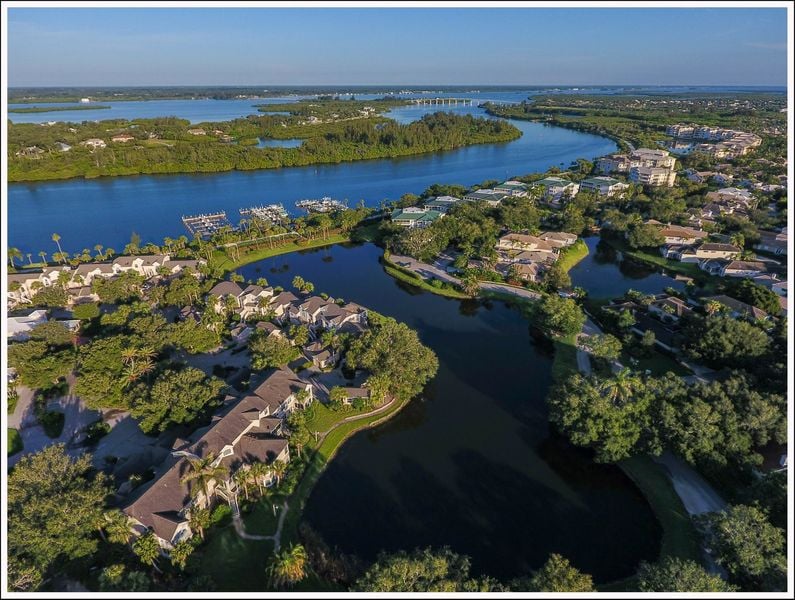
Grand Harbor Beach Club, Vero Beach. For founders and executives timing a liquidity event around a state-tax departure, the financial case for getting the move right is often the largest single financial decision of a career. · © Ben Bryk & Vance Brinkerhoff
For founders, executives, and investors with significant unrealized gains — accumulated equity, partnership interests, appreciated real estate — the tax calculus of a Florida departure is not merely an annual income question. It is a capital event question. And it is the context in which the stakes are highest and the planning requirements most exacting.
New York and New Jersey have specific rules governing how gains are sourced when a taxpayer departs before realizing them. The general principle is that gains accrued during a period of New York or New Jersey residency may be subject to those states' taxes when realized — even if the taxpayer has since moved to Florida. The specifics depend on the nature of the asset, the structure of the transaction, and the terms of the gain's realization. For a founder contemplating a sale, these questions can represent millions of dollars in state tax liability, and they require careful planning with qualified multi-state tax counsel well in advance of any transaction.
The year of departure requires a part-year resident return in the departing state — a document that formally establishes the date of domicile change and allocates income between the two jurisdictions. This return is, in practice, the first document an auditor will examine. It must accurately reflect the domicile change date, be consistent with the taxpayer's actual behavior and documentation during the year, and be prepared by counsel with specific experience in multi-state residency transitions. A part-year return prepared by a general practice CPA without this background is a common and costly error.
Figures are illustrative estimates based on approximate combined New York State and New York City marginal rates and do not constitute tax advice. Actual liability depends on income composition, filing status, and applicable deductions. Consult qualified tax counsel.

A Vero Beach waterfront golf community. The buyers making this move are not choosing Florida reluctantly — they are discovering a lifestyle that makes every element of the domicile case genuinely easy to satisfy. · © Ben Bryk & Vance Brinkerhoff
The most legally defensible tax departure is also the most personally authentic one. A taxpayer who genuinely moves to Florida — whose most significant possessions are here, whose most meaningful relationships are here, whose home is genuinely primary in every sense of the word — faces an audit with confidence rather than anxiety. The legal standard and the lifestyle reality are the same thing.
This is why Vero Beach has become the preferred destination for the wave of high-net-worth households departing New York, New Jersey, Connecticut, and Boston. Not because it is the most convenient choice — but because it is the most compelling one. The 62.7% cash transaction rate in this market reflects a buyer pool that has already made the financial calculations, resolved the complexity, and arrived with capital and conviction. These are not people purchasing a tax shelter. They are people choosing a life.
62.7% of Vero Beach luxury transactions close in cash — the highest concentration in the United States. The barrier island's private beach clubs, championship waterfront golf, the Indian River Lagoon, and a peer community of relocated principals from the Northeast have made this the destination that combines tax efficiency, lifestyle quality, and genuine long-term capital preservation in a single decision.
"The tax savings are real, and for a household with genuine wealth, they are transformative over time. The planning required to capture them fully is not complicated — but it must begin before the move, not after the audit letter arrives."
Ben Bryk & Vance Brinkerhoff · Coldwell Banker Global Luxury · Paradise
Ben Bryk and Vance Brinkerhoff have spent 35 years working with exactly the profile of buyer described in this article — principals whose financial lives require coordinated professional support across legal, tax, and real estate disciplines simultaneously. Their financial concierge desk connects relocating clients with domicile counsel, multi-state estate planning attorneys, CPAs with specific Northeast departure experience, and private banking relationships that serve this client profile.
With more than 2,000 closed transactions and over $1.2 billion in verified sales volume, they bring to every client relationship a depth of market knowledge and professional network that no other team in the region can match.
For buyers whose financial decisions operate on institutional timelines, the Ben Bryk and Vance Brinkerhoff mobile application delivers real-time access to Vero Beach's luxury market — instant notifications, comprehensive listing data, and the around-the-clock responsiveness that high-net-worth clients have come to expect in every other dimension of their financial lives.
Available on the Apple App Store, it is the only proprietary realtor application within a 100-mile radius. The result is measurable: their listings sell 40% faster than the market average. In a market with genuine scarcity at the top of the price range, that speed matters.


Lead Real Estate Agent
Buying a home is a very emotional experience, especially for those who have not done it very often. My experience in sales can help guide buyers with an analytical approach.
Find Your Dream Home
Get assistance in determining current property value, crafting a competitive offer, writing and negotiating a contract, and much more. Contact us today.